
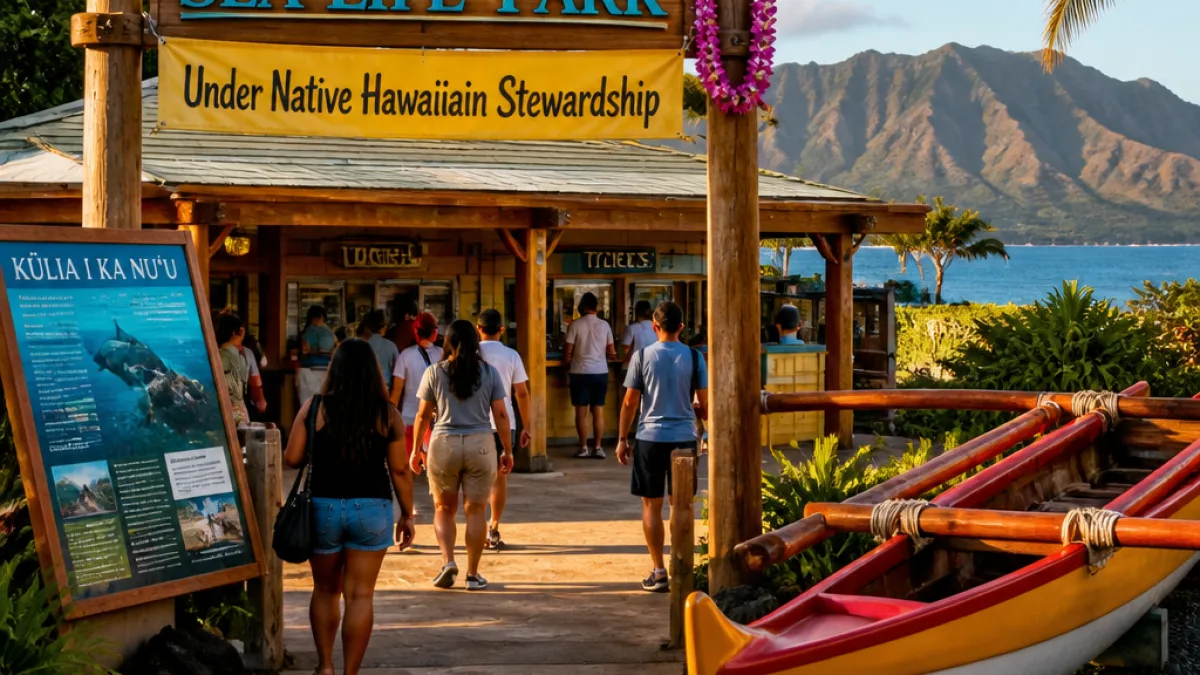
WAIMANALÓ — The Hawaiian Council has completed its purchase of Sea Life Park Hawaii, the 62-year-old Waimanalo attraction, the organization confirmed Wednesday, saying the transaction brings the park under Native Hawaiian stewardship for the first time.
Sale closes, operations continue
The private sale closed Aug. 11, with the Hawaiian Council acquiring the park from Herschend Family Entertainment. Financial terms were not released. Park leaders said daily operations will continue without interruption and that current reservations, memberships and annual passes will be honored.
Management also confirmed there are no planned staff layoffs linked to the change in ownership. The Hawaiian Council has recruited Valerie King, a former Sea Life Park general manager, to help guide the transition and ensure continuity of animal care and visitor services.
New stewardship and priorities
While the park’s immediate operations will remain in place, the Hawaiian Council outlined a longer-term strategy to shift programming and interpretation toward Native Hawaiian cultural values, local marine science and education. The council said it plans to increase cultural storytelling, expand educational offerings and upgrade landscaping with native plants.
“For generations, Sea Life Park has helped people discover the beauty of Hawaiʻi’s marine life. Our opportunity now is to help people understand something deeper – that these animals have always been part of Hawaiʻi’s story,” said Kūhiō Lewis, CEO of the Hawaiian Council.
The organization indicated it will work with Hawaii Pacific University and state agencies to develop expanded research and school partnerships while the park continues to operate under the existing lease arrangement for the site.
Land and lease context
Sea Life Park sits on state-owned land overseen by the Department of Land and Natural Resources. Hawaii Pacific University currently holds the master lease for the property; the Hawaiian Council will operate the park under that lease and said it expects to coordinate with HPU and state officials on future educational and research programs.
| Detail | Information |
|---|---|
| Sale closed | Aug. 11 |
| Park age | 62 years |
| Previous owner | Herschend Family Entertainment |
| New operator | Hawaiian Council |
| Master lease holder | Hawaii Pacific University |
What visitors and staff can expect
Officials said animal care staff will remain in place to maintain existing veterinary and husbandry practices. The Hawaiian Council emphasized that day-to-day guest experiences will not change immediately, while signaling that interpretive content and educational activities will be redesigned over time.
Planned near-term improvements identified by the new owners include:
- landscaping upgrades featuring native plants,
- expanded cultural storytelling and interpretive programming,
- updated educational curricula to emphasize marine science and Native Hawaiian perspectives,
- evaluation of expanded school and community partnerships.
Community and cultural implications
Sea Life Park has long been a fixture on Oʻahu’s windward coast, drawing residents and visitors to marine exhibits, educational talks and performances. Placing the attraction under Native Hawaiian stewardship aligns the site’s future interpretation with community advocates who for years have called for stronger cultural context in how Hawaiʻi’s natural resources are presented to the public.
Leaders did not provide a detailed timeline for implementing the new programming or the scope of proposed research partnerships. They also did not disclose the purchase price.
Next steps
The Hawaiian Council said it will work with Hawaii Pacific University and state agencies to coordinate educational and research initiatives while maintaining current operations. Park management and the new owners indicated further announcements about specific program changes and community opportunities will be made as plans are developed.
As the park enters this new chapter, the change of ownership represents both continuity — maintaining staff, care standards and visitor access — and a strategic shift toward integrating Native Hawaiian knowledge and marine science into a longtime island attraction.
— Keoni Kahale, State Correspondent
















