
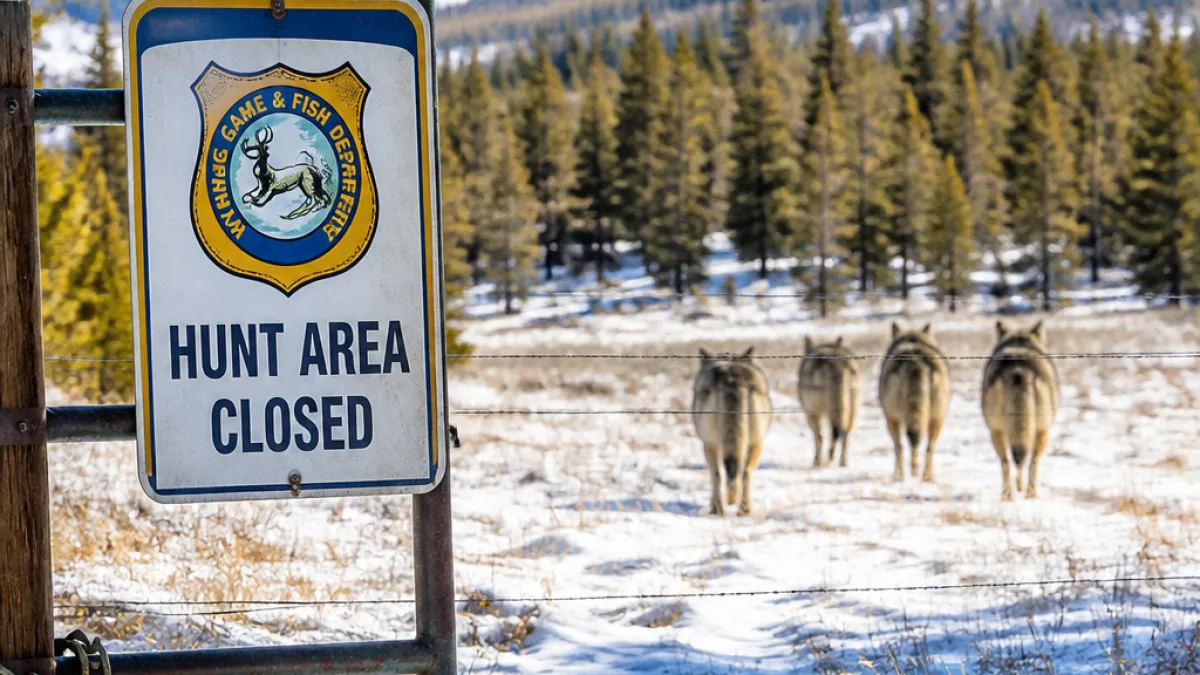
EVANSTON, Wyo. — Yellowstone National Park’s last original wolf pack, known as Mollie’s Pack, emerged from a brief Wyoming hunting season without direct losses to its members, state wildlife officials said Monday.
Quick closure allays fears of wolf watchers
Dan Smith, interim deputy director for the Wyoming Game and Fish Department, told the Wyoming Game and Fish Commission that two hunt zones northwest of Cody — designated as wolf hunt areas one and two — were closed Saturday after reaching a mortality limit of four wolves. Smith said none of the animals harvested were from packs that had been assigned to Yellowstone National Park.
“Wolf hunt areas one and two did close on Saturday, after reaching the mortality limit of four wolves,” Smith said.
The announcement provided relief to wolf advocates and observers who feared the famous Mollie’s Pack might be hit after members left Yellowstone’s Pelican Valley and spent considerable time in the adjacent state-managed hunt area late last year and into 2026.
Pack movements and population details
Park reports earlier this year indicated Mollie’s Pack had been spending much of its time back inside Yellowstone, where hunting is prohibited. In July the pack was documented as consisting of five adults and five pups, though state and federal wildlife managers have continued to track their locations as the animals cross the park boundary.
Lisa Robertson, founder of Wyoming Untrapped, said she traveled to Evanston for the commission meeting and welcomed the news.
“Mollie’s Pack survived the hunt,” Robertson said. “For more than three decades, they have taught us about resilience, family, adaptation, and the enduring nature of the wild.”
Management rules and public concern
Under current Wyoming regulations, several state-defined hunt zones have mortality limits intended to control the number of wolves taken during state-sanctioned seasons. The rapid closure of areas one and two underscores how quickly these limits can be reached and how transient wolf movements across jurisdictional boundaries complicate management.
- Closure trigger: Mortality limit of four wolves reached in hunt areas one and two.
- Pack size (July): Five adults and five pups for Mollie’s Pack.
- Park status: Hunting is not permitted within Yellowstone National Park.
Why the pack matters
Mollie’s Pack traces its lineage to the wolves reintroduced in the mid-1990s and has been one of the most closely observed groups in the Greater Yellowstone Ecosystem. Its survival has symbolic and ecological significance for many observers, wildlife watchers and local businesses that benefit from wolf tourism. Because the pack has historically ranged near the park boundary, its members have frequently become a focal point in debates over state authority to regulate wildlife versus federal protections inside park borders.
Federal and state roles
Yellowstone officials declined a request for an interview Monday, citing that the hunt is managed by the state. The state’s role in setting seasons and mortality limits — and the way those rules interact with animals that cross into federally protected lands — remains a contentious aspect of regional wildlife policy. The quick closure of the hunt areas after the quota was met demonstrates the mechanics of state regulation but also highlights the short window during which animals crossing boundaries may be exposed.
What’s next
Wildlife managers from Wyoming Game and Fish will continue monitoring wolf movements and pack composition through the remainder of the year. Advocates and some members of the public have urged greater coordination between agencies and additional safeguards for packs that rely heavily on habitats adjacent to the park.
| Item | Detail |
|---|---|
| Hunt areas closed | Areas one and two (northwest of Cody) |
| Mortality limit | 4 wolves (triggered closure) |
| Mollie’s Pack size (July) | 5 adults, 5 pups |
For now, Mollie’s Pack remains intact and under observation. The episode is likely to contribute to ongoing conversations in Wyoming about how best to balance hunting seasons, population goals and the conservation of wolf packs that traverse state and federal lands.
Cody Marsh, WE NEWS.


















