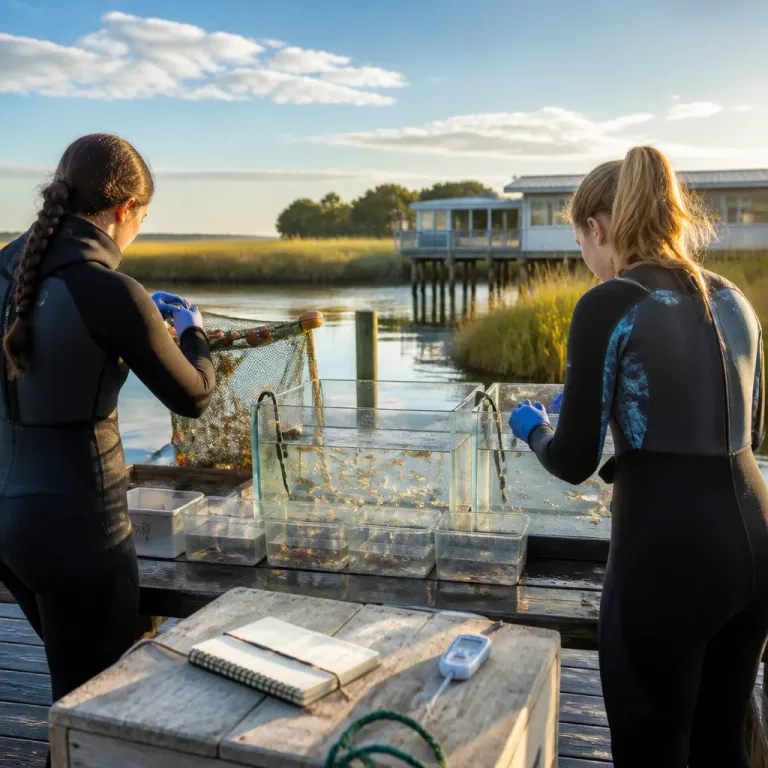
Maryland officials announced Tuesday that the state has met or nearly met the major pollution-reduction goals set under the 2014 Chesapeake Bay Watershed Agreement, a milestone state leaders say is crucial for the bay’s ecological recovery and for industries that rely on cleaner water.
Progress by the numbers
The governor’s office reported that, between 2009 and 2025, Maryland achieved:
- 100% of its sediment reduction goal
- 100% of its phosphorus reduction goal
- 99% of its nitrogen reduction goal
| Pollutant | Target Achievement (2009–2025) |
|---|---|
| Sediment | 100% |
| Phosphorus | 100% |
| Nitrogen | 99% |
Officials also said Maryland has met goals tied to tributary-scale oyster restoration, land conservation, fish passage and public access identified in the 2014 agreement.
Why the milestone matters
State leaders framed the progress as having both environmental and economic importance. The Chesapeake Bay is a central feature of Maryland’s identity and supports sectors including tourism, commercial seafood harvests and aquaculture. Cleaner water can improve habitat for fish and shellfish, bolster recreational opportunities, and strengthen long-term prospects for water-dependent businesses.
Achieving reductions in sediment, phosphorus and nitrogen helps combat algal blooms, low-oxygen "dead zones" and the degradation of underwater grasses that are essential nursery beds for many species.
Next phase: 2030 and 2040 targets
Although the state exceeded or nearly met the 2014 agreement goals for the 2009–2025 period, officials said work will continue. Jurisdictions across the Bay watershed will pursue the pollutant-reduction plans through 2030, then transition to updated benchmarks set by a revised Chesapeake Bay Watershed Agreement, with most new targets aiming for completion by 2040.
"As we enter the next phase of Bay restoration, we are building off our success through targeted reductions of nonpoint pollution sources such as stormwater runoff from our developed areas,"
The comment, attributed to Maryland Department of Natural Resources Secretary Josh Kurtz, underscores the shift in focus toward sources of pollution that are harder to control than point-source discharges from treatment plants.
Addressing nonpoint pollution
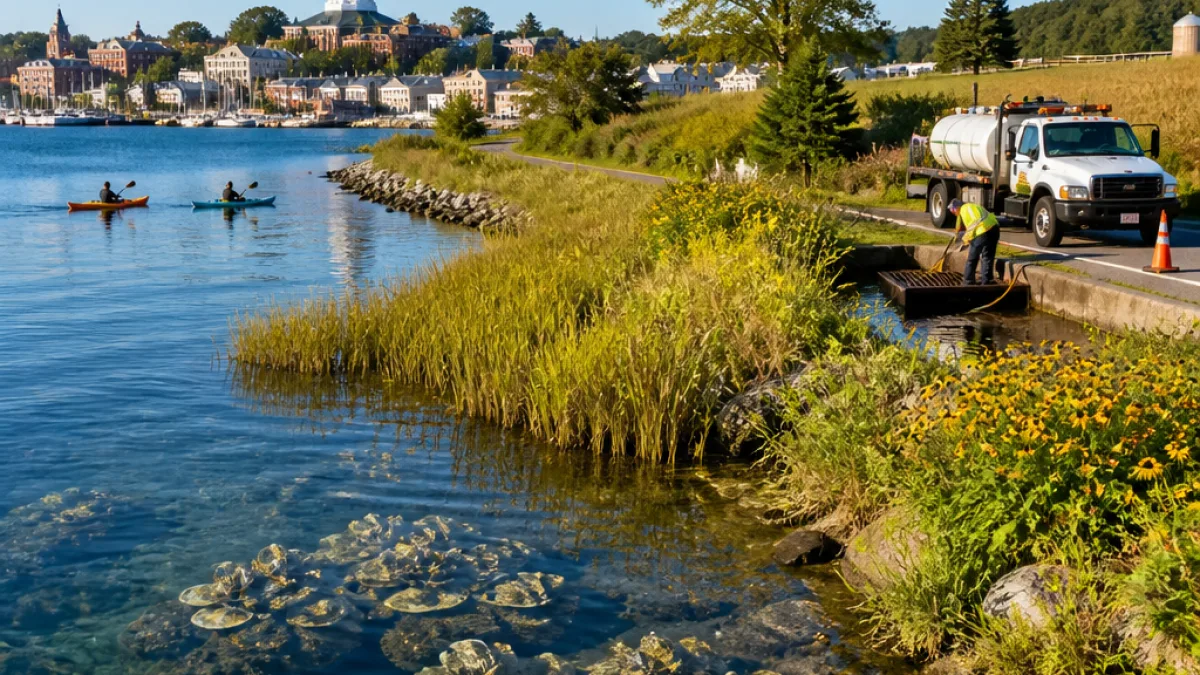
Officials singled out stormwater runoff from developed areas and agricultural runoff as priority issues for the coming decade. Unlike pollution from a single pipe, nonpoint source pollution comes from dispersed surfaces — roads, rooftops, parking lots and farm fields — and typically requires landscape-scale management changes, green infrastructure, and altered farming practices.
Measures commonly used to reduce nonpoint pollution include rain gardens, permeable pavement, retention basins, streamside buffers, cover crops and targeted fertilizer management. While state and local programs have subsidized and incentivized many such practices, officials say the next phase will demand wider implementation across both urban and rural watersheds.
Local implications and public involvement
For Maryland residents, the announcement means continued investment in stormwater projects and conservation programs. Local governments will likely expand stormwater fee programs, grant-funded retrofit projects and outreach to farmers. Recreational users — anglers, boaters and beachgoers — may see incremental improvements in water clarity and habitat quality over the coming years.
Citizens can contribute by reducing impervious cover on private property, installing rain barrels, maintaining septic systems, and following best practices for lawn and garden care to limit fertilizer runoff. State and county agencies typically publish guidance and sometimes offer cost-share assistance for such measures.
Outlook
Officials characterized the progress as encouraging but cautioned that addressing nonpoint pollution will be more technically and politically challenging than earlier phases. The revised watershed agreement’s 2040 targets will steer a new round of policy, funding and on-the-ground work across Maryland and partner jurisdictions in the Bay watershed.
The announcement reflects a substantial step for Maryland’s long-standing effort to restore the Chesapeake Bay, even as the state prepares to tackle the diffuse sources of pollution that remain a major impediment to full recovery.