
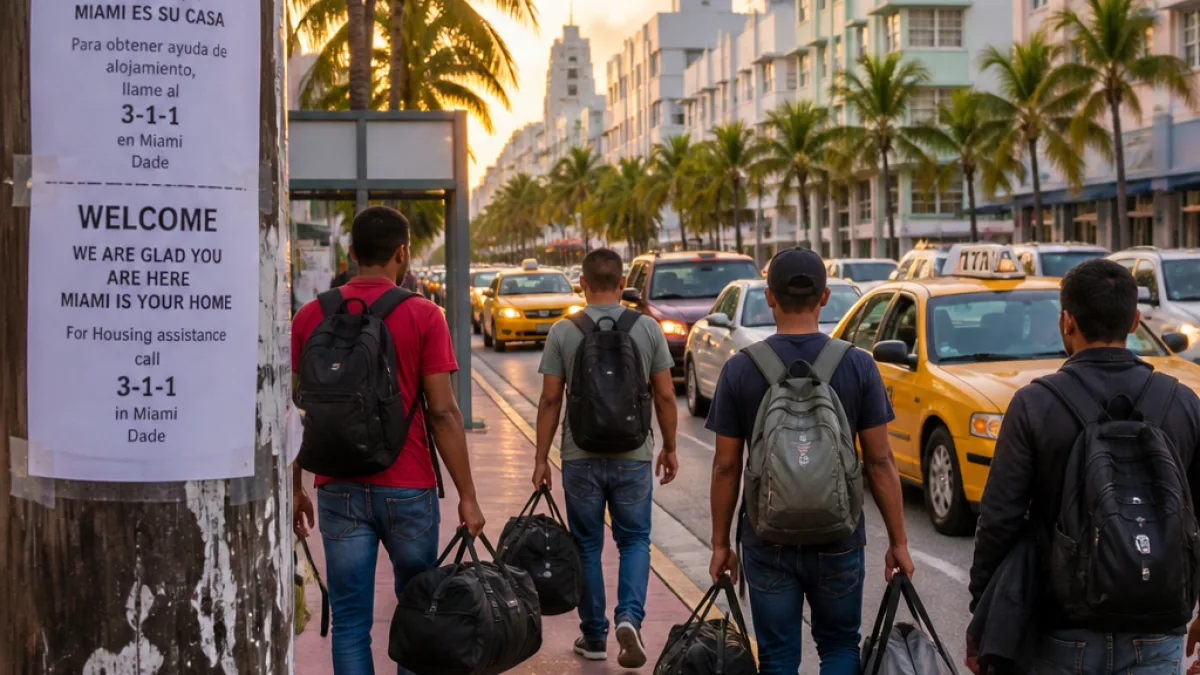
Venezuelan arrivals favor smaller cities over Florida's traditional gateways
MIAMI — A recent Associated Press analysis of federal immigration data covering fall 2018 through summer 2025 shows a notable shift in where Venezuelan migrants are settling after crossing the U.S.-Mexico border. Rather than concentrating in long-established immigrant destinations such as Miami, large numbers are moving to smaller and mid-size metropolitan areas across the country.
That trend has direct implications for Florida. Miami and other South Florida communities have historically been primary destinations for Venezuelan immigrants because of existing social networks and Spanish-language resources. The AP findings indicate those advantages are becoming less decisive as migrants weigh employment opportunities, housing costs and daily quality of life.
Enrique Vera, 32, is one of the migrants whose path illustrates the shift. Vera crossed the border in 2021 and initially joined family in Miami, but he said he quickly found the local labor market and pay unsustainable. After a brief stay in South Florida, he relocated to the suburbs south of Salt Lake City, where he later launched a bakery business and employs other migrants.
"the work, the conditions, the low pay."
Vera’s experience underscores three factors the AP analysis identified as drawing Venezuelans to smaller metros: more available jobs in certain industries, lower housing costs and less traffic congestion. The analysis also lists several U.S. regions that emerged as significant destinations, including parts of Utah, the Chicago and Denver areas, and pockets of the Southeast and Southwest.
Why migrants are moving beyond Florida
Local advocates and employment trends suggest migrants are responding to immediate practical concerns. In many smaller metropolitan areas, rapid suburban development has created demand for labor in warehouses, factories and construction—sectors that have actively hired newly arrived workers. In addition, newer housing tracts outside large urban cores often come with lower prices and newer infrastructure.
For migrants who may not speak English fluently, Miami’s Spanish-language environment remains an asset. But the AP analysis indicates that factor alone is not enough when balanced against wages, cost of living and prospects for entrepreneurship. Some migrants, like Vera, have converted workplace skills or homegrown trades into small businesses once they find more affordable commercial space and a supportive local labor pool.
- Jobs: Manufacturing, warehousing and service industries in growing suburbs have opened hiring opportunities.
- Housing: Newer, less expensive housing developments attract families seeking stability.
- Traffic and quality of life: Less congestion and perceived higher living standards are persuasive.
Florida’s continued role as a Spanish-speaking hub and its tropical climate remain draws for many immigrants, but the changing calculus highlights competition among U.S. cities to attract and retain newcomers. States with active development and available entry-level jobs are becoming more attractive landing points.
Local impact and what it means for Florida
For Florida municipalities, a diversion of arrivals could affect sectors that rely on immigrant labor, such as hospitality, construction and certain service industries. It may also shift where nonprofits and social services concentrate outreach efforts. Agencies that provide language access, legal assistance and housing support may need to adjust strategies if fewer new arrivals are opting for South Florida.
At the same time, migrants who do remain in Florida still benefit from dense Latino networks, Spanish-language media and established cultural institutions. City and county governments here continue to coordinate with community organizations to provide shelter, employment assistance and legal services to recent arrivals.
Numbers and destinations
| Factor | Why it matters |
|---|---|
| Jobs | Higher demand in warehousing and manufacturing in some smaller metros |
| Housing | Lower costs and new developments in suburban areas |
| Quality of life | Less traffic and perceived better living conditions |
Specific metros highlighted by the AP include locales in Utah, the Chicago and Denver regions, and several smaller cities across the country. Those destinations have attracted migrants seeking steadier employment and room to start small businesses.
The changing flows present questions for Florida leaders and service providers about whether existing systems for reception and resettlement need recalibration. If newcomers are increasingly dispersing to different regions, state and local agencies here may need to focus on retaining talent and ensuring pathways from low-wage work to more stable employment.
As migration patterns evolve, Florida will likely remain a major cultural and economic center for Latino communities. But the recent data indicate a more dispersed national settlement pattern for Venezuelan migrants, one driven by immediate economic considerations as much as by historical ties.
Javier Castellanos is a state correspondent for WE NEWS covering Florida. He reports from Miami and surrounding counties.


















