
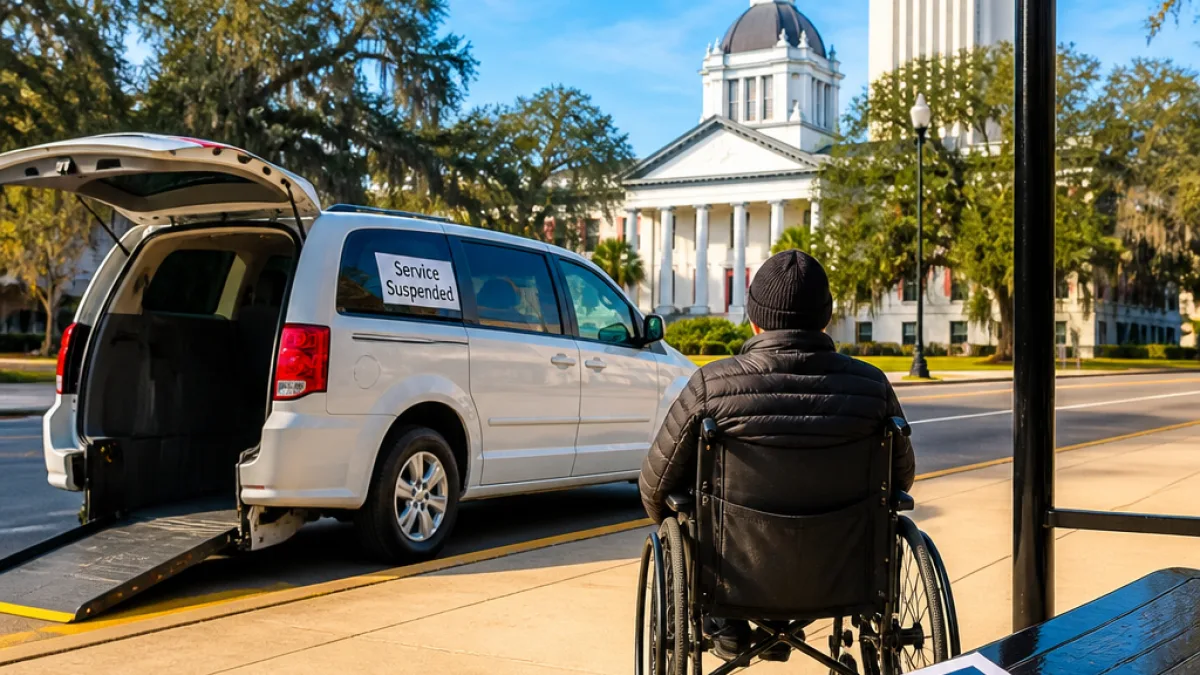
TALLAHASSEE — The abrupt end of a low-cost, door-to-door transportation service is forcing some Tallahassee residents with disabilities to scramble for alternatives and, in some cases, jeopardizing their ability to get to work on time.
Funding cut prompted service closure
i-Enable, a local ride service that provided accessible, predictable transportation in the state capital, ceased operations on July 1 after the governor vetoed funding for the grant program that helped sustain it. The service’s end followed a $6 million reduction in state support to the Innovative Service Development Grant Program, according to local reporting.
The loss has had immediate, practical consequences for regular riders. i-Enable offered a 15-minute pickup window and door-to-door service that riders said made commuting reliable — a feature many say is essential when employers expect punctual attendance.
- Service closed: July 1
- Funding cut: $6 million from the state grant program
- Key feature lost: 15-minute pickup window
Riders describe missed shifts and higher costs
Riders and disability advocates described a patchwork of alternatives — including StarMetro, Dial-A-Ride and commercial ride-hailing services — that are less dependable or more expensive than the shuttered program.
"I was really upset. I was really mad,"
The comment came from rider Matt Blair, who told local reporters that replacement options have been unreliable and have caused him to arrive late for work. "With Dial-A-Ride or StarMetro they're always late, and I can't be late for work," he said, adding that a recent Sunday tardiness nearly led to disciplinary action with his employer.
Another rider, Walker Bullington, said the shutdown has increased his out-of-pocket expenses, particularly when public transit schedules leave gaps. He described paying about $37 for an Uber on a Sunday morning when StarMetro service was not running.
Service interruption leaves support organizations scrambling
Local service providers that help people with disabilities say the loss of i-Enable has created additional administrative burdens and transitional gaps for clients. Amanda Lewis, co-owner of Future Pathways — a Tallahassee organization that assists people with disabilities in finding and keeping jobs — told reporters that some clients faced delays while applying for alternatives such as Dial-A-Ride.
"Some of the difficulties have been just learning a new program like Dial-A-Ride. So they had to go through an application, that took a while. So some of them had a gap in transportation, and I mean they have jobs in the community," Lewis said in a written statement shared with local media.
| Aspect | i-Enable | Alternatives |
|---|---|---|
| Pickup window | 15 minutes | Varies; often less predictable |
| Cost to riders | Low-cost, subsidized | Sometimes higher (e.g., ride-hailing fees) |
| Availability on weekends | Designed for flexible schedules | StarMetro limited; variable pricing for ride-hail |
Advocates say the combination of unpredictable pickup times and higher costs from ride-hailing services can create a real barrier to workforce participation for people with disabilities. For some, parents or family members filled temporary gaps, but that is not a long-term solution for those seeking independence.
The closure has also spotlighted the ripple effects of state budget decisions on local programs that serve vulnerable populations. While i-Enable issued a written statement reflecting on its experience with the Innovation and Service Development Grant, local riders are left wrestling with the day-to-day consequences.
As the community adapts, disability service organizations are continuing to assist clients through applications to alternate services and to identify short-term solutions. For many affected Tallahasseans, though, the change means navigating a less predictable commute, higher costs and increased anxiety about maintaining employment.
Local officials and service providers have not announced a replacement program matching i-Enable’s combination of low cost and reliable pickup windows. The debate over funding and the role of state support in sustaining these services is likely to continue as residents and organizations weigh the human consequences of the veto.

















