
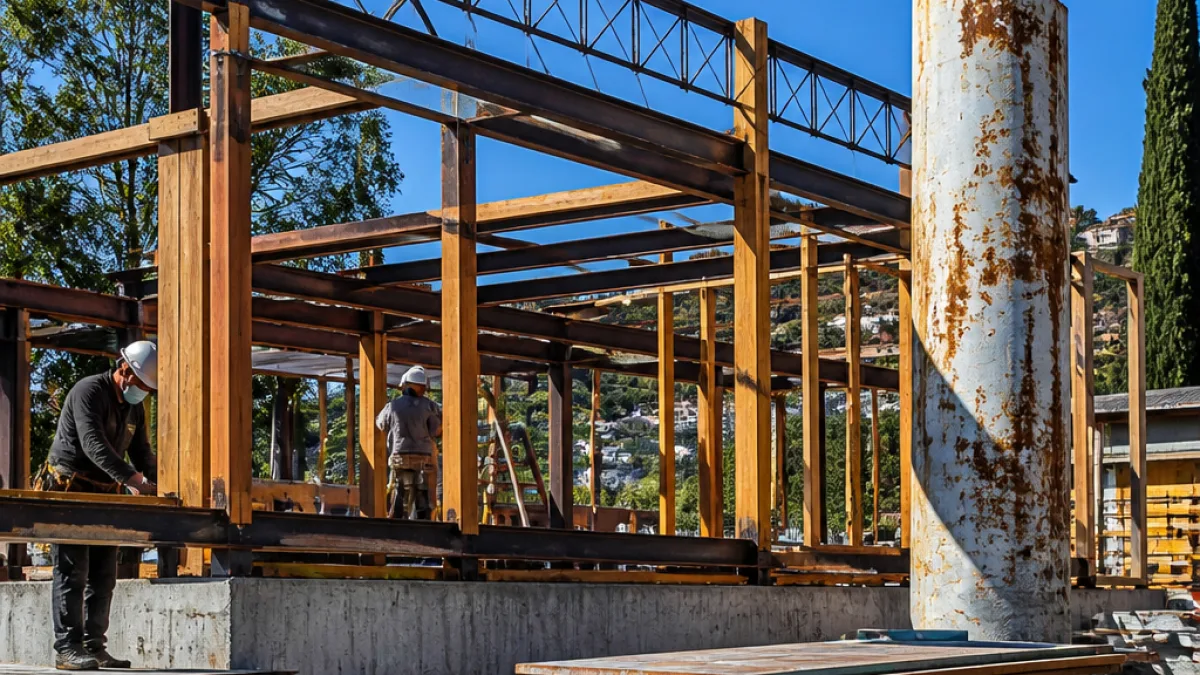
In Silver Lake, a residential project is testing how far material reuse can be taken while still meeting the technical demands of a high-performance home. Builders and the homeowners have incorporated reclaimed structural steel, heavy timber, salvaged rigid foam and even a section of a wind turbine tower into the new house — choices that highlight environmental benefits alongside engineering complexities.
From salvage pile to structure
The homeowners arrived at the design with demolition, salvage and engineering experience, and they planned the house around materials they had already collected. That inventory includes reclaimed I-beams, a reclaimed steel truss, tongue-and-groove roof decking, heavy timber beams and salvaged rigid foam insulation. One of the most striking elements is a wine and whiskey cellar framed from what the builders identified as a structural section of a wind turbine tower.
"This is obviously reclaimed lumber," said content creator Travis Brungardt during a walkthrough video produced by Build Show Network.
Using large reclaimed components for primary structure — not just for finishes or decorative features — is relatively uncommon. The Silver Lake build demonstrates how reuse can reduce demand for newly manufactured materials and keep useful products out of landfills, but it also raises issues that new, code-labeled products typically avoid.
Technical hurdles and building science
Reclaimed materials often lack the documentation homebuilders rely on: manufacturer ratings, product specifications and code references. That absence requires additional review, engineering calculations and careful detailing to ensure structural performance, fire safety and long-term durability.
Randy Williams, editor of Green Building Advisor, who toured the project with Brungardt, emphasized the trade-offs. He noted concerns such as unknown insulation performance, damaged facers on rigid foam and the risk of moisture problems if wall and roof assemblies are not detailed correctly. "There's both, right? I mean we obviously have risk," Williams said, summarizing the tension between reuse and predictable performance.
Practical considerations for builders and homeowners
Prospective reuse projects should prepare for extra steps. Specialists recommend:
- Documenting material provenance where possible and recording structural loads and conditions.
- Engaging structural engineers to calculate whether a reclaimed element meets required capacities.
- Testing or carefully inspecting insulation and weather barriers to verify condition and performance.
- Detailing assemblies to manage moisture, especially when combining different ages and types of materials.
Those steps increase project time and cost, but they are part of ensuring that a home remains safe, energy efficient and durable.
What the Silver Lake build shows
The project illustrates both the potential environmental upside of large-scale salvage and the reason building professionals often default to new materials. Reclaimed steel and timber can carry substantial embodied carbon savings compared with newly produced equivalents. Likewise, extending the service life of rigid foam or structural sections diverts materials from landfills.
| Reclaimed element | Role in project |
|---|---|
| I-beams | Primary structural support |
| Steel truss | Roof/structure framing |
| Wind turbine tower section | Wine and whiskey cellar enclosure |
| Rigid foam insulation | Thermal insulation (inspected/assessed) |
But reclaiming materials is not a simple plug-and-play solution. The Silver Lake house required careful planning to integrate pieces designed for other uses. The reclaimed steel was engineered originally for different load paths; insulated assemblies lacked contemporary labeling; and the turbine tower section presented unique geometry and connection challenges.
Local and wider implications
For Kansas builders and homeowners, the Silver Lake project is a proof of concept: substantial reuse is possible, but it demands expertise. Contractors will need to weigh the environmental benefits against the added design, testing and detailing obligations. Municipal building departments and code officials may also see increased demand for project-specific engineering documentation when reclaimed components are proposed for structural use.
As more owners and designers pursue climate-minded construction strategies, projects like this one will help define practical pathways for reuse at scale while clarifying where extra caution is needed to meet performance and safety expectations.
Wesley Carrington is a state correspondent for WE NEWS covering housing, construction and environmental topics.
















