
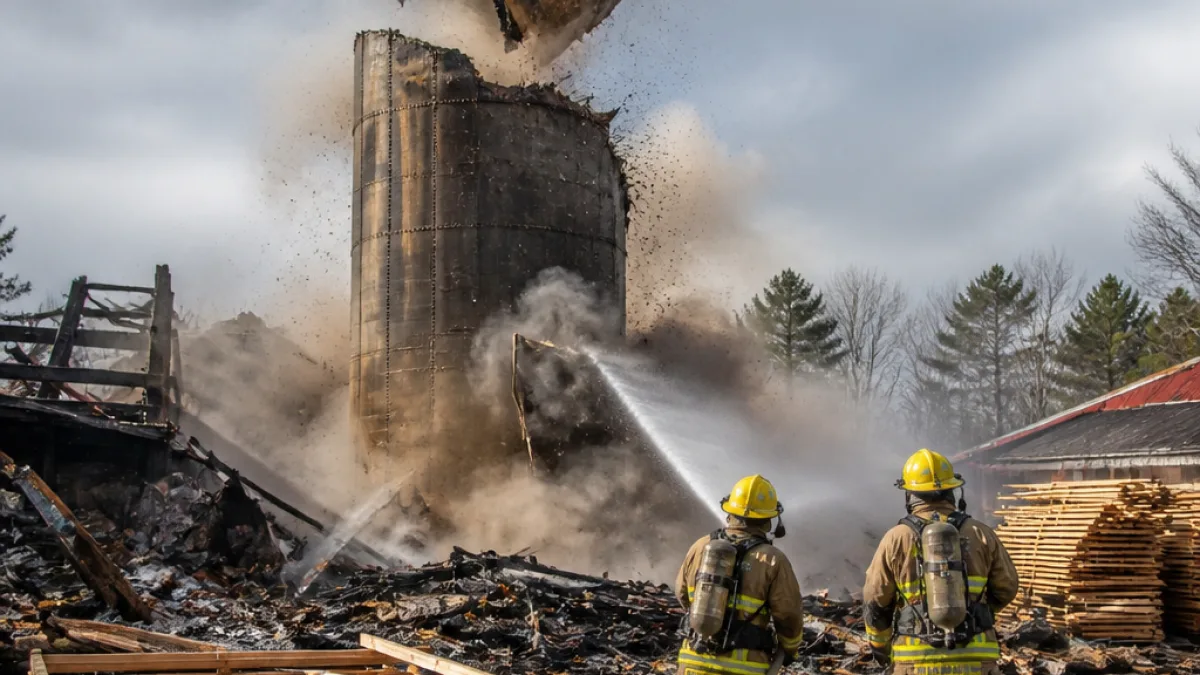
Federal investigators say firefighting tactics used during the May 15 blaze at the Robbins Lumber mill in Searsmont likely contributed to a catastrophic explosion that killed three people and sent a silo rocketing into the sky.
Investigation points to water applied inside sealed silo
In a report released this month, the National Institute for Occupational Safety and Health (NIOSH) concluded that crews who tried to extinguish a fire inside a silo did not realize the structure was an oxygen-limiting silo. The agency said directing water or foam into that type of sealed chamber can introduce air and stir combustible material into an explosive concentration.
The report said applying water into the silo likely entrained oxygen into the headspace, suspended dust within the silo contents and created conditions that ignited, producing the blast that hurled workers and firefighters away from the structure.
“The application of water into the silo in this incident likely entrained oxygen into the silo headspace, stirred up dust within the contents, and caused it to become suspended in an explosive concentration.”
The blast devastated parts of the Robbins Lumber facility and was captured in images released by the Maine State Fire Marshal showing flames and heavy damage. The NIOSH findings do not provide criminal determinations but focus on occupational safety and steps to prevent recurrence.
Warnings from manufacturers and firefighting organizations
NIOSH noted that both the silo manufacturer and fire safety organizations had issued guidance cautioning against introducing water or foam into oxygen‑limiting silos because doing so can force air into the space and create an explosive mixture. Investigators concluded the responding companies were unaware the silo was oxygen‑limiting and therefore did not use tactics aligned with that hazard.
The report recommends that fire departments adopt specific operational protocols for silo fires and that additional training be provided about the hazards unique to oxygen‑limited and sealed process vessels.
- Do not direct water or foam into oxygen‑limiting silos.
- Train incident commanders and firefighters to recognize sealed and oxygen‑limited structures.
- Coordinate with facility operators to identify silo types and have clear response plans.
Local and statewide implications
Robbins Lumber’s explosion is a reminder for municipal and volunteer fire departments across Maine that industrial structures can present hazards uncommon at residential fires. Many Maine towns rely on volunteer departments that may have limited training or infrequent exposure to industrial equipment and process vessels.
The NIOSH report urges departments to ensure that their tactics match the hazards they face and to seek facility-specific information when responding to industrial incidents. The agency also emphasized the need for better preparedness so firefighters can choose safer tactics on scene.
Practical steps for emergency responders and facilities
The report centers on preventing the specific sequence that likely led to the Searsmont blast: water introduction, oxygen entrainment and dust suspension. It calls for clearer pre-incident planning between facilities and local responders and enhanced training on identifying oxygen‑limiting and other sealed containers.
| Concern | NIOSH recommendation |
|---|---|
| Unknown silo type | Obtain facility diagrams and identify sealed or oxygen‑limiting vessels |
| Suppressing interior silo fires | Do not spray water/foam into oxygen‑limiting silos; consult manufacturer guidance |
| Training gaps | Provide scenario-based training for industrial incidents and sealed-structure hazards |
The report does not specify whether Robbins Lumber or local authorities will face new regulatory actions, but it establishes a technical finding that could shape future training, mutual‑aid planning and facility safety measures.
What remains unclear
NIOSH’s investigation focused on the chain of events that made an explosion more likely, but the report as summarized publicly stops short of assigning blame beyond the conclusion that the firefighting tactic was inappropriate for an oxygen‑limiting silo. The identity of the three people who died and other victim details have been reported previously but are not expanded upon in the agency’s technical report excerpt released this month.
Local fire chiefs and industry safety officials now face decisions about implementing the report’s recommendations, updating response plans and communicating risks to facilities that use silos and other sealed process vessels.
For Maine’s smaller towns and volunteer departments, the NIOSH findings underscore the importance of pre-incident coordination with industrial operators and ongoing training that reflects the types of facilities in their response areas.
The Robbins Lumber incident remains under study by local and federal authorities; NIOSH’s report provides a technical basis for changing how silo fires are approached to prevent another deadly outcome.


















