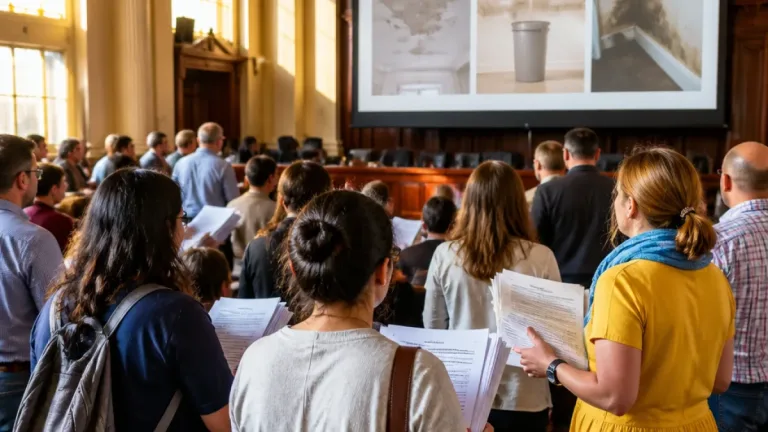

BISMARCK — U.S. Secretary of Education Linda McMahon spent Thursday in North Dakota visiting a mix of higher-education, rural K-8 and career-technical classrooms as part of her nationwide effort to document state-level education approaches. The trip — her 41st stop on what she calls the "Returning Education to the States Tour" — included time at Bismarck State College, Sweet Briar School outside Mandan, Dickinson’s Southwest Area Career and Technical Education Academy and a concluding stop at the Theodore Roosevelt Presidential Library in Medora.
Focus on local control and classroom practices
McMahon said her aim is to observe “what is taught, how it’s taught” and to identify where students are showing the most progress. The observations will feed into a toolkit of best practices she hopes to assemble before the end of her term in office.
During the visit to Sweet Briar, a rural K-8 school, McMahon spoke directly with teachers and students and learned about several classroom programs that school leaders highlighted as examples of local innovation. Officials described a buddy system that pairs older students with younger ones, a hydroponics project used by the 3-5 classroom to grow plants, and a reading program in the K-2 classroom that tracks minutes read and converts them into small rewards.
“This is one of the best schools I have visited,”
McMahon told students in the K-2 classroom at Sweet Briar.
State and local officials on hand
McMahon’s visit to Sweet Briar included former North Dakota superintendent of public instruction Kirsten Baesler, who accompanied the secretary in her new federal role as assistant secretary of elementary and secondary education. U.S. Rep. Julie Fedorchak, current state Superintendent of Public Instruction Levi Bachmeier, state legislators and local education officials were also present for the visit.
The presence of both federal and state education officials underscores the tour’s stated emphasis on documenting state and local innovations rather than advancing new federal mandates. McMahon said states are the innovators and that federal offices should primarily look to local examples when identifying successful practices.
Stops and context
The stops McMahon made in North Dakota ranged from postsecondary to career-focused K-12 settings and a cultural institution. Her itinerary for the day included:
- Bismarck State College — a regional community college and workforce training hub.
- Sweet Briar School — a rural K-8 school outside Mandan showcasing student mentorship, hydroponics and early-reading initiatives.
- Southwest Area Career and Technical Education Academy — Dickinson-based career and technical education facility.
- Theodore Roosevelt Presidential Library — Medora, site of the tour’s closing event in the state.
| Stop | Type |
|---|---|
| Bismarck State College | Postsecondary/workforce |
| Sweet Briar School | Rural K-8 |
| Southwest Area CTE Academy | Career & technical education (K-12) |
| Theodore Roosevelt Presidential Library | Cultural site |
What McMahon said about North Dakota
McMahon described North Dakota as one of the states she wanted to see for examples of local education policy. She pointed to the state’s recently adopted bell-to-bell cellphone ban, instituted in 2025, as one example of a policy innovation she is cataloguing during the tour.
She told reporters she visited Colorado the day before and planned a stop in Michigan the following day. Her stated goal is to collect classroom and policy examples that can be assembled into practical guidance for other states and school systems.
Local reaction and next steps
Sweet Briar educators displayed classroom projects and spoke about mentorship and early-literacy approaches while state officials used the visit to emphasize North Dakota’s local-control priorities. McMahon said she will compile the practices she observes into a toolkit to be shared with states before her term ends.
The secretary’s visit brought federal attention to small, rural classroom initiatives and to career-technical programs aimed at workforce preparation — priorities that North Dakota leaders say align with the state’s education goals. For educators and families interested in the specific programs McMahon observed, local school districts and Bismarck State College are the immediate sources for more detailed information and follow-up.
(Ingrid Bjornstad is WE NEWS state correspondent.)