
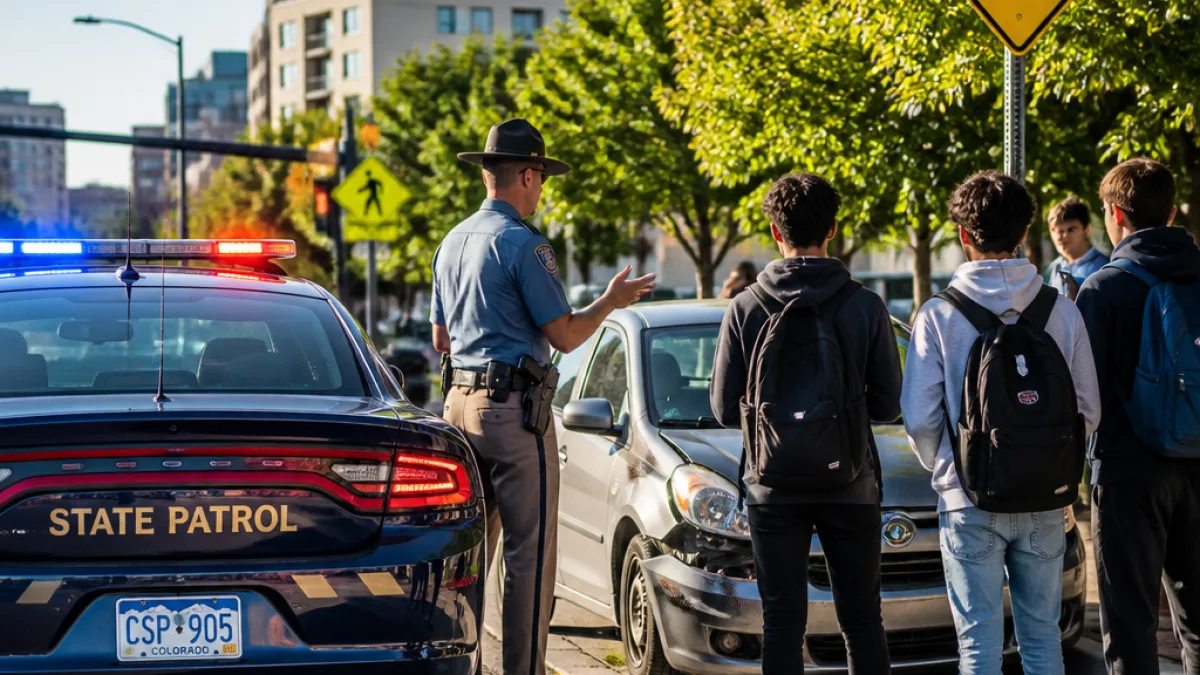
As students across the Denver metro area head back to school, the Colorado State Patrol is urging parents to take an active role in their teens' driving habits, citing data that show young drivers were at fault in a large number of crashes in 2025 and warning that those who cause collisions can be charged as adults.
High numbers, common causes
Troopers reported that in the first eight months of 2025, drivers between the ages of 15 and 19 were at fault in nearly 1,500 crashes. The Patrol identified several recurring behaviors that contributed to those wrecks: inattentive or distracted driving, excessive speeding and following too closely.
| Cause | Approximate number of crashes |
|---|---|
| Inattentive / distracted driving | ~500 |
| Excessive speeding | ~450 |
| Following too closely | ~350 |
State troopers say every crash is preventable and that many of the behaviors behind these numbers are habits parents can spot and correct.
Legal consequences for teen drivers
The Patrol emphasized that teenagers who cause collisions because of unsafe driving could face the same criminal charges as adults. Sgt. Ivan Alvarado of the Colorado State Patrol warned parents that the stakes can be high when dangerous driving leads to injury.
"If your son or daughter drives to school and is on their phone and they strike another student, a pedestrian, or someone on a bike and we can prove that, depending on their age, they could be looking at spending some time in jail," said Sgt. Ivan Alvarado.
The potential to face adult charges depends on the circumstances of a crash and the driver's age, officials said. While consequences vary with each case, troopers stressed that proving distracted or negligent behavior can elevate the severity of charges.
What troopers recommend parents do
To reduce risks, the Colorado State Patrol offered specific steps for parents to take before and after their teens get behind the wheel. The recommendations focus on supervision, habit-setting and reinforcement.
- Ride along on drives to observe behavior and ensure phones remain stowed.
- Make teens memorably aware of posted speed limits and the importance of maintaining safe speeds.
- Require both hands on the steering wheel and constant seat-belt use.
- Avoid forcing a nervous teen to drive; delay independent driving until they are comfortable.
Troopers said parental involvement can be decisive: consistent monitoring and clear rules at the outset of independent driving reduce the chance that bad habits become dangerous patterns.
Local impact and context
The data cover the first eight months of 2025 and reflect crashes across Colorado, with the State Patrol singling out the Denver metro area as students return to in-person schooling. Teen drivers are a persistent focus for traffic safety programs because of higher crash rates per mile driven compared with older age groups.
Schools and community organizations frequently partner with law enforcement on graduated licensing education and distracted-driving campaigns; the Patrol's latest figures underscore the continuing need for those efforts. Parents and guardians who accompany novice drivers can gauge readiness and reduce the impulse to multitask while driving.
Practical steps for families
Beyond the Patrol's direct recommendations, experts often suggest structured practice plans that expose teens to a variety of driving conditions under supervision — daytime and nighttime, wet roads and highway merging — and clear limits on peer passengers until experience is gained. Insurance companies sometimes offer discounts for teens who complete approved defensive-driving courses.
Colorado's message is straightforward: many teen crashes stem from behaviors that can be corrected, and failure to address those habits can carry serious legal consequences. Parents who prioritize training and oversight can reduce both the risk of crashes and the possibility that their child faces adult-level charges after a collision.
— Hannah Sorensen, State Correspondent
















