WASHINGTON — Civil rights advocates, political figures and community members gathered on the National Mall Friday to press for federal protections for voting rights and to sound alarms about recent changes to election rules and redistricting that they say harm Black representation.
Historic setting, urgent message
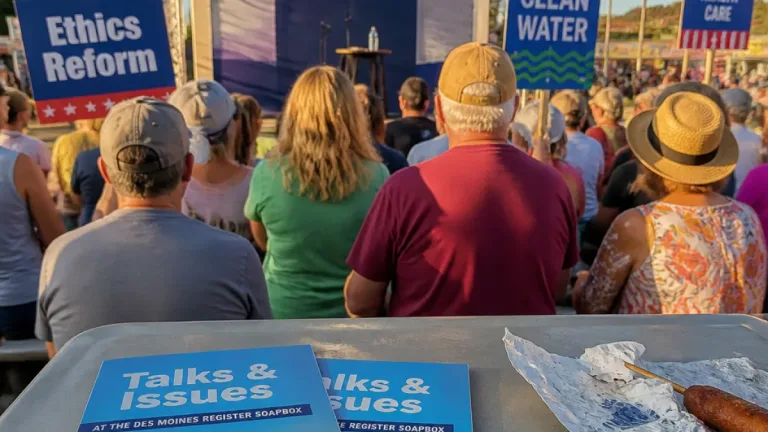
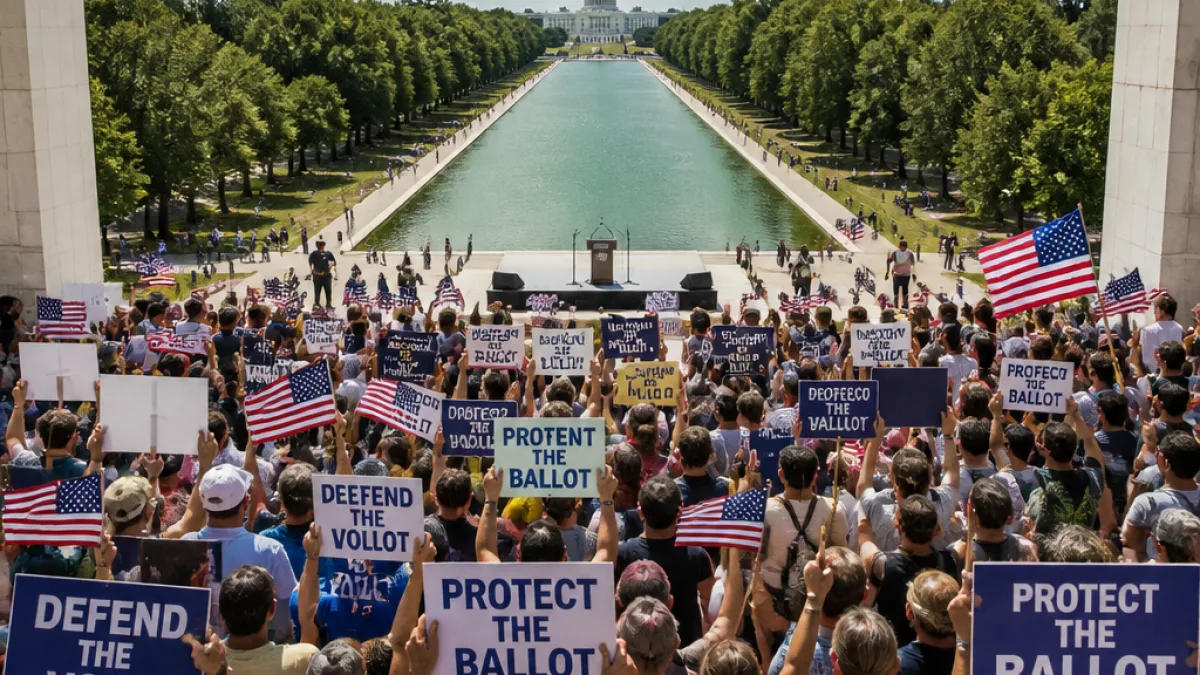
The rally, billed as the 2026 “Defend the Vote” March on Washington, drew hundreds to the steps of the Lincoln Memorial. Organizers said the event was intended to revive the legacy of the 1963 march for jobs and freedom while responding to what they called a crisis for ballot access across the country ahead of the midterm elections.
Leading the event were prominent civil rights figures including the Rev. Al Sharpton and Martin Luther King III, joined by elected officials and activists. Progressive Sen. Bernie Sanders was among the speakers, telling the crowd that the nation faces an unusually perilous moment for democratic ideals.
“We’ve been doing these marches for years, but this is probably the most important because this is the first year we are marching that the voting rights bill has been nullified by the Supreme Court,”
The organizers framed the march as both a commemoration and a mobilization: remembering the civil rights movement’s successes while urging immediate action in response to recent legal and legislative developments.
Reaction to a recent Supreme Court ruling
Speakers and attendees pointed to the U.S. Supreme Court’s April decision in Louisiana v. Callais as a turning point. That ruling, according to advocates, reinterpreted key provisions of the Voting Rights Act of 1965 in ways that allow states to adopt congressional maps that dilute the political power of Black communities.
Organizers and some elected officials say the Madison Avenue of court decisions and state actions — including tighter registration processes, limits on mail-in and early voting, and redistricting — have combined to erode access to the ballot for historically marginalized groups.
Voices on the mall
- Rev. Al Sharpton emphasized urgency and the need for federal legislation to restore protections.
- Martin Luther King III linked the day’s march to his father’s 1963 call for economic and political justice.
- Sen. Bernie Sanders warned that current political moves place the “dream of a more just and equitable society” at risk.
Speakers urged participants not only to protest but to take part in civic processes — from canvassing to voting and monitoring polling places — and to press lawmakers for action.
What organizers want
While the event served as a national show of force, organizers delivered a succinct set of demands: federal legislation to strengthen voting protections, opposition to state-level restrictions that curb early and absentee voting, and accountability for redistricting that leaders say fragments Black communities.
| Goal | Why it matters |
|---|---|
| Restore federal voting protections | Advocates say it prevents discriminatory state practices |
| Oppose restrictive voting laws | Protects access to early and mail-in ballots |
| Fair redistricting | Preserves political representation in Black communities |
Context for voters in D.C. and beyond
Although the District of Columbia is not directly affected by congressional redistricting in the same way as states, the rally’s message resonated locally because it highlights broader national trends that can influence turnout, representation and trust in elections. Organizers said they hoped the demonstration would boost awareness and participation in the midterm cycle.
Local and national leaders at the event urged attendees to convert the energy on the Mall into tangible actions in the weeks ahead: registering voters, volunteering at polls and pressing lawmakers to consider legislation that would reinstate or fortify protections under the Voting Rights Act.
Looking ahead
With the midterm elections approaching, the Defend the Vote march added pressure on Congress and state legislatures to address voting access. Whether the event translates into legislative change or shifts public opinion will depend on lawmakers’ responses and how organized advocacy groups sustain momentum in the coming months.
For now, the National Mall served as a reminder that decades after the civil rights era, questions about who gets to vote and how votes are counted remain central to debates over American democracy.
Imani Washington is a state correspondent at WE NEWS in Washington, D.C.