
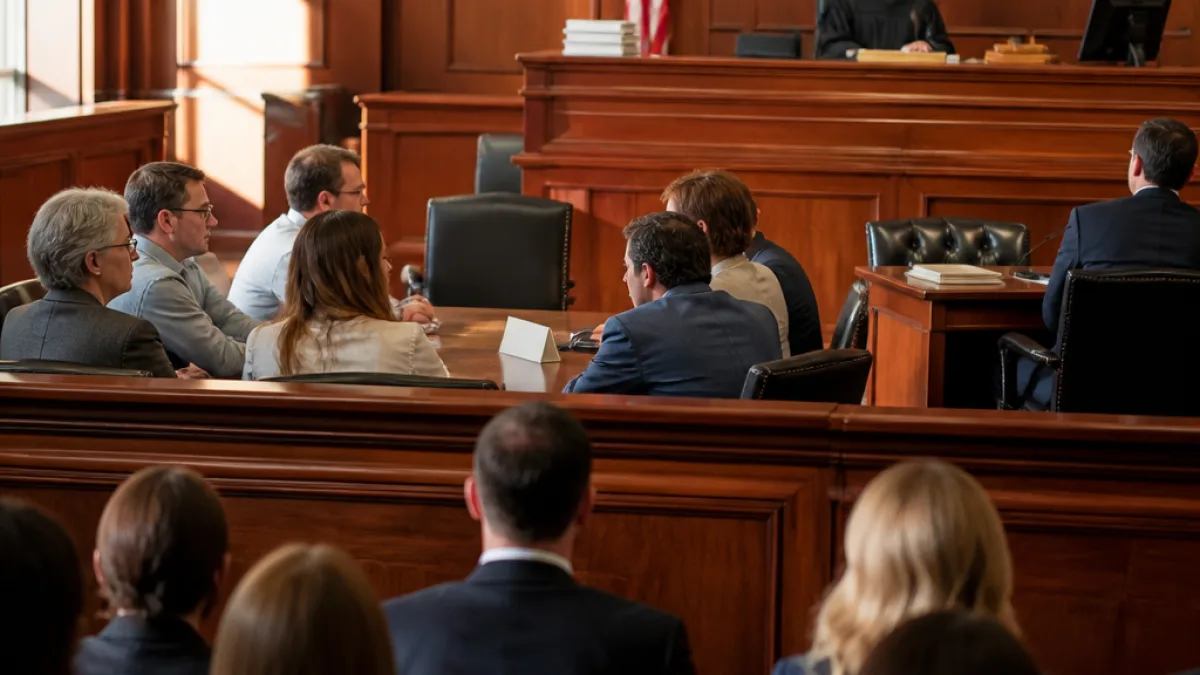
Jurors in the federal bribery trial of Ward 8 D.C. Council member Trayon White told the judge Friday they were unable to reach a unanimous decision after a third day of deliberations, sending the case into an unresolved weekend and renewing uncertainty around the schedule for a verdict.
Judge rejects immediate mistrial, urges continued talks
Shortly after deliberations began Friday, the jury sent a note to U.S. District Judge Rudolph Contreras saying members could not agree. Defense attorney Gary Kohlman responded by asking the court to declare a mistrial, arguing jurors had reached an impasse. Prosecutors opposed the motion and asked that jurors keep discussing the case.
"enough is enough"
Contreras declined to declare a mistrial. He told jurors the process was still in its early stages and encouraged them to continue deliberating, balancing conversation with quiet reflection as they weigh the evidence and instructions the court provided.
Key question about intent drives jurors’ confusion
During the day, jurors sent two written questions to the judge centered on White’s intent when he accepted a bundle of cash from an FBI informant identified in court papers as Allieu Kamara. The money in question totaled $35,000, which prosecutors say was paid in exchange for White pressuring D.C. staff to extend city contracts for violence intervention services.
Defense counsel framed the jury’s questions as asking whether receiving money in exchange for an official act could amount to a violation of official duty if the council member never intended to carry out the act — or, conversely, whether acceptance of money would still be bribery if the recipient had no intention of following through. Judge Contreras responded that the answer to both hypothetical questions was no and referred jurors back to the jury instructions provided at trial.
Charges and the prosecution’s theory
White was arrested in 2024 on a federal charge alleging he accepted the $35,000 payment from Kamara. Prosecutors contend the payment functioned as part of an agreement in which White would exert pressure on D.C. employees to extend otherwise expiring contracts for services addressing community violence. During court proceedings, prosecutors also said White agreed to accept more than $150,000 tied to those contracts.
To return a guilty verdict on the bribery count, jurors must find beyond a reasonable doubt that prosecutors proved White knowingly accepted money as part of a quid pro quo connected to an official act, following the legal standard explained in the jury instructions.
Practical timeline and what remains
Friday marked the third day of jury deliberations. With jurors sent home for the weekend, attorneys and the court will reconvene next week when deliberations resume. The judge has several options depending on whether the panel returns a verdict: accept a unanimous decision, more strongly encourage consensus, or consider a mistrial if the jury remains hopelessly deadlocked.
- Arrest: 2024
- Cash payment at center: $35,000
- Alleged additional amount tied to contracts: more than $150,000
- Deliberation days: 3 (and counting)
| Item | Detail |
|---|---|
| Defendant | Ward 8 Council member Trayon White |
| Key payment | $35,000 from FBI informant Allieu Kamara |
| Additional alleged funds | More than $150,000 tied to contracts |
| Judge | Rudolph Contreras |
Local implications remain significant
The case has drawn intense local attention because it involves a sitting council member who represents a ward with persistent public safety and economic challenges. Beyond the immediate legal consequences for White, the trial has spotlighted relationships between elected officials, community service contracts and the methods federal investigators use in corruption probes.
Council operations and constituent services for Ward 8 remain a focus for residents and city officials alike as the trial progresses. If jurors are unable to reach a verdict after continued deliberation, the possibility of a mistrial would prolong legal uncertainty for the council office and for residents seeking stable representation on city policy and funding matters.
For now, jurors have been told to resume deliberations next week. The court’s next steps will depend on whether the panel can find a unanimous verdict after more discussion, or whether the judge will entertain renewed motions from defense counsel seeking to end the trial without a verdict.
Coverage will continue as the case develops and jurors return to the bench.
















