
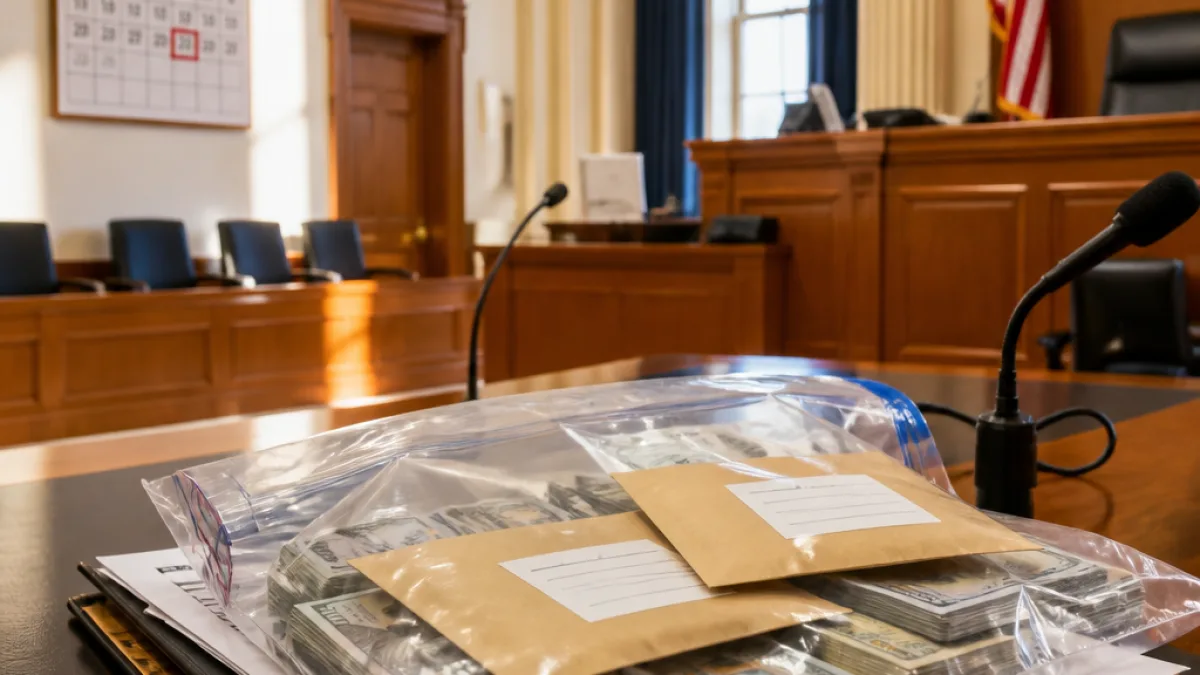
The federal bribery trial of D.C. Councilman Trayon White reached a key milestone Friday when prosecutors and defense attorneys both rested their cases after testimony centered on financial transactions and investigative evidence.
What happened in court
During the trial’s final day of witnesses, the government presented testimony from an Internal Revenue Service agent about the paper trail and banking records the FBI and prosecutors say support their case. Jurors also heard previously introduced video and audio recordings that show what prosecutors say are envelopes of cash exchanged between White and a cooperating witness.
Federal prosecutors allege that White accepted cash payments in exchange for using his influence to help a businessman obtain D.C. government contracts. The defendant has denied the accusations. The prosecution contends White accepted a total of $35,000 from the key cooperating witness, while video evidence includes footage of White placing an envelope containing $15,000 into his suit pocket on June 6, 2024.
Key witness, testimony and scrutiny
The central witness for the government is businessman turned FBI informant Allieu Kamara. Kamara testified for the prosecution earlier in the week and described drafting a proposed cooperation agreement for White that, according to his testimony, could have resulted in payments up to $156,000.
Defense attorneys focused much of their cross-examination on Kamara’s credibility, questioning his memory, prior statements and motivations for cooperating with federal authorities. Kamara previously worked with prosecutors in hopes of obtaining a reduced sentence in his own federal case, a fact the defense highlighted to undermine his testimony.
Charges, potential penalties and defendant’s position
White was arrested in 2024 and faces a federal bribery charge that carries a maximum statutory penalty of up to 15 years in prison. He did not testify in his own defense. Court filings and testimony indicate the government’s case rests heavily on recorded exchanges, the cooperating witness’s account and financial evidence brought in by investigators.
| Date/Item | Detail |
|---|---|
| Arrest | 2024 (federal bribery charge) |
| Alleged cash payments | $35,000 total alleged; $15,000 recorded on June 6, 2024 |
| Potential sentence | Up to 15 years in federal prison |
| Next court action | Jury to return for closing arguments on Tuesday, Sept. 22 |
Next steps in the trial
With both sides having rested, the court has scheduled closing arguments for next week. The jury is set to return to the courtroom on Tuesday, Sept. 22 to hear final statements from prosecutors and defense counsel. After closing arguments and the judge’s instructions, jurors will begin deliberations to determine whether the government has proven the charge beyond a reasonable doubt.
- Closing arguments: scheduled for next week
- Jury return: Tuesday, Sept. 22
- Possible outcomes after deliberation: verdict of guilty or not guilty on the bribery charge
Local implications and oversight
The trial carries implications for local governance and public trust. White represents a ward on the D.C. Council, and the outcome of the case will affect his ability to serve and the council’s composition. Separately, the proceedings highlight the role of federal law enforcement in investigating corruption allegations involving elected officials in the District.
Officials and residents watching the case have emphasized the importance of transparency and due process. The use of a cooperating witness who previously faced federal charges, recorded exchanges of cash and testimony from federal agents underscore the evidentiary mix jurors must weigh as they assess credibility and intent.
I will continue to cover developments in this case as closing arguments approach and jurors prepare to deliberate. Court documents and testimony remain the primary sources for this report; no verdict has been reached and the defense has reiterated the defendant’s denial of the allegations.
















