
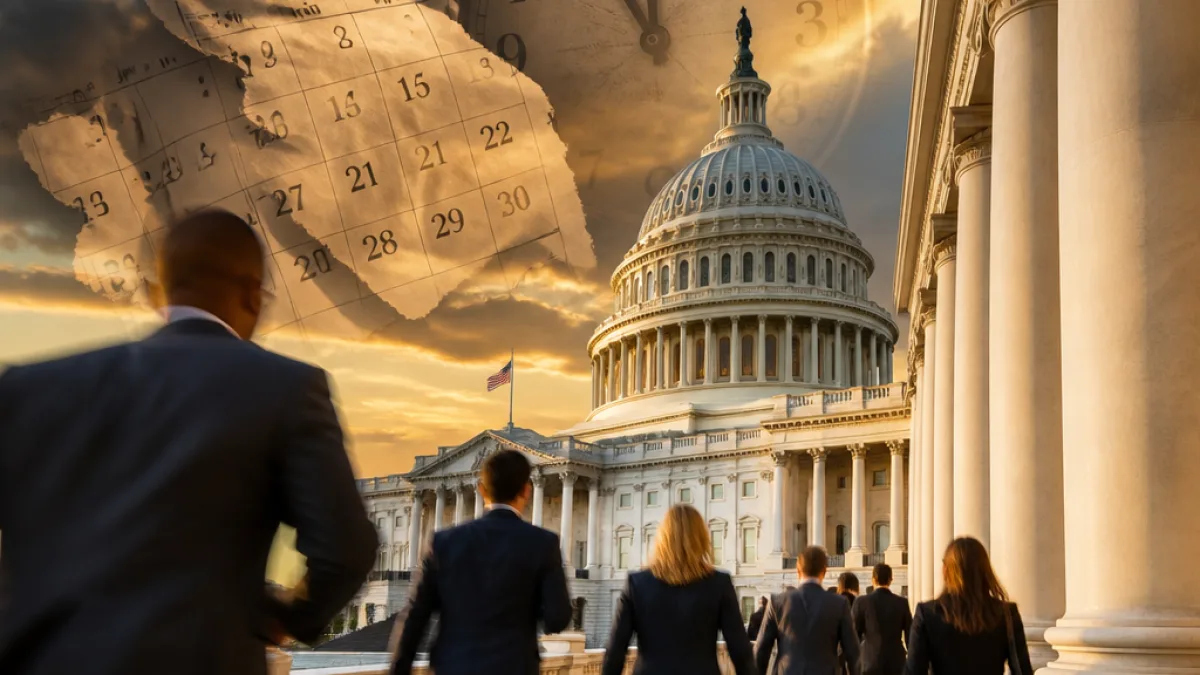
WASHINGTON — Members of Congress have reconvened in Washington for a sharply condensed series of work weeks that will determine whether several high-profile measures advance before the November midterm campaign period begins.
Compressed calendar leaves narrow window for action
House leaders curtailed the chamber’s September schedule, scrapping the final two weeks of planned activity and leaving the House with roughly a one-week window to consider legislation before members return to their districts. The Senate, by contrast, is set to remain in session for about three weeks, though there is uncertainty whether Republican leadership will keep members in Washington for the full stretch.
Lawmakers enter the session with one major deadline already met: Congress earlier approved funding measures that keep the federal government operating through mid-December. That temporary solution reduces pressure to resolve an immediate shutdown fight and allows attention to shift toward specific policy priorities.
Major bills on a tight timeline
Among the items drawing the most attention during this brief period are two contentious measures expected to see procedural and possibly decisive floor action:
- The Clarity Act — a cryptocurrency market-structure bill designed to divide regulatory oversight between the Securities and Exchange Commission and the Commodity Futures Trading Commission — faces a critical Senate cloture vote on Sept. 15.
- The Protect College Sports Act — a bipartisan package seeking to create national standards for college athletics, with provisions affecting Name, Image and Likeness (NIL) deals and athlete transfer rules.
Senate leaders are expected to take up both measures in short order, but each faces procedural and political hurdles that could derail floor consideration or final passage.
“The timeline is tight and the politics are complicated,” a congressional aide familiar with the schedule said, speaking on condition of anonymity. “Even when leadership sets a path, individual votes can shift the outcome quickly.”
Clarity Act: revisions, resistance and a high bar in the Senate
Sponsors of the Clarity Act revised the bill in recent days to respond to Democratic concerns. The updated language adds several notable features, including expanded enforcement authority for state attorneys general, new Treasury powers aimed at limiting runs on stablecoin deposits, and a proposed ethics framework intended to address conflicts of interest.
Despite those changes, the measure still faces a steep climb. The Senate must clear a procedural hurdle that requires 60 votes to advance to an on-the-floor debate and final consideration. According to leaders and lawmakers tracking the bill, a number of Senate Democrats remain unconvinced the enforcement structure — which places a central role for the Department of Justice in some areas — is sufficient to prevent potential conflicts tied to high-profile private crypto ventures.
Protect College Sports Act centers on NIL, transfers and media rights
The Protect College Sports Act would create a uniform federal approach to college athletics, aiming to alleviate a patchwork of state laws and court rulings that have reshaped the landscape for student-athletes. Key provisions include:
- Standardizing NIL rules across states;
- Establishing limits on athlete revenue sharing;
- Allowing one penalty-free transfer for athletes;
- Granting a limited antitrust exemption for schools and conferences with respect to media rights.
Proponents argue the bill would bring predictability to schools, conferences and athletes. Opponents warn the legislation could entrench power among major conferences or raise questions about competitive balance and athlete compensation.
Local impact and what to watch this week
For Washington residents, the compressed schedule means much of the nation’s lawmaking focus will be concentrated in the district over the coming days. Constituents with interests in financial regulation, higher education policy or campaign season developments should monitor votes and public statements from their senators and representatives.
| Item | Planned action |
|---|---|
| Clarity Act | Senate cloture vote — Sept. 15 |
| Protect College Sports Act | Motion to proceed and potential floor votes |
As the session unfolds, political dynamics both inside Washington and on the campaign trail will shape whether these measures advance. The compressed calendar leaves little margin for maneuver, and a handful of swing votes in the Senate could determine outcomes that will affect markets, college athletics and federal regulatory authority for years to come.

















