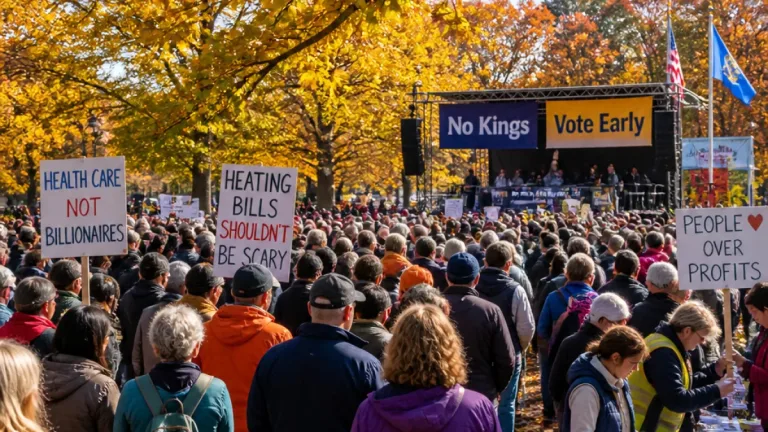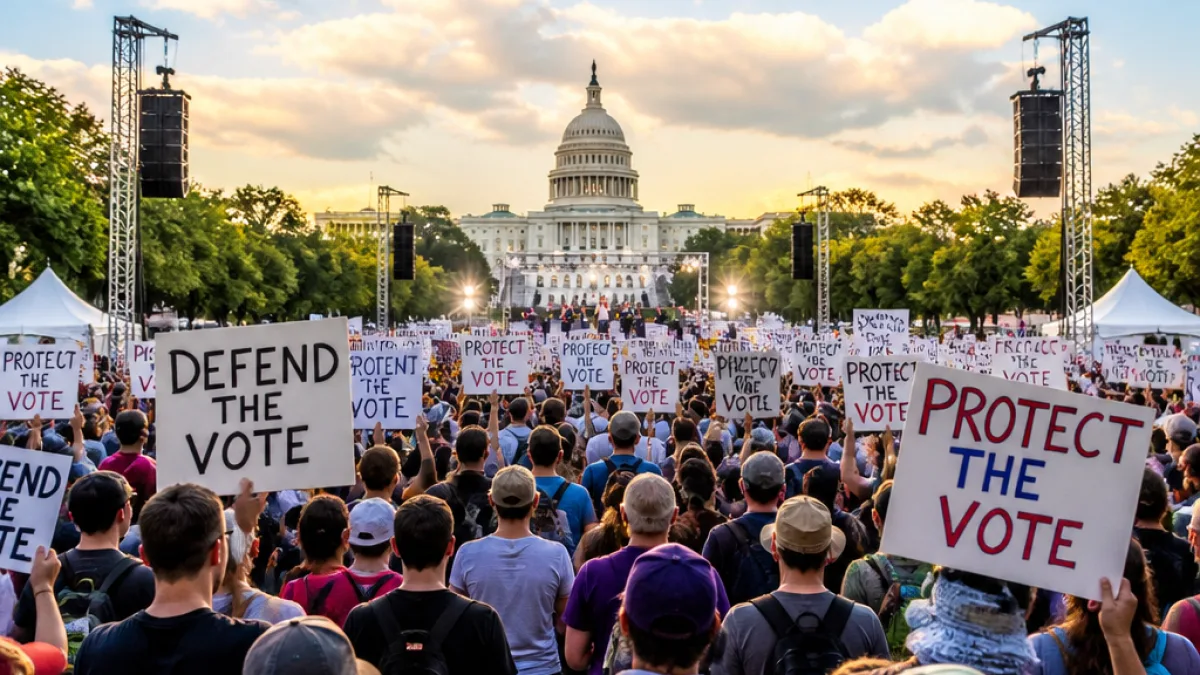
WASHINGTON — Thousands of demonstrators gathered on the National Mall Friday in a high-profile push for voting rights and racial justice as activists and elected officials warned that recent legal shifts have weakened protections for Black voters ahead of the midterm elections.
Organizers frame event as a critical moment
The rally, billed as the 2026 “Defend the Vote” March on Washington, was organized by the Rev. Al Sharpton’s National Action Network alongside the Drum Major Institute, led by Martin Luther King III. Speakers and attendees drew parallels to the 1963 March on Washington and said the movement faces a fresh set of challenges following a recent U.S. Supreme Court decision.
The April ruling in Louisiana v. Callais — which reinterpreted parts of the Voting Rights Act of 1965 — has allowed some Southern states to redraw congressional maps in ways critics say reduce equitable representation for Black communities. Organizers said the decision makes this year’s demonstration especially urgent.
“We’ve been doing these marches for years, but this is probably the most important because this is the first year we are marching that the voting rights bill has been nullified by the Supreme Court,”
— Rev. Al Sharpton, National Action Network
Speakers, slogans and demands
The event featured a broad slate of speakers from across the progressive and civil rights spectrum, including Sen. Bernie Sanders, I-Vt., Virginia Gov. Abigail Spanberger and Rep. Alexandria Ocasio-Cortez, D-N.Y. Organizers laid out demands aimed at federal and state lawmakers to strengthen ballot access and counteract what they called an erosion of voting protections.
- Call for new federal legislation to shore up voting rights.
- Opposition to redistricting moves the groups say dilute Black voting power.
- Increased public awareness and mobilization ahead of the midterms.
Martin Luther King III, speaking about the legacy of his father, said recent developments leave civil rights advocates with pressing work to do. He suggested that had Dr. King lived, the current situation might have taken a different path.
“Had he lived, we’d be on a totally different trajectory,”
— Martin Luther King III
Historical context and local implications
Organizers and attendees intentionally evoked the historic 1963 rally at the Lincoln Memorial, which helped catalyze the civil rights movement. That comparison underscored both the symbolic importance of the Mall as a protest site and the organizers’ intention to connect past victories to present-day policy fights.
Locally, the demonstration brought thousands into the heart of Washington, temporarily closing portions of the Mall and drawing a major law enforcement presence to manage crowds and traffic. For city residents and visitors, the event was a reminder that national-level legal decisions can translate quickly into on-the-ground political mobilization in the capital.
Who spoke and what they asked for
Speakers at the march laid out a mix of policy prescriptions, electoral strategy and calls for civic engagement. While details about specific legislative proposals were discussed, organizers emphasized the importance of broad public pressure to prompt action in Congress and state legislatures.
| Notable Speakers | Affiliation |
|---|---|
| Al Sharpton | National Action Network |
| Martin Luther King III | Drum Major Institute |
| Bernie Sanders | U.S. Senator, Vermont |
| Abigail Spanberger | Governor of Virginia |
| Alexandria Ocasio-Cortez | U.S. Representative, New York |
Next steps and what to watch
Organizers indicated the march is part of a sustained effort that will include continued demonstrations, petitions and lobbying efforts aimed at preserving what they see as fundamental voting protections. With the midterm elections approaching, activists plan to translate public pressure into voter registration drives and local organizing in key states affected by redistricting.
For Washington residents and policymakers, the demonstration reiterated that the nation’s capital remains a focal point for national debates on voting rights and civil liberties. How Congress, the courts and state officials respond in the coming months will shape the legal and political landscape heading into the next federal elections.
Reporting from the Mall for WE NEWS. Coverage will continue as organizers outline follow-up plans and lawmakers respond to the demands laid out at Friday’s event.