California lawmakers moved this month to sharpen the state's definition of electric bicycles and curtail the sale and use of higher-powered two-wheelers that critics say masquerade as bikes but behave like mopeds or motorcycles.
What the bill would do
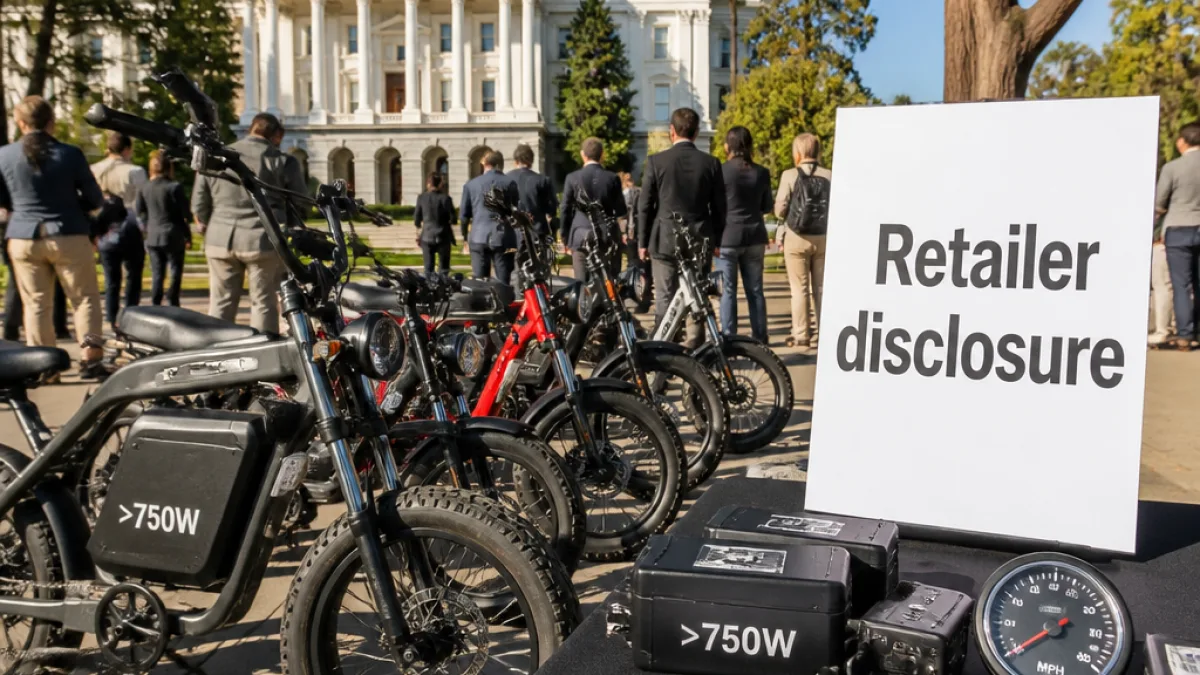
Senate Bill 1167, authored by State Sen. Catherine Blakespear, would require retailers to disclose when a vehicle exceeds statutory e-bike limits and would mandate registration and operating licenses for those higher-powered vehicles. The measure now awaits Gov. Gavin Newsom’s signature.
Under current California law, an e-bike is defined by two technical limits: a maximum of 750 watts of power and speed limits of 20 mph on throttle alone or 28 mph when pedal-assisted. S.B. 1167 would make clear that vehicles surpassing those thresholds cannot be marketed or labeled as e-bikes.
"It's a consumer protection bill. It's aimed at bikes not being labeled as e-bikes when they're actually motorcycles. You know, they're e-motos. They go too fast. They're being ridden by people who don't have not been through driver training, who are too young, and they're creating hazards for themselves and people, other people on the roads, and so the bill is really comprehensively looking at that," Blakespear said.
Blakespear told reporters the bill is intended to help parents and consumers understand what they are buying and ensure that vehicles that behave like motor vehicles are treated accordingly under the law.
Safety, consumer protection and enforcement
S.B. 1167 seeks to address a growing safety concern: a market of fast, heavy electric two-wheelers that some riders — including young people — operate without training or licensing. The bill would require clear disclosures by sellers and would impose registration and licensing requirements for machines that exceed the statutory e-bike parameters.
Blakespear said the legislation also includes various safety requirements tailored to those higher-powered vehicles, though specifics of implementation would depend on subsequent regulatory actions and law enforcement practices.
- Disclosure: Retailers must inform buyers when a vehicle exceeds e-bike limits.
- Registration and licensing: Required for vehicles that exceed the 750-watt or speed thresholds.
- Classification clarity: Vehicles that surpass the limits cannot be marketed as e-bikes.
Where this fits in broader policy
The measure follows a separate action by the governor: Gov. Newsom recently signed Assembly Bill 1569, which directs the state to develop a standardized e-bike safety and training program for students in grades seven through 12. That move reflects growing attention from Sacramento on e-bike safety, especially for younger riders navigating streets and bikeways alongside cars and pedestrians.
Supporters of tighter rules say the changes are necessary because many so-called "e-motos" exceed the capabilities of traditional e-bikes and pose added risks on mixed-use corridors. Opponents — including some retailers and riders of high-performance electric bikes — have argued that heavier regulation could limit innovation and complicate the market for legitimate, higher-performance vehicles used responsibly.
Key technical limits compared
| Category | Existing statutory limit |
|---|---|
| Motor power | 750 watts |
| Throttle-only speed | 20 mph |
| Pedal-assist speed | 28 mph |
Law enforcement agencies have faced challenges distinguishing among the diverse vehicles now sold as e-bikes. The bill's disclosure and registration provisions aim to give police and regulators clearer tools to manage those distinctions.
As S.B. 1167 moves toward the governor’s desk, local governments, retailers and advocacy groups are expected to weigh in during the implementation phase to shape the rulemaking and enforcement details. Anyone interested in the bill’s specifics or potential effects on local bike and transportation policies will likely watch the governor’s decision closely.
If signed, the law could reshape how California classifies and markets electric two-wheelers and could prompt parallel changes in municipal rules for bike lanes, curbside parking and youth safety programs.