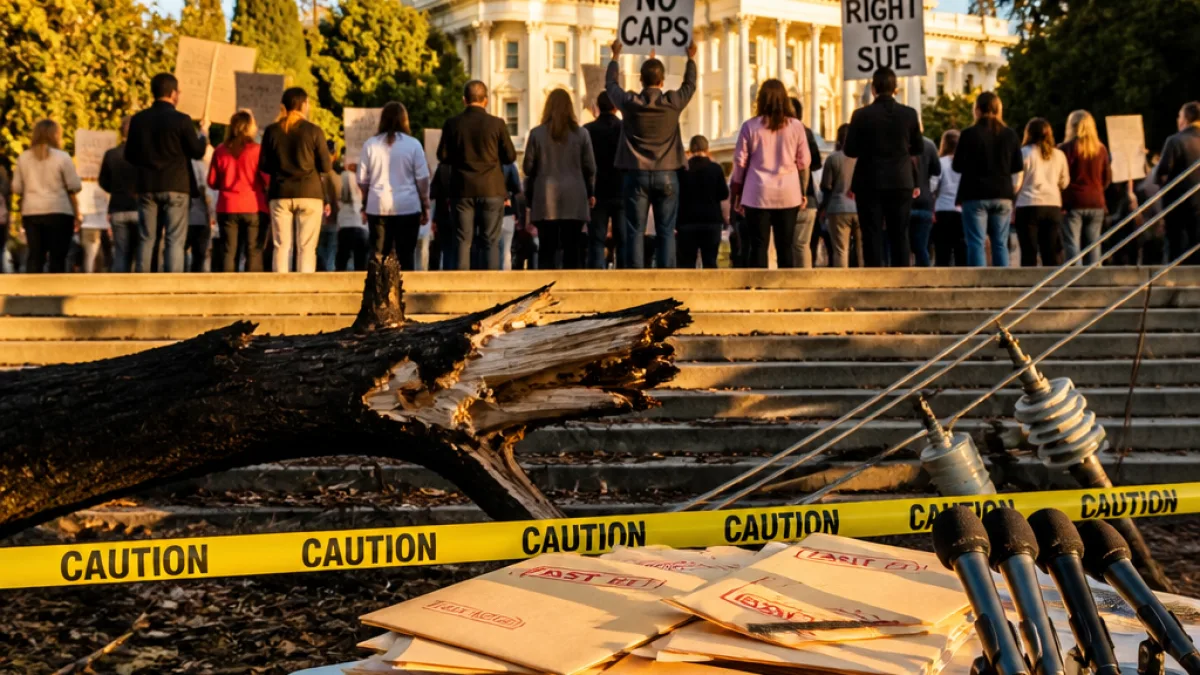
SACRAMENTO — California lawmakers on Sunday moved to protect wildfire survivors' rights to recover damages from utilities, rejecting language that would have capped payouts and shielding local governments and businesses from limits on claims tied to fires started by utility equipment.
Legislature preserves avenues for recovery
The compromise, carried in revisions to Senate Bill 492, removes proposed limits on how much money people and entities can recover from investor-owned utilities blamed for igniting fires. Instead of a bailout-style cap, the measure creates a so-called Fast Pay program intended to expedite compensation to survivors while retaining the ability to pursue full legal remedies.
Lawmakers amended the bill after hearing testimony from wildfire survivors and advocacy groups who argued that limiting damages would deny victims meaningful accountability. The state’s three investor-owned utilities — including Southern California Edison, whose equipment has been blamed for the Eaton Fire — were central to debate over the bill.
“It’s important that we hold these companies accountable so all our fellow Californians can be safer,”
said Joy Chen, executive director of Every Fire Survivor’s Network, reacting to the Legislature’s action.
What the final bill does — and doesn’t — do
The final language of SB 492, as amended, emphasizes quicker compensation for survivors without foreclosing lawsuits. Consumer Watchdog, which criticized earlier provisions, described the revised approach as preserving the “fundamental rights to hold utilities accountable.”
Consumer Watchdog also noted that the amended bill allows survivors to proceed with discovery — the evidence-gathering process in civil litigation — which it said is essential for determining how fires started and for public accountability.
| Feature | Final bill (SB 492) |
|---|---|
| Caps on damages | Not included — no limits on survivor recoveries |
| Right to sue | Retained — survivors may file lawsuits and pursue discovery |
| Fast Pay program | Established — intended to speed compensation |
Reaction from advocates and the governor
Advocates for survivors applauded the outcome. Consumer Watchdog described the earlier proposal as a “gut-and-amend” effort that would have contained harmful provisions, and praised the revisions for preserving essential legal tools for survivors, regulators and courts.
Governor Gavin Newsom said the compromise represents “real progress,” but he also urged the Legislature to continue work to stabilize electric rates and ensure the long-term durability of the state’s Wildfire Fund — an insurance backstop intended to limit utilities’ exposure to catastrophic losses from wildfire liabilities.
Stakeholders and stakes
The debate reflects an ongoing tension in California wildfire policy: balancing the financial stability of large utilities and the broader energy system against full accountability and compensation for victims. Investor-owned utilities contend that uncapped liabilities can threaten solvency and drive rate increases; survivors, municipalities and businesses argue that limits on damages would deny justice and weaken incentives to improve safety.
- Survivors sought to preserve full legal recourse and evidence-gathering through lawsuits.
- Consumer advocates praised the amendment for maintaining accountability tools.
- Governor called for further work on rate stability and the Wildfire Fund.
Lawmakers amended SB 492 to respond to those concerns, aiming to accelerate payments without preventing survivors and jurisdictions from pursuing full claims in court.
Next steps
SB 492’s revised language will continue through the legislative process. Supporters say the Fast Pay program will help survivors receive compensation more quickly, but the bill’s passage will not foreclose further debate over how to reconcile utility financial stability with accountability for catastrophic blazes.
As California heads into another fire season, the outcome of this legislation will be closely watched by survivors, local governments, utilities and ratepayers across the state.
— Kevin Nakamura, State Correspondent