
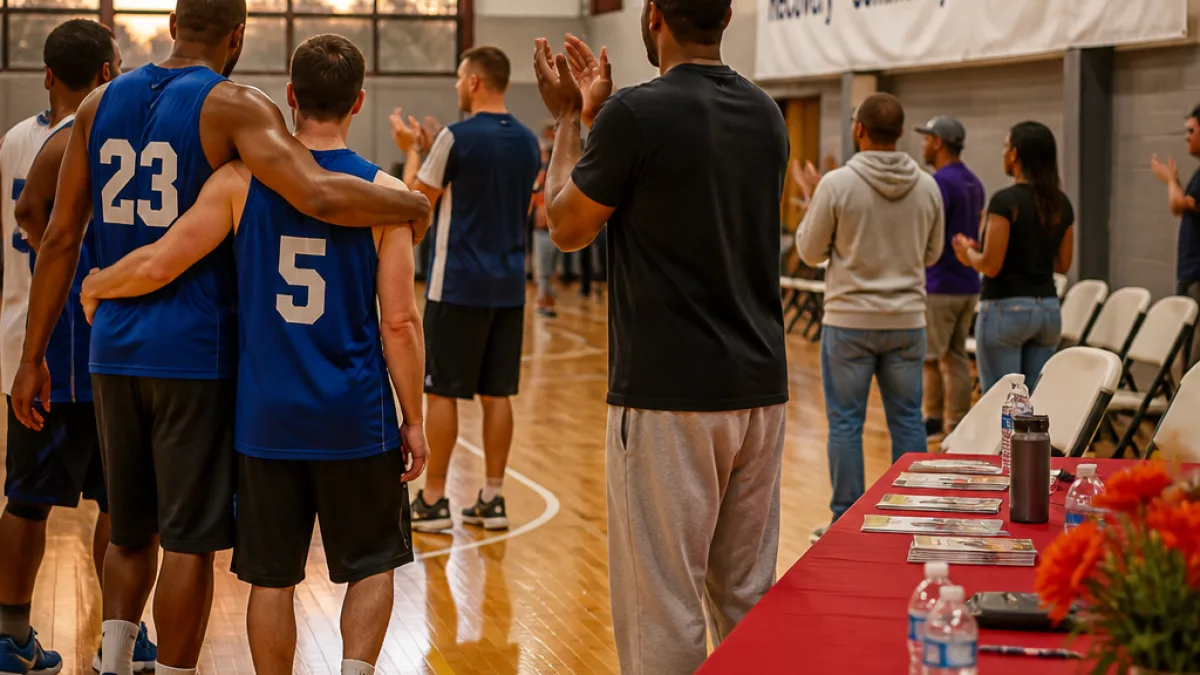
Community event spotlights sobriety, second chances
BEAUMONT — A local recovery movement brought neighbors together Saturday evening at the SPAC Activity Center on Gulf Street, using basketball as a platform to celebrate sobriety, encourage reflection and reinforce a message of community backing for those working to rebuild their lives.
Organizers hosted the gathering from 4 to 7 p.m., framing the event as both a celebration and a reminder that recovery often requires ongoing social support. The program emphasized second chances and the role of friends, family and community in sustaining long-term recovery.
Organizers emphasize shared responsibility and hope
The event’s founder, Charketha Coseley, described the movement behind the gathering as driven by what she called "purpose, passion and the belief that anyone can rebuild their life with support and action." She urged attendees to keep showing up for one another and to avoid giving up on people who are struggling.
“Many times in life, you know, people give up on their loved ones. Sometimes we give up on ourselves. Today is all about showing up for your people,” Coseley said.
Coseley also encouraged participants to consider their personal reasons for pursuing recovery. She said asking "What is your why? Why did you choose recovery?" can be an important exercise, noting that for her the turning point was a spiritual experience.
Event details and intended outcomes
| Item | Details |
|---|---|
| Date | Saturday (event reported Sept. 13, 2026) |
| Time | 4 to 7 p.m. |
| Location | SPAC Activity Center, Gulf Street, Beaumont |
Organizers said the purpose of the gathering was straightforward: to use a shared recreational activity to highlight the possibility of recovery and the importance of not defining a person by past mistakes. The event combined sport with discussion and encouragement to create an accessible environment for people at different stages of recovery.
How the community can support recovery efforts
Local recovery initiatives often rely on civic engagement and informal networks. During the gathering, organizers suggested several practical ways residents and local institutions can back individuals in recovery:
- Attend community events that normalize recovery and provide positive social interaction.
- Offer mentorship or volunteer time with recovery programs and peer-support groups.
- Encourage local businesses and faith groups to provide resources and low-barrier access to activities that foster connection.
Speakers at the event framed these actions as part of a broader effort to reduce isolation and stigma, conditions that can hinder long-term recovery. The use of recreational activities — here, basketball — was presented as a way to reconnect people to healthy routines and to one another without the pressure of formal clinical settings.
Local impact and next steps
While this weekend’s gathering was framed as a celebration, organizers said it also served as outreach: to remind people in early recovery that they are not alone and to invite family members and friends to participate in supportive activities. By centering the event around a widely accessible sport, the movement aimed to reach people who might otherwise be reluctant to attend traditional recovery meetings.
Organizers did not detail future events in the reporting but emphasized ongoing community involvement and the simple principle behind their efforts: recovery is a process strengthened by connection. For Beaumont residents looking to support those in recovery, the gathering underscored that showing up — whether at a court, a meeting or a neighborhood event — can be a meaningful, tangible form of help.

















