
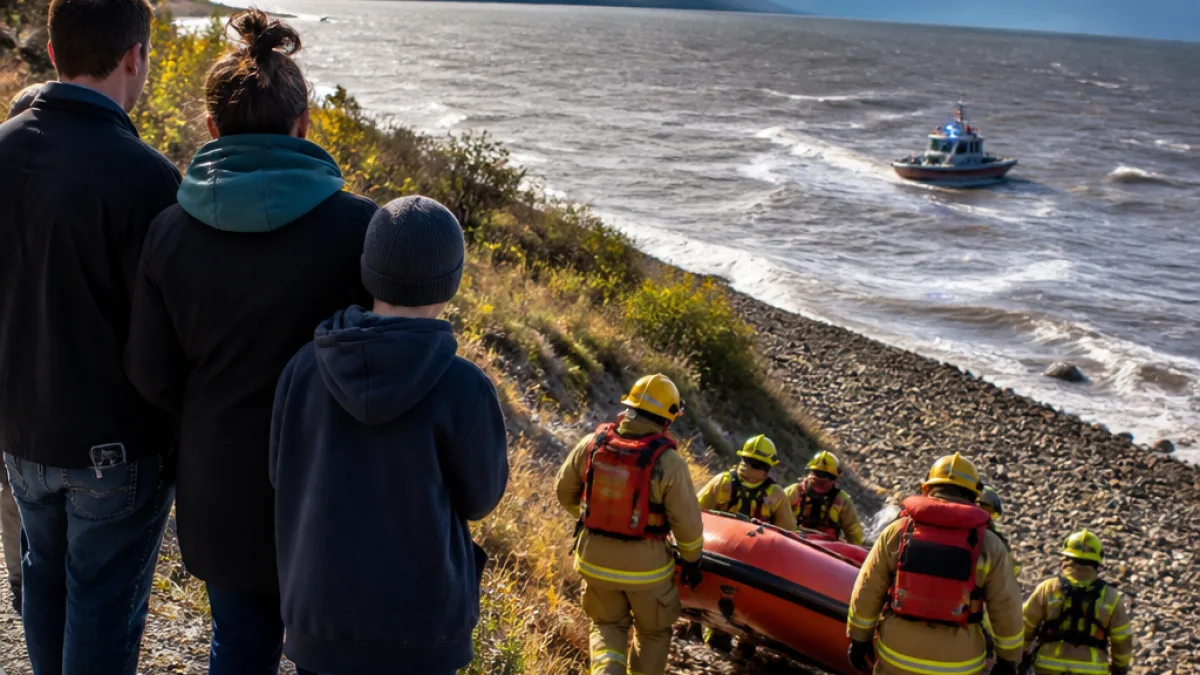
Family questions response time and access after Turnagain Arm bore tide death
Anchorage residents and emergency responders are grappling with the loss of 25-year-old paddleboarder Joshua Novakovich, whose body was recovered June 21 after he disappeared while surfing the bore tide in Turnagain Arm two days earlier. The incident has reignited local concerns about shoreline rescue capabilities, particularly for volunteer crews operating near Girdwood.
State troopers recovered Novakovich’s body after search efforts that, according to his father, involved onlookers and local volunteers constrained by terrain and sea conditions. The area near milepost 92 of the Seward Highway — a stretch known for dramatic tides and strong currents — presents unique hazards to recreational users and to those attempting rescues from shore.
“The final thing Josh said to me was — it was he was just struggling,”
The comment above was shared by the victim’s father, who described the last phone call with his son as the tide overtook him. He recalled advising his son to keep paddling and stay warm. Family members and friends said they witnessed desperate attempts to reach Novakovich from the bank as waves and distance thwarted rescue efforts.
Community concern: access and equipment
Residents of Girdwood and surfers who frequent Turnagain Arm say the area has become a mecca for adventure-seekers and recreationalists, but they argue that lifesaving resources have not kept pace with increased use. During the response, volunteer firefighters reportedly carried a rescue boat down 30 to 40 feet of rocks to launch into difficult conditions — a task that illustrates the logistical barriers to rapid deployment along that coastline.
That reality — volunteers hauling boats across hazardous terrain while trying to reach victims in fast-moving water — has prompted public outcry and renewed calls for permanent emergency boat access for Girdwood-based crews. Local advocates say improved access could cut response times and expand options for safe, effective rescues in high-risk tidal zones.
- Victim: Joshua Novakovich, 25, Anchorage resident
- Incident: Disappeared while paddleboarding/surfing the bore tide in Turnagain Arm
- Recovery: Body recovered by Alaska State Troopers on June 21
| Event | Date | Location |
|---|---|---|
| Disappearance | June 19 | Turnagain Arm, near Seward Highway milepost 92 |
| Body recovered | June 21 | By Alaska State Troopers |
Family and neighbors seek answers, improved coordination
Novakovich’s father has expressed the painful calculations that accompany sudden loss, describing the barrage of what-ifs that follow: whether different choices or faster assistance might have averted the outcome. He declined to assign blame to any single person or agency, but said that no one stepped forward as a definitive rescuer that day.
Local residents say the growing popularity of Turnagain Arm for surfing, paddleboarding and other recreation means public safety planners should reassess resource placement, access routes and interagency coordination. Girdwood relies heavily on volunteer firefighting crews, who often face difficult terrain and limited infrastructure when responding to shoreline emergencies.
Officials with the Alaska State Troopers confirmed recovery of the body but have not publicly detailed operational timelines or specific constraints faced during the response. The incident, however, has already prompted residents and community leaders to renew calls for clearer emergency access, additional equipment staging and improved communications among state, municipal and volunteer organizations.
For Anchorage and nearby communities along the Seward Highway, the Novakovich case underscores an enduring tension: Alaska’s rugged coastline and powerful tides offer unique recreational experiences, but they demand tailored rescue capacity and thoughtful planning to reduce risk. As summer brings more visitors and outdoor activity to Turnagain Arm, residents say the time is now to address known vulnerabilities rather than wait for further tragedy.
Authorities continue to investigate the circumstances surrounding the incident. Community meetings and conversations about possible infrastructure or policy changes have been suggested by local advocates and could follow in the weeks ahead.
















