
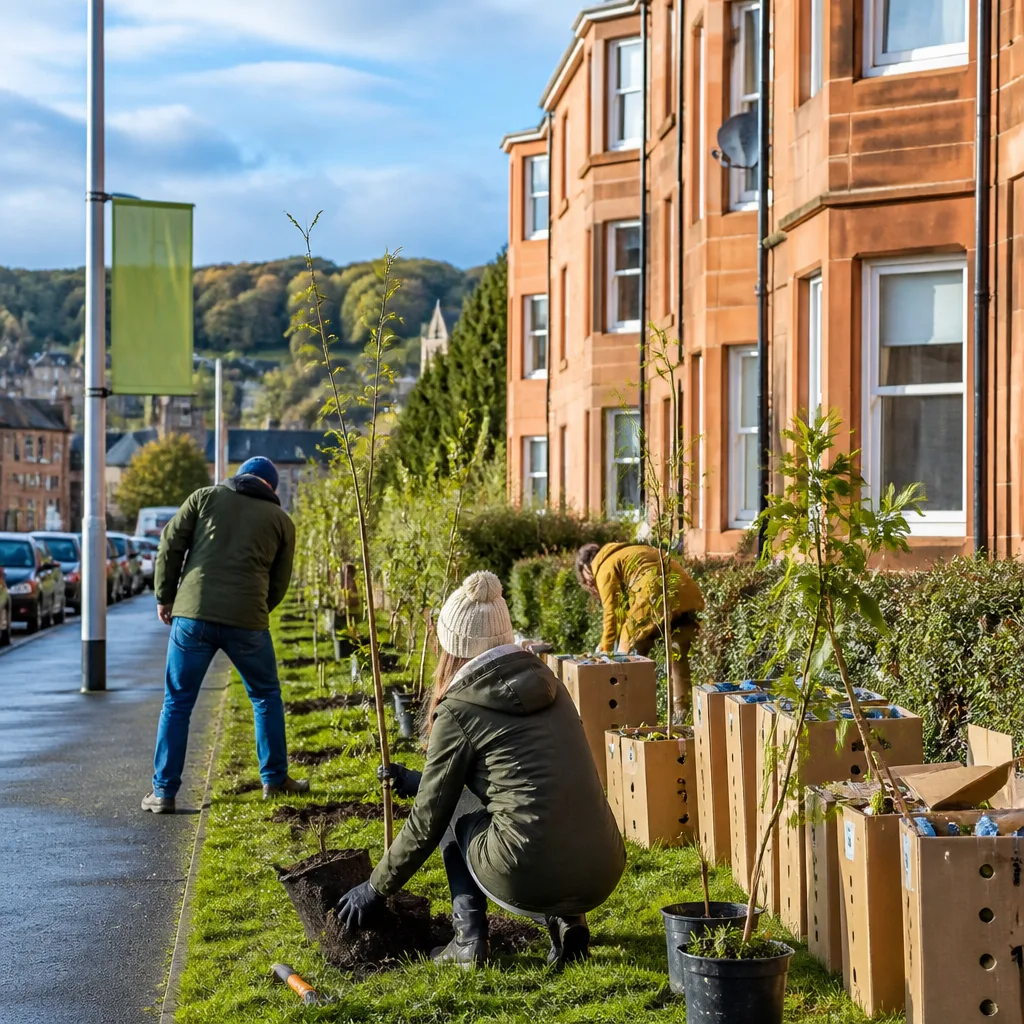
Woodland Trust Scotland has announced plans to prioritise tree planting in parts of Fife identified as most likely to deliver health and wellbeing benefits, urging community groups and schools to apply for free tree packs ahead of November delivery.
Targeting neighbourhoods with greatest need
The trust has singled out areas of Kirkcaldy, Leven, Methil, Buckhaven, Kennoway, Cowdenbeath, Lochgelly and Dunfermline as priority locations for planting. It used the Tree Equity Score UK, a map-based tool that combines data on tree canopy cover, health, deprivation, urban heat and air quality, to identify urban neighbourhoods with the greatest deficit of trees.
Anna Perks, Scotland’s tree equity lead at the trust, said the organisation aims to focus urban planting where it can "make the most difference". She emphasised the multiple benefits trees provide, from air quality improvements to mental health and shading city streets.
"If we are to plant urban trees, we want to plant them where they will make the most difference. Let’s put more trees where people need them most."
Why tree equity matters for health
The trust says neighbourhoods with better health outcomes have around 40% more tree canopy cover than the least healthy neighbourhoods. It also reports that only 12% of Scots living in urban areas have what it considers adequate tree provision, while the national average urban canopy cover is 18.8%. Nearly one third of areas fall below 10% canopy cover, the trust adds.
The Woodland Trust frames these disparities as a matter of equity: tree equity means all communities should have fair access to the benefits of trees and woods close to where people live and work. The organisation distributes free tree packs to schools and community groups twice a year and is asking for as many applications as possible from the identified Fife towns, which will be prioritised.
Implications and limitations
The trust links higher canopy cover with improved mental and physical health, lower exposure to urban heat and better air quality. While there is a growing body of research that finds associations between green infrastructure and health outcomes, causation can be complex. Factors such as socioeconomic status, housing quality and access to health services also influence health outcomes and can correlate with tree cover. The trust's approach — combining canopy data with measures of deprivation and local air quality — seeks to identify where planting is most likely to address multiple local needs.
Plans to expand urban tree cover require practical considerations including available planting space, long-term maintenance, community support and the suitability of species for urban environments. The trust's model of offering tree packs to local groups is intended to build grassroots involvement, but successful tree equity programmes often need ongoing funding and local authority cooperation to secure planting locations and long-term care.
How communities can get involved
Woodland Trust Scotland is currently taking applications for tree packs to be delivered in November. The trust asks community groups and schools in the priority Fife towns to apply; it will prioritise applications from those places.
- Priority towns: Kirkcaldy, Leven, Methil, Buckhaven, Kennoway, Cowdenbeath, Lochgelly and Dunfermline.
- Delivery window: tree packs available for November delivery.
- How to apply: via Woodland Trust Scotland’s tree pack scheme (applications open now).
The trust’s use of the Tree Equity Score UK reflects a wider shift among charities and local authorities to use spatial data to target environmental interventions that have health co-benefits. For policymakers, the challenge will be scaling such local efforts while ensuring long-term stewardship and integrating planting with broader urban planning and public-health strategies.
| Indicator | Reported figure |
|---|---|
| Average urban canopy cover in Scotland | 18.8% |
| Percentage of urban Scots with sufficient trees | 12% |
| Areas below 10% canopy cover | Nearly one third |
Local tree planting can form a component of public-health efforts to improve wellbeing and mitigate urban heat and pollution, but it is not a standalone solution. Targeted planting driven by data, backed by long-term maintenance plans and community engagement, will determine whether initiatives such as the Woodland Trust’s Fife programme translate into measurable health gains.














