
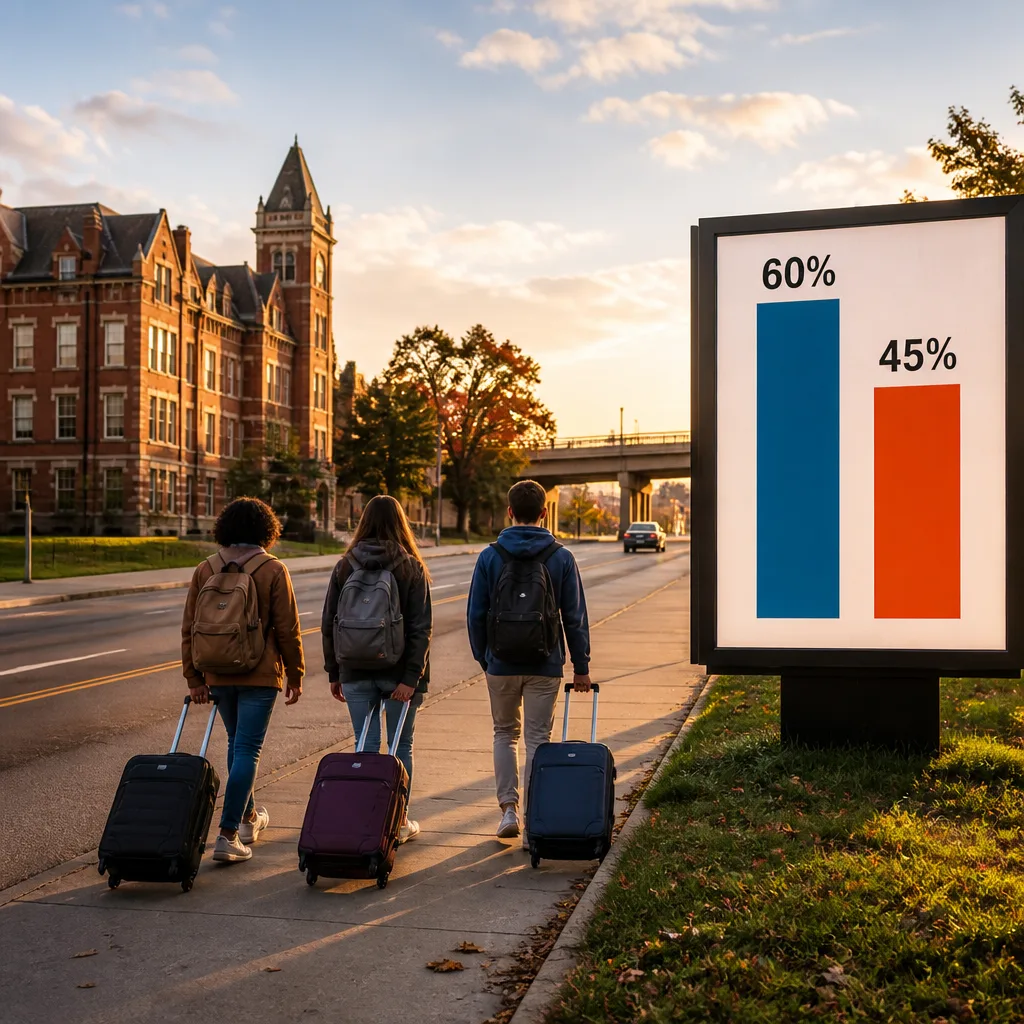
A new analysis of US Census data finds that Wisconsin loses more college‑educated workers than it gains, leaving the state with the second largest net outflow of young, degree‑qualified people in the United States. The finding raises immediate questions about the ability of employers and communities across the state to fill roles that increasingly require higher education.
Data point: who is leaving and who is arriving
Researchers at the Wisconsin Policy Forum compared the educational attainment of people in their 30s who were born in Wisconsin but now live elsewhere with those who moved into the state. They report that roughly 60% of Wisconsin‑born residents living in another state hold a bachelor’s degree or higher, while about 45% of people who relocated to Wisconsin from outside have the same level of qualification.
| Group | % with bachelor’s or higher |
|---|---|
| Wisconsin‑born residents living out of state | 60% |
| People who moved into Wisconsin | 45% |
Economic consequences and employer concern
Authors of the report warn that the gap matters for the state’s workforce because growth sectors are increasingly concentrated in occupations that usually require a college degree. The Policy Forum’s research team points to previous work showing that many of the job openings in Wisconsin expected by 2030 that pay at least $50,000 a year are in roles typically requiring a bachelor’s or advanced degree.
“It’s a pretty big gap,” said Joe Peterangelo, research director at the Wisconsin Policy Forum and one of the report’s co‑authors.
Business leaders say the trend is an active concern. Dale Kooyenga, president and chief executive of the Metropolitan Milwaukee Association of Commerce, told the Milwaukee Journal Sentinel that his organisation thinks about brain drain “on a weekly basis.”
Policy responses elsewhere — and limits of the evidence
The report notes that other states have attempted to blunt similar losses of educated workers with targeted initiatives. For example, Minnesota operates a collection of schemes designed to recruit people to rural communities. The report also references an Ohio initiative, without detailing its features.
- Wisconsin ranks second nationwide, behind North Dakota, for net loss of young, college‑educated residents.
- The analysis used 2024 US Census data focused on people in their 30s.
- Local business groups describe the phenomenon as an ongoing operational and strategic concern.
The analysis does not by itself explain the drivers behind individuals’ decisions to leave or move to Wisconsin — factors such as wage levels, housing costs, personal ties, career opportunities, and local amenities will all influence migration choices. Nor does it claim that all migration is avoidable or undesirable. But the demographic pattern underlines a policy challenge: employers and policymakers may struggle to match future openings for mid‑career, higher‑paid positions with qualified local candidates unless the state changes the incentives that shape where degree‑holders choose to live and work.
For educators and labour market planners, the report will prompt renewed focus on retention strategies that go beyond producing graduates. That could include strengthening ties between higher education and local employers, promoting career pathways in growing sectors, and examining housing and quality‑of‑life factors that influence where young professionals settle.
As Wisconsin policymakers consider responses, the core statistic remains stark: more of the state’s own college‑educated young people leave than are replaced by newcomers with similar qualifications — a pattern with long‑term implications for the state’s economic resilience.











