The World Health Organization (WHO) and Indonesia’s Ministry of Health have completed a multi-stakeholder after-action review (AAR) of the severe floods and landslides that struck Aceh, North Sumatra and West Sumatra in late 2025, concluding that while national surge capacity and the maintenance of essential services were commendable, key systems weaknesses undermined the early response and will need urgent attention.
Rapid surge but systemic weak spots exposed
The AAR — supported by WHO Indonesia and led by the Ministry of Health’s Centre for Health Crisis — brought together government agencies, health sub-clusters, non-governmental organisations and partners to reflect on the emergency response, according to WHO documentation.
Among the strengths identified were the swift mobilisation of national surge capacity, including a health reserve workforce (tenaga cadangan kesehatan) and deployment of emergency medical teams (EMTs), and the ability to continue providing essential health services in affected areas despite the disruption.
"The AAR is a critical process for strengthening our collective response capacity," said Agus Jamaludin, Head of the Centre for Health Crisis at the Ministry of Health. "It provides valuable lessons not only for the Health Crisis Center but also for all stakeholders involved and serves as an important reference for improving future responses across regions."
However, the review also highlighted persistent challenges that limited the effectiveness of the initial response. These included:
- Uneven functionality of Health Emergency Operation Centres (HEOCs), which impeded coordinated leadership and governance in some affected districts.
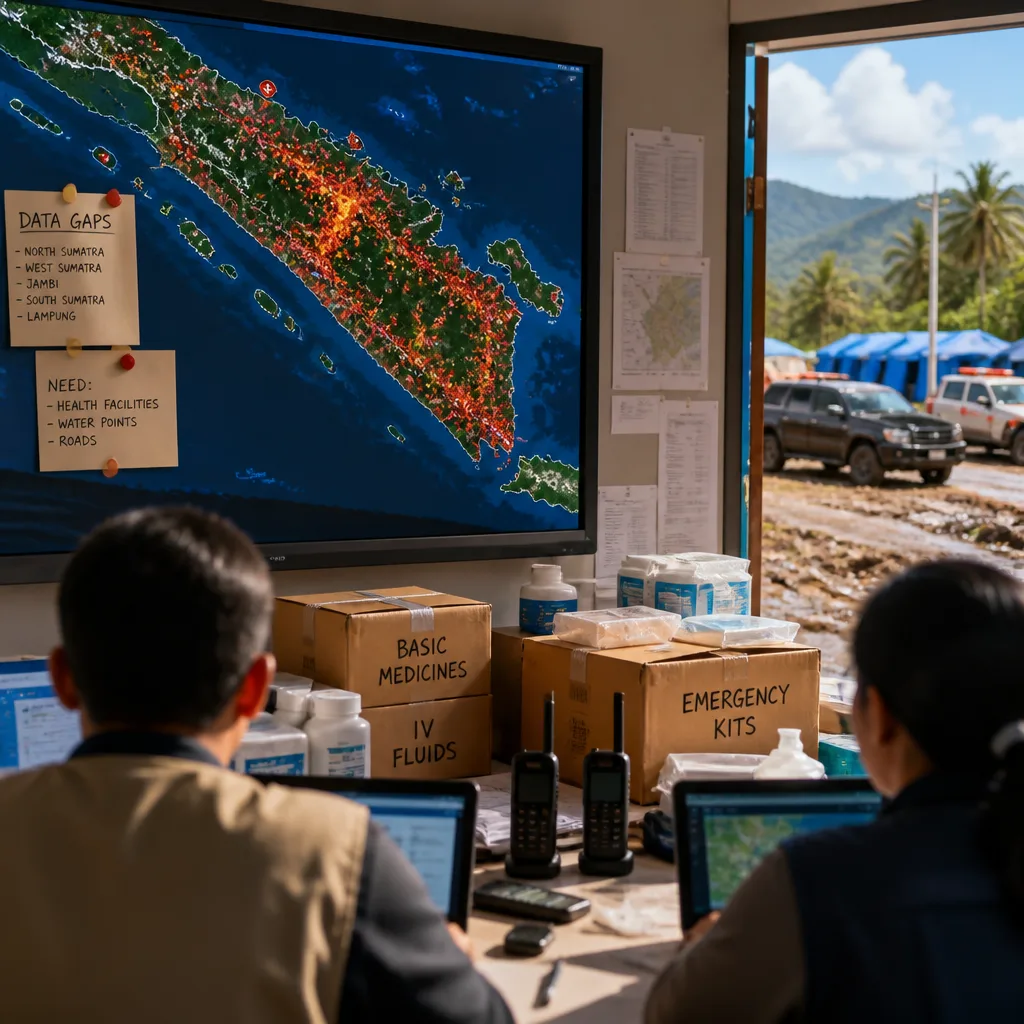
- Fragmented early data reporting, reducing the capacity for timely, information-based decision-making at national and subnational levels.
- Reactive logistics deployment, with supplies and transport systems struggling to anticipate or pre-position resources ahead of sustained operations.
Lessons for preparedness and response
The AAR followed a structured review across four pillars: leadership and governance; information-based decision-making; service delivery; and resource management. It generated consolidated findings intended to inform national reforms and preparedness planning.
WHO and Indonesian health officials emphasised that the AAR is not an audit but a learning process designed to turn operational experience into policy and investment priorities. The review has reportedly informed five strategic priorities to strengthen future responses, although the public summary does not enumerate them in detail.
| Area | Findings |
|---|---|
| Surge capacity | Rapid mobilisation of reserve workforce and EMTs — a clear asset |
| Essential services | Continuity of core health services maintained in many affected zones |
| Coordination & governance | HEOC functionality uneven across regions |
| Information systems | Early data reporting fragmented, limiting situational awareness |
| Logistics | Reactive deployment rather than anticipatory supply management |
Those conclusions have practical implications. Strengthening HEOC operations, standardising early reporting channels, and developing anticipatory logistics mechanisms are recurrent recommendations in international emergency preparedness guidance and were central to the AAR’s findings. Improving these systems would help convert initial surge efforts into sustained, efficient operations when disasters strike again.
Implications for policy and investment
The AAR outcome points to several areas where targeted policy change, training and investment could reduce vulnerability in future events:
- Enhancing the consistency of HEOC activation and staffing across provinces so local, regional and national command structures operate seamlessly.
- Investing in interoperable data systems and agreed reporting standards to ensure rapid, accurate situational awareness for decision-makers.
- Pre-positioning essential supplies and developing logistics plans that anticipate access constraints rather than relying on ad hoc shipments.
WHO Indonesia’s role in facilitating the AAR underlines the importance of international technical support in complex disasters, but the review also underscores that national structures and subnational capacity remain decisive. The Ministry of Health described the AAR as a reference point for improving responses across regions, signalling that lessons learned are intended to be translated into concrete preparedness actions.
As climate change increases the frequency and intensity of extreme weather events, the findings from Indonesia’s AAR — both the strengths and the gaps — will be of interest to countries seeking to bolster their own health emergency systems. The review demonstrates that rapid human and clinical surge capacity can save lives, but that leadership, information flow and logistics determine whether those initial gains are sustained.