
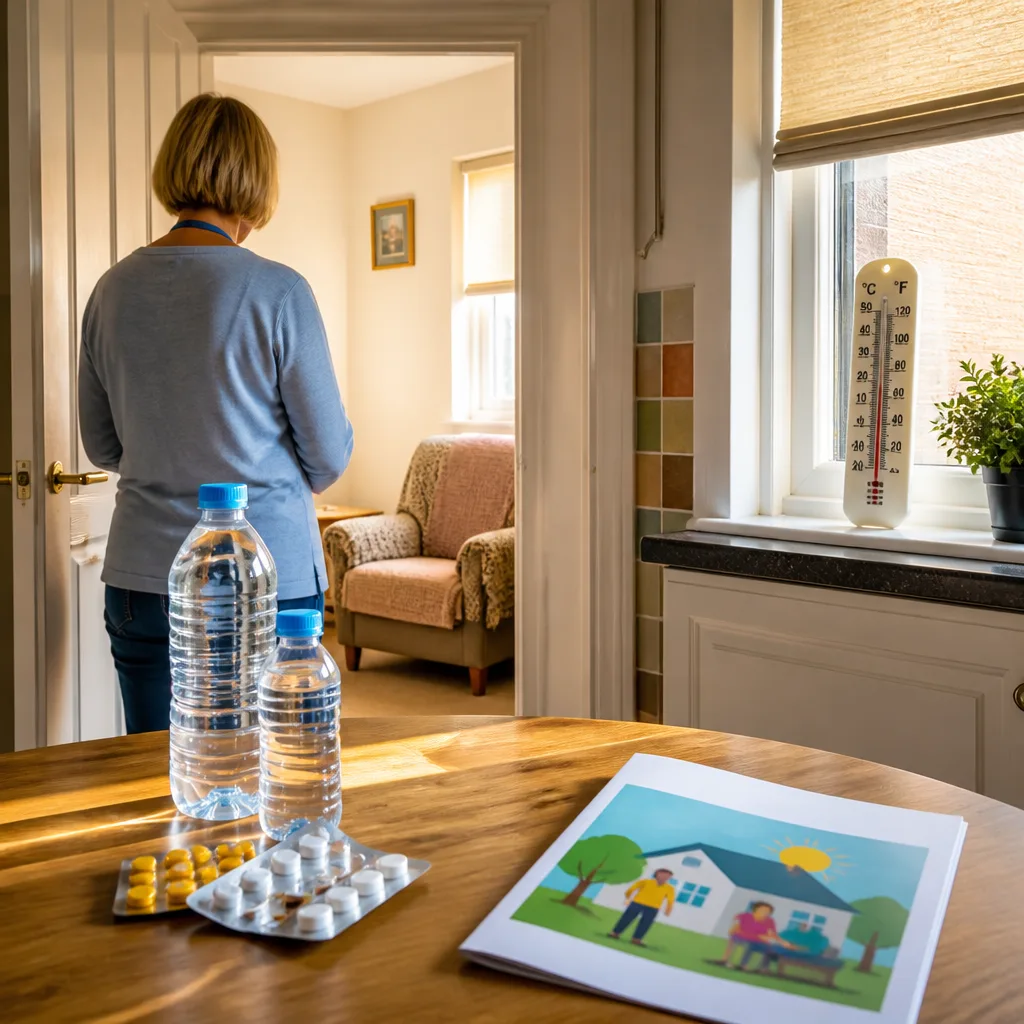
West Sussex County Council has issued an amber health alert as a spell of hot, dry weather approaches, urging residents to take precautions to reduce the health risks from heat. The alert signals that impacts are likely to be felt across local health services and that large sections of the population may be at risk.
Who is most at risk and what to do
The council emphasised that the groups most likely to be affected are the elderly, the very young and people with pre-existing medical conditions. Local authorities are asking communities to check on vulnerable neighbours and relatives during the hot spell to ensure they remain cool, hydrated and able to access needed medicines and supplies.
Advice published by the council recommends a series of straightforward measures to reduce heat exposure and related health problems:
- Keep windows shut and shades down while it is hotter outside, and open windows for ventilation when it cools.
- Avoid the sun between 11am and 3pm, the hottest part of the day, and plan journeys or activities to avoid those hours where possible.
- Identify the coolest room in the home and use it as a refuge from heat during peak temperatures.
- Use cool baths or showers, splash with cool water and wear loose, light clothing; wear a hat outdoors.
- Drink cold fluids regularly, such as water or fruit juice, and avoid caffeine and alcohol.
- Plan ahead to ensure supplies of food, water and any prescribed medication are maintained.
The council’s guidance mirrors longstanding heat-health messaging from national public health bodies aimed at reducing heat-related morbidity and pressure on services during hot periods.
Practical implications for services and households
An amber alert within the Heat-Health Alert system indicates that heat can have widespread impacts on health and on health and social care services. Local health commissioners and providers typically use such alerts to implement contingency plans, including outreach to care homes, community services and GP practices to safeguard those at greatest risk.
| Vulnerable groups | Recommended actions |
|---|---|
| Older people | Stay cool, remain hydrated, identify coolest room, check medication supplies |
| Young children | Avoid peak sun hours, use cool baths/showers, ensure regular fluids |
| People with long-term conditions | Plan ahead for medication, avoid heat exposure, seek help if unwell |
Households are advised to take simple preparatory steps now—closing windows and shades during the heat, preparing cool spaces in the home and ensuring that those who live alone have a plan for being checked on. For care settings, the alert is a signal to review heatplans and staffing arrangements to maintain safe care during sustained hot weather.
Public messaging during heat episodes focuses on preventing heat exhaustion and heatstroke. These conditions develop on a spectrum from dehydration and heat cramps to more serious heat-related collapse. Avoiding the hottest hours, keeping hydrated and moderating physical exertion are established protective measures.
Although heat-health alerts are designed to prompt immediate practical action, their effectiveness depends on public awareness and community support. Local authorities often ask neighbours, family members and community volunteers to be alert to signs of heat distress—such as confusion, rapid breathing or inability to keep down fluids—in people who may be less able to keep cool themselves.
There are limits to the data in a local advisory: while an amber alert denotes likely widespread impacts, it does not quantify how many people may be affected or how health services will perform. Nevertheless, taking the council’s simple, evidence-aligned precautions now can reduce preventable illness and the strain on health and social care at the height of the heat.














