
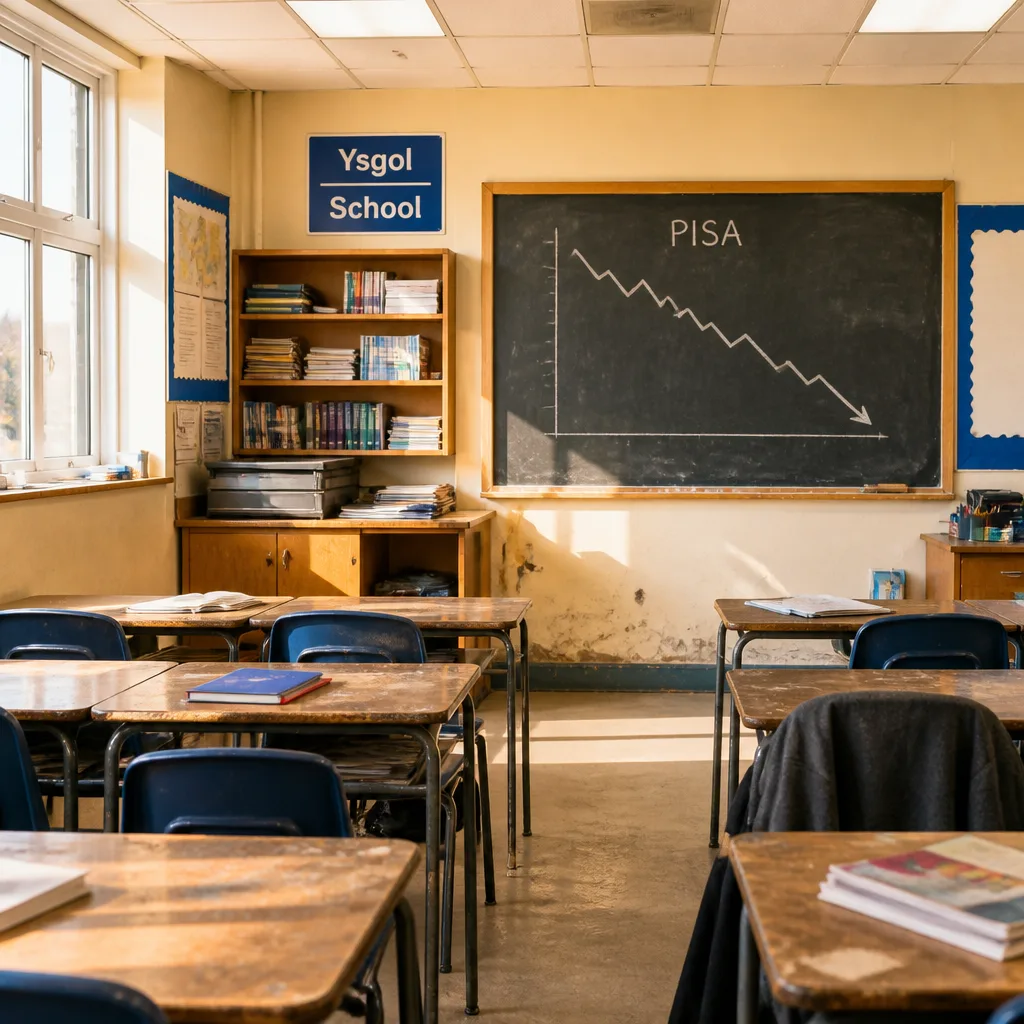
Wales has again recorded below‑average performance in the international Pisa assessments for 15‑year‑olds, prompting concern from educators who say the pattern reflects longstanding weaknesses rather than a single poor showing.
What the tests show
The Organisation for Economic Co‑operation and Development (OECD) Pisa examinations, taken every three years in reading, mathematics and science, place Wales beneath both the UK and global means. Education professionals describe the pattern as persistent, stretching back to Wales’ first participation in 2006, and say recent data points to a deterioration that cannot be attributed solely to temporary factors such as the pandemic.
| Fact | Detail |
|---|---|
| First Pisa participation | 2006 |
| Assessment cycle | Every three years |
| Pattern | Long‑term decline relative to UK and OECD averages |
| Groups most affected | Least advantaged 15‑year‑olds |
Disadvantage and attainment
The latest report highlights a stark equity issue: pupils from the most deprived backgrounds in Wales perform worse across all three core domains than their better‑off peers. Those gaps mirror broader patterns in national assessments and attendance records, and commentators say they point to entrenched barriers to learning that have not been closed despite successive devolved administrations’ stated aims to reduce poverty‑related disadvantage.
At the same time, one nuance in the data is that the gap between the most and least affluent pupils in Wales remains narrower than the OECD average — a point that complicates the narrative and suggests policy responses must be carefully targeted.
Voices from the sector
Teachers, union leaders and a number of education researchers responding to the results emphasised the need to focus on classroom practice rather than introducing a raft of new reforms.
"It's all about the teaching."
That refrain underlines calls for stronger support for the workforce: improved recruitment, retention and professional development for teachers and school leaders. Experts argue that top‑quality classroom instruction and school leadership are the primary levers to lift pupil outcomes, rather than short‑term policy fixes or administrative changes.
- Workforce strengthening: recruitment and training for teachers and leaders.
- Targeted support: interventions concentrated on the most disadvantaged pupils.
- Accountability and evaluation: clearer measures to monitor progress over time.
Policy implications and next steps
The findings reopen difficult questions for the Welsh Government about the direction of its education policy. Education in Wales has been devolved for around three decades and has taken a distinct path from England, including a greater emphasis in recent years on curriculum redesign and localised accountability arrangements. Critics suggest that over time this separation has not delivered the expected improvements in international comparisons.
Those defending current approaches caution against simplistic readings of Pisa and stress that system change takes time. Nonetheless, the consensus among many headteachers, union officials and academic commentators is that urgent action is required — with renewed priority given to the conditions that allow teachers to do their best work in classrooms.
The debate now turns to what concrete interventions will be funded and prioritised: further curriculum reform, classroom‑level coaching and professional development, earlier literacy and numeracy programmes, or a combination of measures aimed at reducing the impact of poverty on attainment. Whatever the package, the Pisa results have injected fresh urgency into the question of how Wales can halt a downward trajectory and deliver better outcomes for its most vulnerable pupils.











