
Vietnam's Prime Minister Le Minh Hung has pressed education leaders to deliver concrete improvements for pupils, teachers and the nation's workforce as the country moves into the 2026–27 academic year. Chairing a national teleconference on 27 August to review the previous year and set priorities for the year ahead, he said reform must be judged by outcomes rather than documents.
From policy to practice
The conference, held in the wake of the 14th National Party Congress and the introduction of new policy directions, including the Politburo’s Resolution No. 71-NQ/TW, reviewed achievements from 2025–26 and identified persistent weaknesses. The prime minister acknowledged progress, but insisted the coming year should represent a “fundamental change in both thinking and action”.
He urged education authorities to move away from an emphasis on institutional development and administrative box-ticking towards:
- implementation that produces clear results for learners and teachers;
- governance focused on development rather than simply managing tasks;
- substantive innovation at school, classroom and teacher level rather than cosmetic change.
“Innovative thinking – Strong transformation – Substantive results”
Persisting problems and priorities
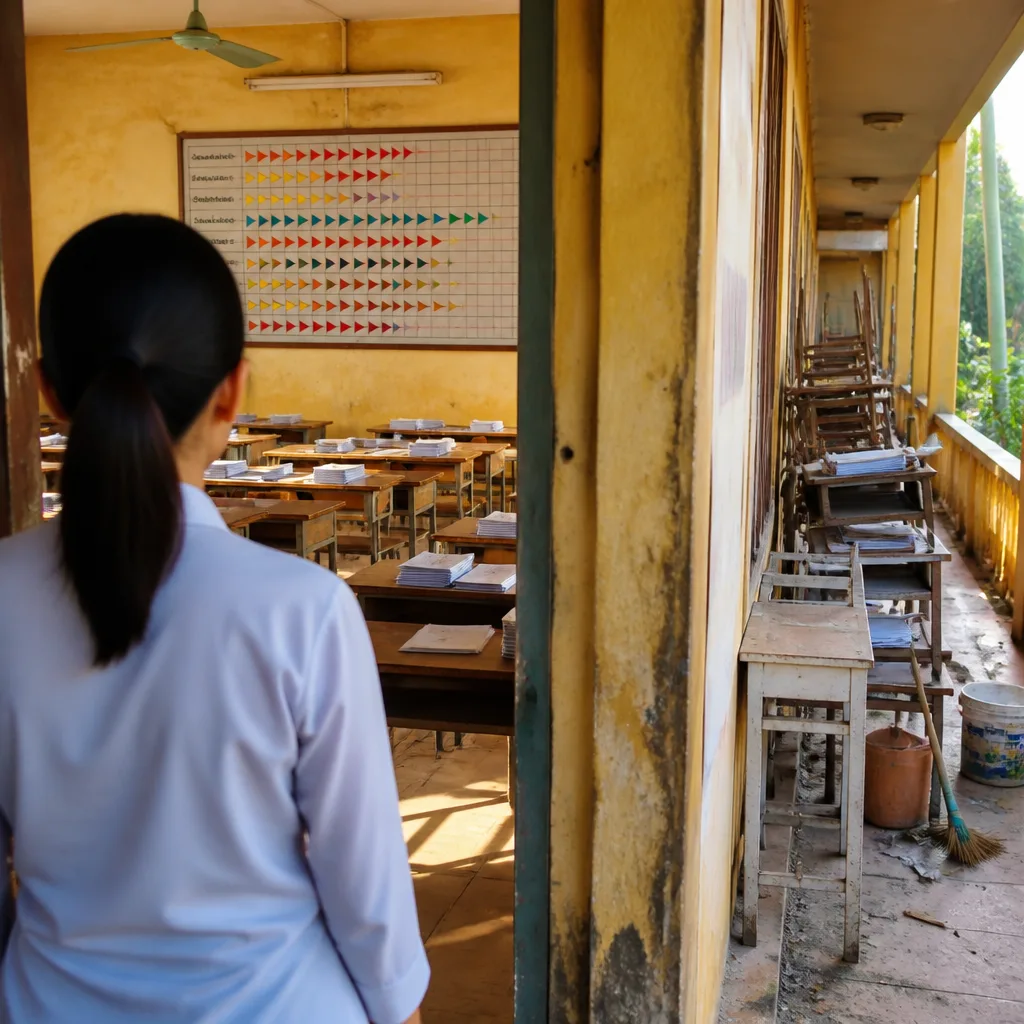
The prime minister highlighted a number of ongoing difficulties that must be tackled urgently. These include delays and weaknesses in putting policy into practice, shortages of teachers, classrooms and teaching equipment, and insufficiently deep innovation within some institutions. He said excessive focus on grades and examinations remained a problem, alongside worrying behaviours and risks such as examination cheating, hidden additional tuition, school violence and food safety concerns.
Among operational priorities he insisted on ensuring there are “enough schools, enough classes and enough teachers”, and on protecting access for disadvantaged children so they are not excluded from education. Specific pressures were identified in urban areas and industrial zones, where shortages of classrooms, specialist rooms, equipment and boarding capacity were said to be particularly acute.
Removing bottlenecks and unlocking resources
The prime minister asked ministries, agencies and local administrations to concentrate on easing obstacles and releasing the finance and capacity needed to make the new policies effective. He recommended measuring progress by improvements in:
- pupil learning and wellbeing;
- teachers’ working conditions and professional development;
- school performance and the overall quality of human resources.
While the teleconference set direction, it did not publish detailed new targets or timetables at the session reported. The emphasis instead was on changing mindsets and refocusing activity so that systemic reforms translate into classroom-level changes.
| Identified Shortcomings | Priority Actions Requested |
|---|---|
| Policy implementation delays | Speed up execution; remove administrative bottlenecks |
| Teacher and classroom shortages | Expand capacity; ensure enough schools, classes and staff |
| Excessive focus on exams | Shift assessment and incentives towards substantive learning |
| School safety and extracurricular risks | Strengthen safeguarding, food safety and oversight |
The prime minister’s remarks underscore a familiar tension in education reform: ambitious national strategy must be matched by practical delivery on the ground. For teachers and school leaders, the test will be whether the next 12 months bring concrete improvements in class sizes, resources and working conditions rather than further policy pronouncements.
International observers and domestic stakeholders will be watching whether the government’s insistence on measurable results leads to additional investment, changes in accountability arrangements, or new programmes targeted at the most acute shortages — especially in fast-growing urban and industrial districts.
As Vietnam seeks to raise the skills and capacity of its workforce, the success of the 2026–27 academic year will be judged by whether pupils make better progress, teachers gain stronger support and schools demonstrate lasting improvement.











