
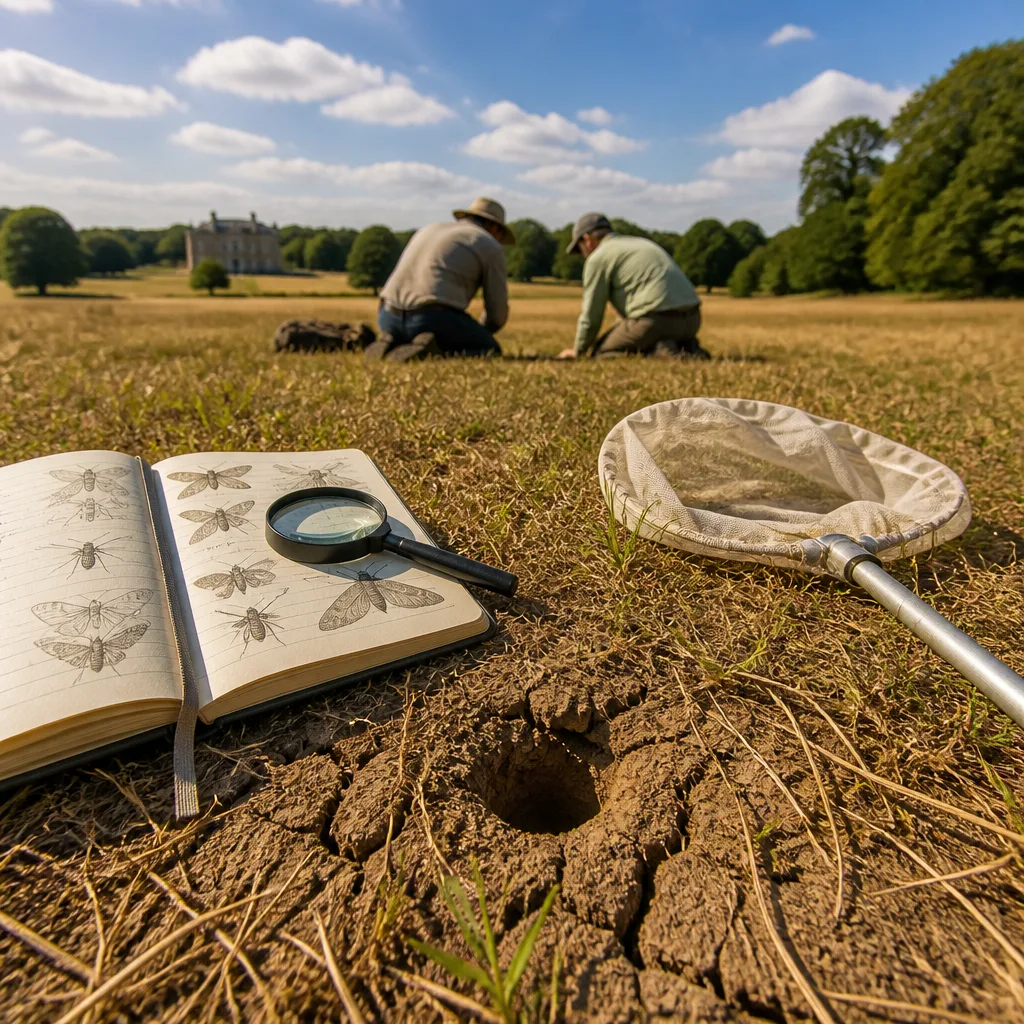
Across Britain this summer a surge of previously unseen insects has been recorded by both professional ecologists and amateur naturalists, raising fresh questions about how a warming climate and extreme weather events are reshaping the country’s fauna.
Sightings from south coast to north west
At the Knepp Estate in West Sussex, ecologist Matt Phelps and entomologist Graeme Lyons traced a loud, piercing trilling sound to a crack in parched ground and identified the first British record of the Verge (Bordeaux) cricket (Eumodicogryllus bordigalensis), a species generally associated with southern Europe.
“It was like the classic sound effect of a cricket in a film, a beeping sort of little trilling sound,” said Phelps, describing the hunt that lasted several hours before the insect was located.
Phelps said other reports followed quickly, and he characterised the pattern as an "extraordinary flood" of first sightings. He suggested the influx might be linked to an intense wildfire in Bordeaux, adding: “It made you think: have some of these things fled the flames of southern Europe?”
Amateurs filling gaps in recording
The wave of records has relied heavily on newly engaged amateur recorders. In north Cheshire, retired secretary Jackie Harmer, one week into moth-trapping as a hobby, captured Odice pergrata, a species native to the Iberian peninsula and a first for the UK. In north Essex, city trader David Cousins opened a moth trap one June dawn to find what proved to be a spotted-seal moth (Enolmis acanthella), a genus previously unrecorded in Britain.
Meanwhile, an 18‑year‑old in Truro, Olly Mkeown, made an early discovery that added to the list of unusual arrivals documented this season.
Why the arrivals matter
Scientists warn that northward movements of insects are consistent with broader patterns of range shifts under climate change. Warmer summers and altered wind patterns can allow ordinary seasonal migrants to travel further and establish beyond historical limits. Extremely hot, dry conditions and continental wildfires can also create unusual dispersal events, either by driving animals away from affected areas or by generating windborne movement of individuals.
These arrivals have several potential consequences:
- Ecological interactions: New species can alter food webs, compete with native species, or introduce new parasites and pathogens.
- Monitoring challenges: Many records are coming from newly engaged amateurs, highlighting both the value of citizen science and the need for systematic surveillance.
- Biosecurity and conservation policy: Authorities may need to reassess mechanisms for early detection and response where non-native species could have impacts.
Examples recorded this summer
| Species | Scientific name | Recorded in Britain at |
|---|---|---|
| Verge (Bordeaux) cricket | Eumodicogryllus bordigalensis | Knepp Estate, West Sussex |
| Unusual moth (Iberian native) | Odice pergrata | North Cheshire |
| Spotted-seal moth | Enolmis acanthella | North Essex |
These records are snapshots rather than proof of permanent establishment. Experts caution that a single-year influx does not necessarily mean a species will become resident; some migrants perish or fail to breed in new climates. Nonetheless, repeated first sightings and the range of species involved make the phenomenon noteworthy.
For policymakers and conservationists, the immediate priorities are enhanced monitoring, verification of records by entomologists and an assessment of potential risks to native fauna and agriculture. The recent wave of discoveries underlines how climate-linked events beyond Britain’s borders—such as the wildfire in Bordeaux—can have tangible effects on the UK’s natural environment.
While many observers described a sense of excitement at the discoveries, scientists stressed the need for careful documentation and study. The surge has brought fresh attention to the role of citizen recorders in detecting ecological change and the increasingly international nature of Britain’s biodiversity challenges.









