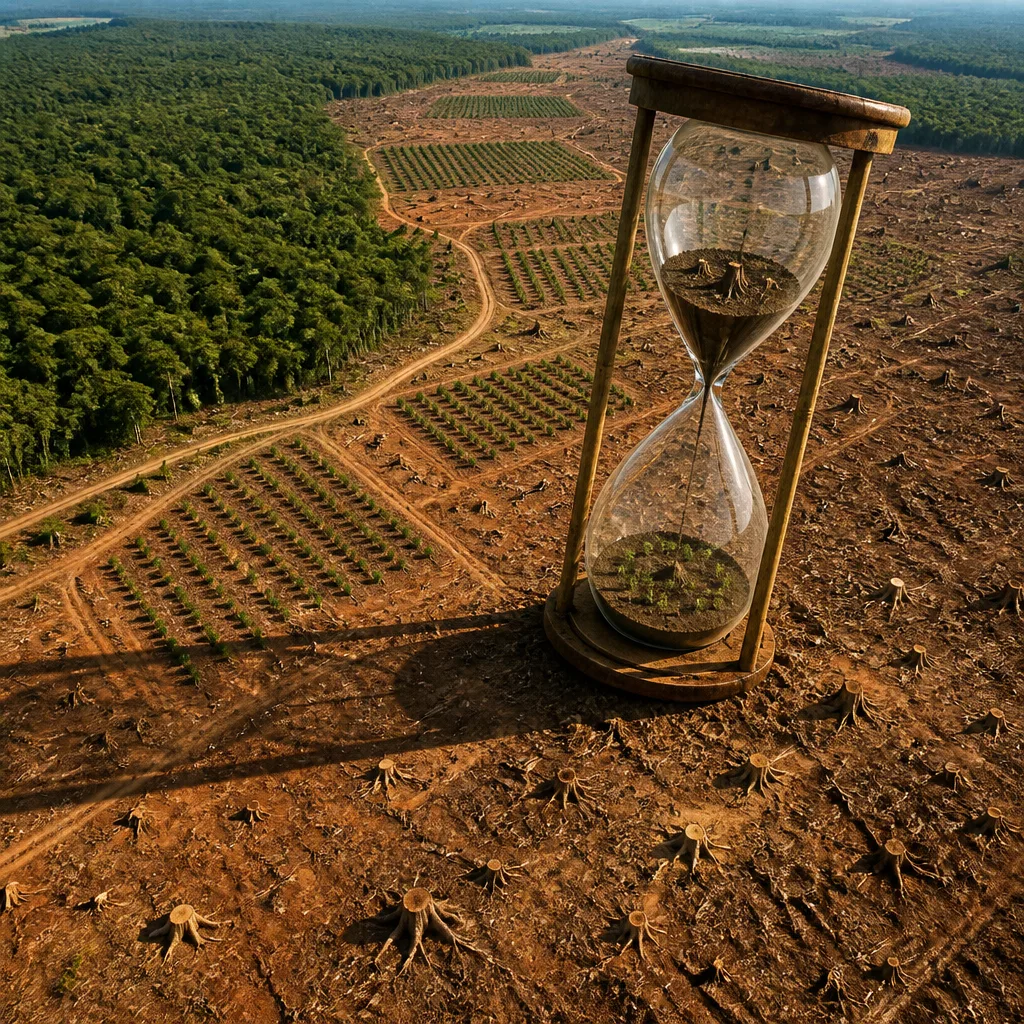
The United Nations has sounded an urgent warning that the opportunity to restore forests crucial for food security, biodiversity and climate stability is rapidly shrinking.
Scale of loss and shortfall in commitments
According to the Food and Agriculture Organization (FAO), more than 489 million hectares (around 1.2 billion acres) of forest have been cleared since 1990. Forests still cover an estimated 4.14 billion hectares — roughly one third of the planet’s land surface — but degradation and continued losses mean the ecosystem services they provide are under increasing strain.
The report highlights a major discrepancy between ambitious pledges and on-the-ground restoration: over the past two decades initiatives have promised to place more than 1 billion hectares under restoration, but only around a fifth of that target is actually being restored. The FAO cautions that, while there have been advances in protection and tree planting, progress has not matched commitments.
“Progress is uneven, and it is insufficient to meet growing global needs.”
Why forests matter now
Forests are central to multiple public goods. They store an estimated 714 gigatonnes of carbon, host up to 80% of terrestrial biodiversity and contribute to the regulation of rainfall patterns. The FAO reiterates their role in livelihoods and food systems: nearly a third of the global population depend on forests for their living.
Loss and degradation are driven by a mix of pressures: agricultural expansion, resource extraction, pollution and the climate crisis itself, which is increasing the incidence of fires, pest outbreaks and extreme weather. The FAO reports that about 127 million hectares of forest are affected by fire each year, with additional destruction from insects, disease and severe storms.
Economic case for restoration
The UN document frames restoration not just as an environmental priority but as an economic opportunity. Restoring 1 billion hectares is estimated to generate around $1.8 trillion in benefits annually, the FAO says — a figure that includes ecosystem services, improved food security and heightened resilience to climate impacts.
- 489m hectares — forest cleared since 1990
- 4.14bn hectares — current global forest area
- 714 gigatonnes — carbon stored in forests
- 127m hectares — annually affected by fire
- 1bn hectares — restoration commitments; only ~20% underway
Implications and uncertainties
The FAO’s warnings carry practical implications for national policy. Restoring degraded landscapes is technically feasible at scale but requires coherent planning, finance and long-term stewardship to avoid perverse outcomes such as monoculture tree plantations that offer limited biodiversity or social benefit.
At the same time, the report implicitly warns that delays increase costs and reduce options. As forests become more fragmented and degraded, the ecological functions that underpin agriculture, water cycles and local economies weaken, leaving communities more exposed to shocks.
Data summary
| Indicator | Figure |
|---|---|
| Forest area lost since 1990 | 489 million hectares |
| Current forest coverage | 4.14 billion hectares |
| Carbon stored | 714 gigatonnes |
| Annual area affected by fire | 127 million hectares |
| Restoration pledged | 1 billion hectares (barely one-fifth underway) |
| Estimated annual benefits from 1bn ha restored | $1.8 trillion |
For governments, this presents a policy crossroads. The FAO urges nations to elevate forest restoration to a national priority, aligning land-use policy, finance and rural development objectives. Doing so could bolster food security, protect biodiversity and help meet climate commitments; failing to act risks compounding losses and increasing the cost of future recovery.
Given the scale of the gap between promises and outcomes, the report stresses the need for better tracking, transparency and support for locally led restoration that recognises the rights and knowledge of communities who depend on forests. Without those changes, the narrow window to secure forests’ multiple benefits is likely to close further.
— World Desk