
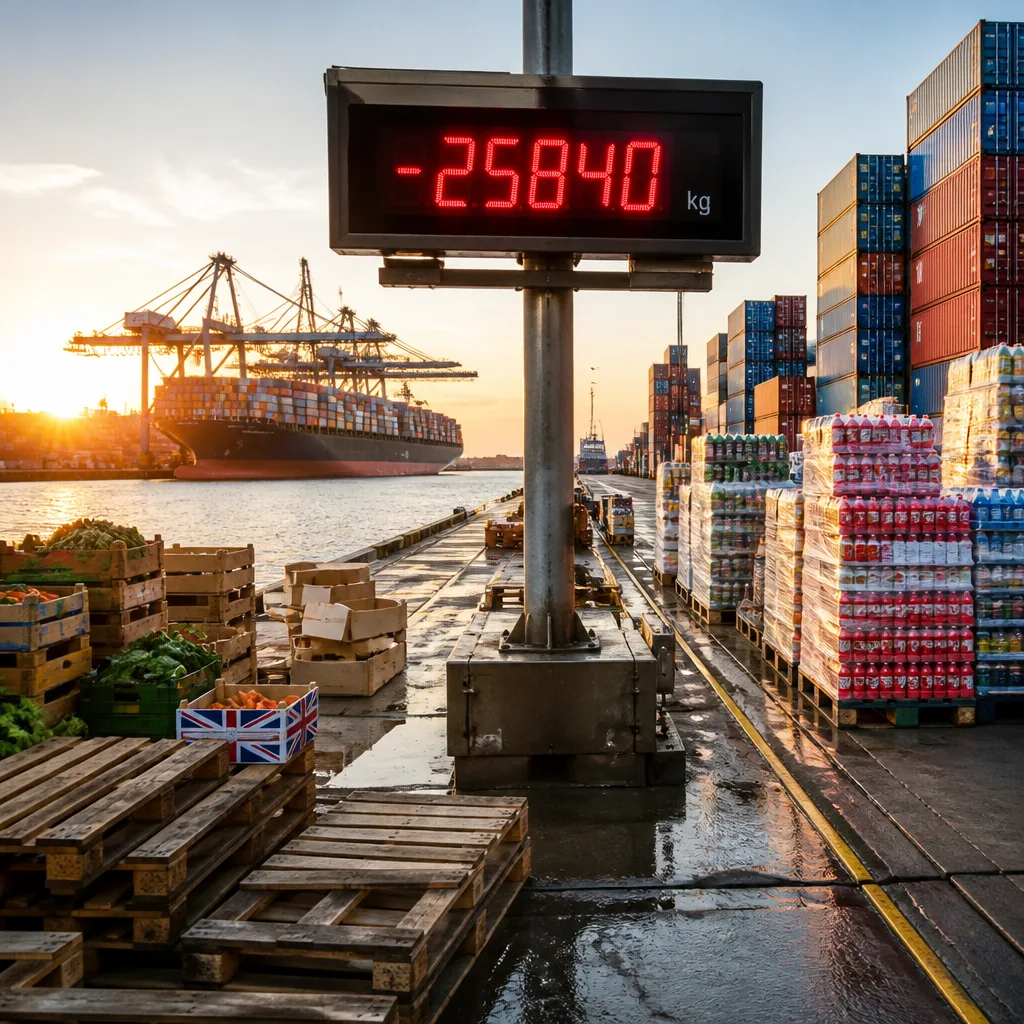
The United Kingdom’s food and drink trade deficit has swollen to more than £21bn in the first half of 2026, the largest shortfall since 2000, as export volumes plunged and imports climbed to near-record levels, industry analysis shows. The figures have prompted warnings from farming leaders that policy action is needed to protect domestic production and the country’s food resilience.
Exports slump while imports surge
Analysis by the Food & Drink Federation (FDF) found that UK food and drink export volumes fell by 11.7% in the first half of 2026 to 4bn kg. Exports in value terms to the EU were down 0.9%, while sales beyond the EU fell by 6.9%.
At the same time, imports reached 19.1bn kg — the second highest half-year total on record, beaten only by the same period in the previous year. Imports from outside the EU have increased by more than a fifth since 2023, a change attributed in part to eased restrictions through new trade deals.
- Export volume H1 2026: 4bn kg (down 11.7%)
- Imports H1 2026: 19.1bn kg (second highest ever)
- Exports to EU (value): down 0.9%
- Exports beyond EU (value): down 6.9%
Geopolitics and tariffs dent overseas sales
The FDF cited several drivers of the export weakness. Disruption in sales to the Middle East helped push exports to the United Arab Emirates down by almost a quarter, a decline linked to the wider US‑Israel war on Iran. Meanwhile, the introduction of a 10% US import tariff has been blamed for a 16.5% drop in cross‑Atlantic sales.
Those two pressures — regional instability and new trade barriers — have compounded the ongoing frictions created by post‑Brexit trading arrangements, which continue to add complexity and cost for exporters to the EU.
Imports reshaped by trade deals and temporary tariff changes
Imports from countries outside the EU have been buoyed by recent trade agreements, with Australia singled out: its deliveries to the UK are now said to be 25% higher in value terms than a year earlier, covering a range of products from meat to whisky.
Domestic measures intended to ease pressure on household budgets have also had an effect. The suspension of tariffs on a selection of manufactured foods — including chocolate and biscuits — as part of a package announced by the former chancellor, Rachel Reeves, has been credited with increasing imports of those items this year.
| Measure | Effect on trade |
|---|---|
| US 10% tariff | Cross‑Atlantic sales down 16.5% |
| Exports to UAE | Down almost 25% |
| Imports from Australia | Value up 25% year on year |
“These figures should be a wake‑up call. At a time of growing geopolitical uncertainty, we cannot afford to take our food production capacity for granted.”
The comment came from Tom Bradshaw, president of the National Farmers’ Union of England and Wales, reflecting industry concern that rising reliance on imports weakens the country’s resilience to future shocks.
What this means for households, wages and jobs
For consumers, the immediate consequence is ambiguous. Greater import volumes, particularly of manufactured foodstuffs whose tariffs have been suspended, can alleviate price pressures for some grocery items. But the fall in export demand and the squeeze on domestic producers risks job losses and weaker incomes in farming and food manufacturing — a sector that supports rural employment and local supply chains.
Lower export volumes typically translate into reduced factory utilisation and downward pressure on wages or hiring in affected businesses. That in turn can reduce spending power in local economies and raise government exposure if support is required. Conversely, the growth in imports may benefit retailers’ margins or store prices in the short run, but at the cost of domestic producers' viability.
Industry leaders and some policymakers will point to the figures as justification for targeted support for British agriculture and food manufacturing, or renegotiation of trade terms. Critics argue that protectionist responses risk higher prices for consumers and retaliation from trade partners. The FDF data will intensify that debate ahead of budget and trade policy decisions.
What is clear is that the current balance of trade leaves the UK more dependent on foreign supplies for food and drink than it has been for decades — a strategic vulnerability that ministers and industry players will be pressed to address without promising easy answers for prices or jobs in the near term.














