
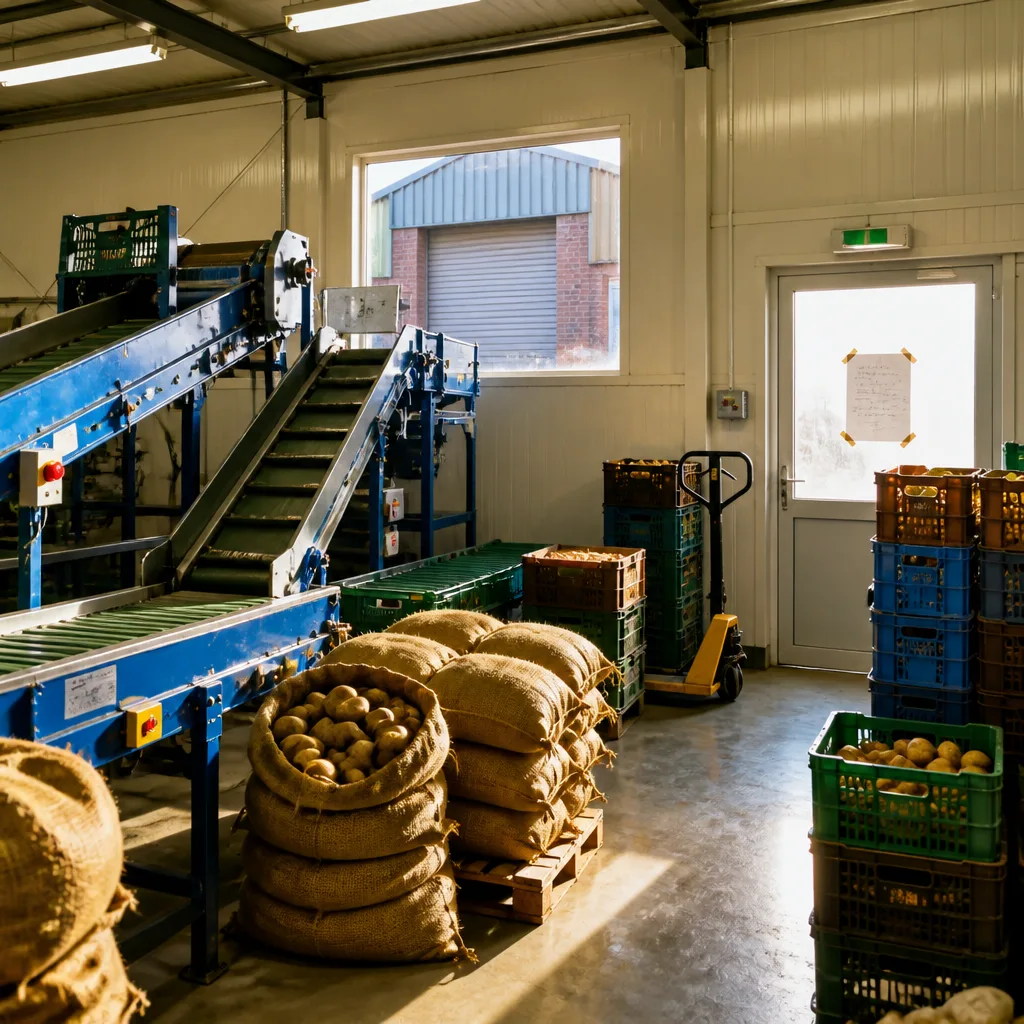
Administrators from Interpath have been appointed at Glens of Antrim Potatoes, the Northern Ireland grower and crisp maker established in 1972, after the company ceased trading following what administrators described as “significant challenges” in the agri‑food sector.
Rapid end to operations leaves workforce and supply chains exposed
The business, which operates from sites in Cushendall and Ballymena and employs 95 staff, has effectively shut down with the vast majority of employees made redundant. Administrators Stuart Irwin, Ian Leonard and Robin Coughlin said the move followed a deterioration in cashflow driven by rising input costs across the supply chain.
“For Glens of Antrim, these pressures had a significant and detrimental impact on cashflow. In response, the directors explored a range of options, including refinancing and investment, but sadly, with no solvent options available, they had to take the very difficult decision to request the appointment of the joint administrators.”
Interpath confirmed a small skeleton staff has been retained to support the administration process and that its employment team will provide support to affected workers. Stuart Irwin, Interpath’s managing director and a joint administrator, described the outcome as “a tremendously sad outcome for the business, its dedicated team, the agri‑food sector in N”.
From family firm to export and supermarket supplier
Founded by the McKillop family, Glens of Antrim grew from a local farming operation into a supplier of potatoes and crisps for supermarkets and grocery chains across the island of Ireland and into export markets. The company produced a range of hand‑cooked crisps under the Glens of Antrim Crisps brand and manufactured own‑label crisps for Tesco in the Republic under its Finest range.
Recent commercial highlights included a 2022 contract to supply its hand‑cooked crisps to 35 Tesco stores across Northern Ireland and exports to markets including Dubai, Singapore, Malaysia and South Korea. The firm had also invested in capacity in previous years, spending £900,000 on a new plant in 2015.
What this means for jobs, prices and the food sector
The administrators pointed to rising input costs that have battered businesses across the agri‑food chain. While the immediate effect is the loss of jobs and halted production at the sites concerned, the wider implications are twofold:
- Local employment: 95 people have largely lost their jobs, with only a minimal administrative team retained.
- Supply chains and retail: contracts with supermarkets and export customers will need to be reassessed by buyers as supplies stop and administrators seek options for the business or its assets.
Supermarkets and food-service customers that sourced regional crisps and potatoes from the business will now be required to find alternative suppliers, a process that can put upward pressure on procurement costs if local capacity is limited. For workers, the immediate priority will be access to redundancy support and any statutory payments the administrators can secure.
Administrators exploring options amid wider sector stress
According to Interpath, directors had investigated refinancing and external investment before concluding there were no solvent paths forward. The statement framed the collapse as symptomatic of broader pressures in the sector rather than an isolated management failure, citing the impact of rising input costs across the supply chain.
| Fact | Detail |
|---|---|
| Year founded | 1972 |
| Employees | 95 (majority made redundant) |
| Investment (2015) | £900,000 new plant |
| Retail contract | Supply to 35 Tesco stores in Northern Ireland (from 2022) |
| Export markets | Dubai, Singapore, Malaysia, South Korea |
The appointment of administrators at a business of this vintage underlines the fragile margin many food producers now operate within. For employees and suppliers, the immediate questions are about redundancy payments, outstanding invoices and whether the business can be sold as a going concern. For buyers and consumers, the closure may be a prompt to scrutinise how rising costs are being absorbed across the food chain.
Interpath will lead the next steps as administrators, including assessing asset values, potential buyers and any liabilities. In the meantime, the shutdown is a stark example of how volatile input costs can translate into lost livelihoods and disrupted supply lines in the agri‑food sector.














