
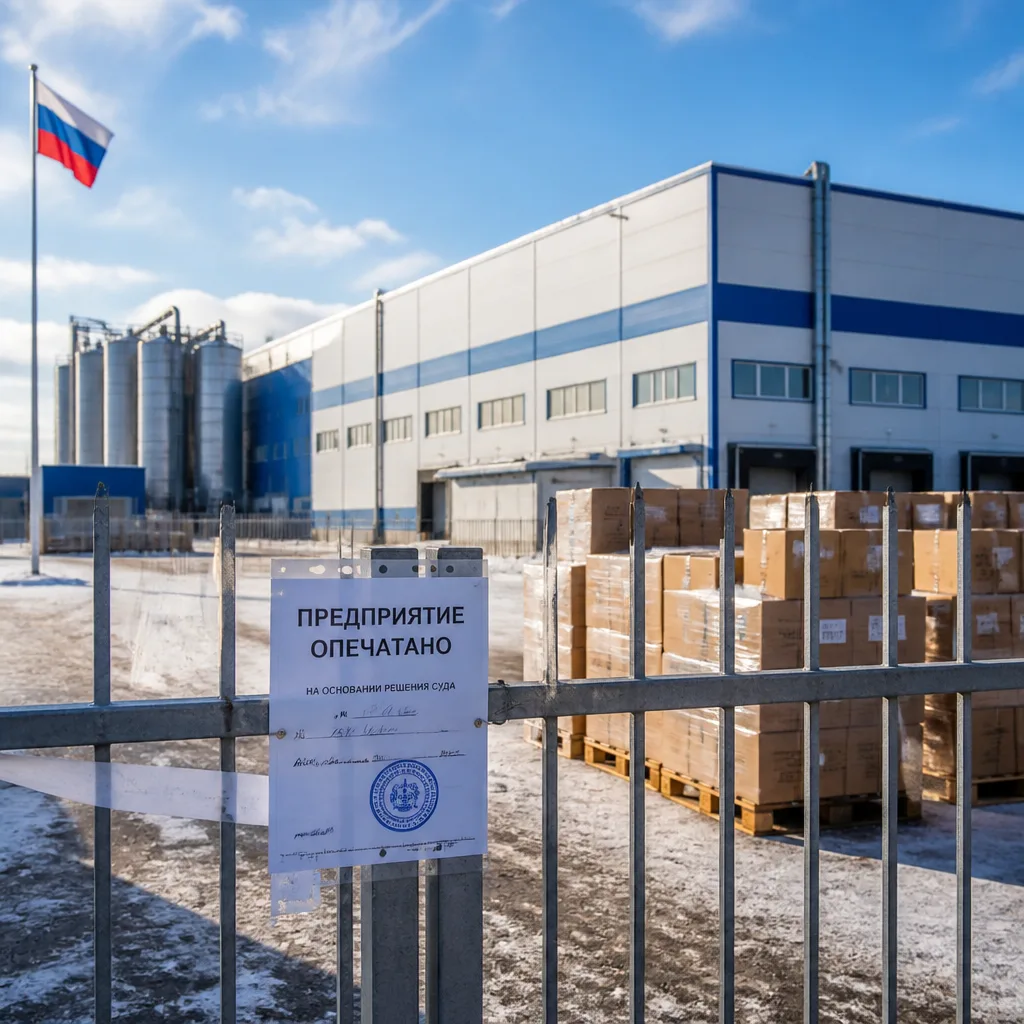
Swiss food group Nestlé said it was reviewing its options after President Vladimir Putin issued a decree late on Thursday placing the company’s Russian operations under temporary administration.
What has happened
The decree, which also affects the Russian arm of French supermarket chain Auchan, represents what observers say is the Kremlin’s biggest takeover of foreign corporate assets since at least 2024. Moscow has changed laws in recent years to permit the transfer of shareholdings owned by firms deemed “unfriendly”, a measure previously used against companies including Carlsberg, Danone, and beers businesses owned by AB InBev.
Nestlé, which has operated in Russia since 1995, said it was "assessing the situation and its options" and signalled it would act to protect staff and business continuity.
“Nestlé is committed to taking all necessary steps to protect its rights and ensure continuity of business operations in the interests of all stakeholders, particularly its employees.”
Scale of the operation and immediate implications
According to the company and widely reported figures, Nestlé’s Russian business comprises:
- Six manufacturing sites
- About 7,000 employees
- Approximately CHF 2 billion (around £1.81 billion) of annual revenue — roughly 2% of the group’s global sales
| Metric | Figure |
|---|---|
| Manufacturing sites | 6 |
| Employees | ~7,000 |
| Annual revenue (approx.) | CHF 2 billion (~£1.81bn) |
| Share of group sales | ~2% |
The measures arrive amid heightened tensions between Russia and Europe. More than 1,000 firms exited Russia after the 2022 invasion of Ukraine, although a number of large companies — including Mondelez (owner of Cadbury) and PepsiCo — have remained.
Risks for workers, prices and investors
For employees in Russia the decree introduces immediate uncertainty over job security, wages and local management. Nestlé’s public statement stresses protection of staff interests, but offers little detail on how protections would be enforced under temporary state administration.
For consumers and retailers in Russia, control of local production units can affect the availability and price of household food brands such as KitKat, Nescafé and Cheerios. Any disruption to manufacturing or distribution risks short-term price volatility and supply squeezes in categories where Nestlé is a major supplier.
For shareholders and bondholders, the seizure underscores a geopolitical risk that has already hit returns from other firms whose Russian assets were transferred or restricted. Although the Russian business represents only around 2% of Nestlé’s global sales, the legal and reputational fallout could be more significant, especially if other jurisdictions or investors press for broader consequences.
Context and likely next steps
The Kremlin has previously taken control of assets from companies it classifies as unfriendly. Nestlé has reduced its footprint in Russia since 2022 but still operates on the ground with manufacturing capacity and thousands of staff. The company is now publicly signalling its intent to explore legal and commercial responses to preserve rights and continuity.
In practical terms that could include legal challenges, negotiations with Russian administrators, or contingency plans to maintain supply chains and support employees. The outcome will be watched closely by other multinationals with significant Russian exposure and by policymakers concerned about precedent and the treatment of foreign investors.
While the financial hit to Nestlé’s top line is limited relative to its global scale, the episode crystallises a wider problem for companies operating in jurisdictions where political risk can translate rapidly into operational and legal disruption — with direct consequences for jobs, prices and investor confidence.














