
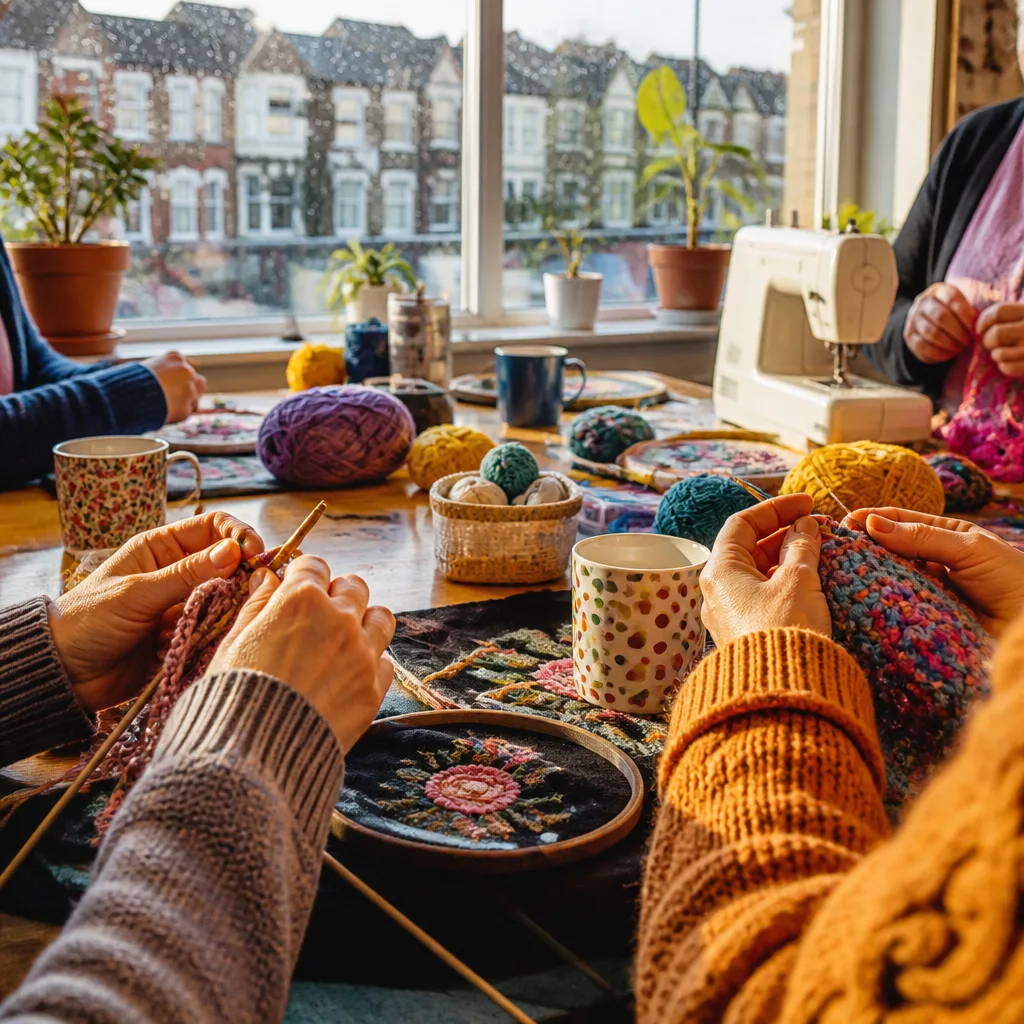
Knitting, crochet, sewing and similar traditional crafts are experiencing a renewed popularity across age groups, driven in part by a search for slower, more mindful activities that can support mental health.
Hands-on hobbies, calmer minds
In recent months a noticeable cultural shift has seen people — many of them younger than the generations historically associated with these pastimes — return to manual, creative pursuits. Practitioners and emerging research argue these activities offer a cheap, accessible route to improved mental wellbeing at a time when anxiety, burnout and loneliness remain prominent public health concerns.
Researchers emphasise that the benefits of such crafts are not simply nostalgia. Repetitive, rhythmic motions involved in knitting or embroidery, for example, can produce effects similar to those experienced in meditation: reduced physiological arousal, increased focus and a lowering of rumination. This aligns with psychological models such as Csikszentmihalyi’s theory of flow, where immersive activity leads to deep concentration and positive affect.
What the evidence says
Academic studies cited in the reporting include a 2024 paper in the Journal of Occupational Science by Nordstrand and colleagues, which found knitting supported people with mental health difficulties by providing calm, daily structure, a renewed sense of identity and improvements in wellbeing. A major review of needlecraft studies by Dr Anne Kirketerp also identified consistent emotional benefits across diverse participant groups.
While promising, researchers and clinicians caution that the literature is heterogeneous — studies use varied designs and outcome measures — so results should be interpreted carefully. Correlation does not prove causation: crafts may be one of several factors contributing to improved mood and social connection.
- Accessible: Low cost and widely taught informally or through community groups.
- Psychologically supportive: May reduce stress and rumination by encouraging present-moment focus.
- Social benefits: Group classes, clubs and community workshops can reduce isolation and foster belonging.
These mechanisms suggest tangible routes by which simple hobbies could be deployed alongside conventional mental health supports, particularly where formal services are strained.
| Perceived benefit | Possible mechanism |
|---|---|
| Reduced anxiety | Rhythmic movement and focus reduce physiological arousal |
| Improved mood | Sense of achievement and identity from skill mastery |
| Less loneliness | Social contact in classes and clubs |
Policy and practical implications
Public health bodies and community organisations are increasingly interested in low-cost, scalable interventions that can complement clinical services. Traditional crafts could be incorporated into social prescribing schemes or offered through libraries, community centres and voluntary groups to reach people who might not engage with formal mental health services.
However, experts stress limitations. Many studies rely on small samples or self-reported outcomes; robust randomised trials are scarce. That means while the available evidence supports the idea that crafts can contribute to wellbeing, it cannot establish them as a standalone treatment for mental health disorders.
Practitioners advising individuals should therefore view crafts as one element in a broader toolkit that might include therapy, medication where appropriate, exercise and social support. For people seeking to try these activities, community-based options make them affordable and socially engaging as well as potentially therapeutic.
In sum, the revival of so-called ‘granny crafts’ appears to reflect a wider desire for slow, meaningful activity that supports psychological resilience. Emerging peer-reviewed work, including Nordstrand et al. (2024) and reviews of needlecraft studies, point to real benefits, but more rigorous research is required to define the size and durability of those effects and how best to integrate craft-based approaches into public mental health strategies.














