
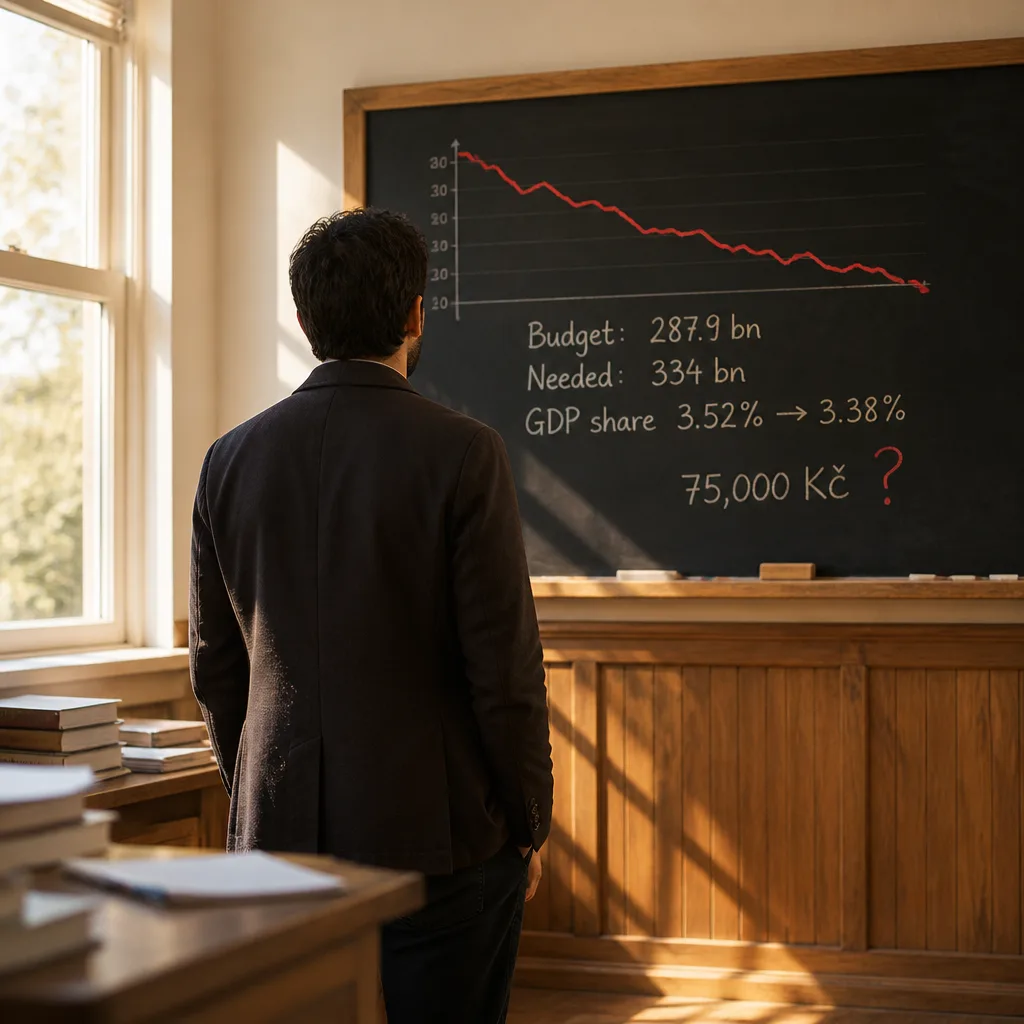
The Czech Republic's draft state budget for 2027 allocates 287.9 billion crowns to school education, a figure that teacher representatives say is insufficient to meet statutory obligations and to deliver on government pay promises.
Teachers' Platform says draft misses required spending
The assessment comes from the Teachers' Platform, a group led by Michal Kaderka, a secondary-school teacher who brings together more than 400 active educators. Kaderka has calculated that the proposed sum is roughly 6 billion crowns short of what is needed simply to cover mandatory expenditures in 2027.
He argued the draft budget also represents a step back from the ruling ANO movement's election commitments, which included a pledge not to cut education funding and an aspiration to bring Czech spending closer to the OECD and EU average. Instead, according to the Platform's calculations, the share of gross domestic product devoted to schools would fall from about 3.52% to 3.38% in 2027, as wages and the wider economy outpace the planned rise in education expenditure.
Pay promises under pressure
Attention has focused on the government's pledge to raise the average teacher salary to 75,000 crowns by 2029. Kaderka warns that reaching that target would require a near-term acceleration in pay rises — roughly a 12% increase next year — but the budget as drafted envisages only a 3–4% uplift.
That shortfall matters, the Platform says, because past experience shows pay levels affect recruitment and retention. When teacher salaries increase, interest in the profession improves; when wages stagnate, staffing pressures intensify, the group warns. The Finance Ministry’s medium-term forecast further compounds concern by projecting a steady decline in education spending, falling to 269.6 billion crowns by 2029 under current plans.
Wider consequences for school services
Kaderka cautioned the draft budget’s trajectory would not only squeeze teachers' pay but also staffing for specialist roles. In his view, insufficient funding risks shortages in areas such as special education support, school psychologists and other professionals who underpin inclusion and pupils' wellbeing.
He has argued that if the Czech Republic were serious about meeting its own commitments and aligning with OECD norms, the Education Ministry's allocation for 2027 should be closer to 334 billion crowns — some 46 billion crowns more than the current draft.
- Draft 2027 education allocation: 287.9 billion crowns
- Teachers' Platform estimate to meet commitments: ~334 billion crowns
- Projected spending under finance forecast by 2029: 269.6 billion crowns
| Item | Amount (billion crowns) |
|---|---|
| Draft 2027 allocation | 287.9 |
| Teachers' Platform recommended level | 334 |
| Finance Ministry forecast for 2029 | 269.6 |
The picture painted by these figures is of a sector facing sustained pressure. Even if headline cash totals remain broadly stable, a falling share of GDP means education will command a smaller slice of national resources as wages and other public spending grow.
For schools, the practical effect could include harder choices over class sizes, support staff and services that address behavioural and special educational needs. These are precisely the areas that tend to absorb rising costs quickly and where shortfalls feed through into classroom experience and pupil outcomes.
Teachers and their representatives will watch the coming weeks as the draft budget moves through consultations and scrutiny. The debate exposes a persistent tension in public policy: balancing macroeconomic forecasts and fiscal restraint with the recurring, day-to-day demands of classrooms and the long lead times needed to rebuild teacher numbers and specialist provision.
In short, the draft numbers have prompted a stark warning from the profession: without a significant uplift in funding, the Czech school system risks falling further behind both domestic expectations and international comparisons.











