
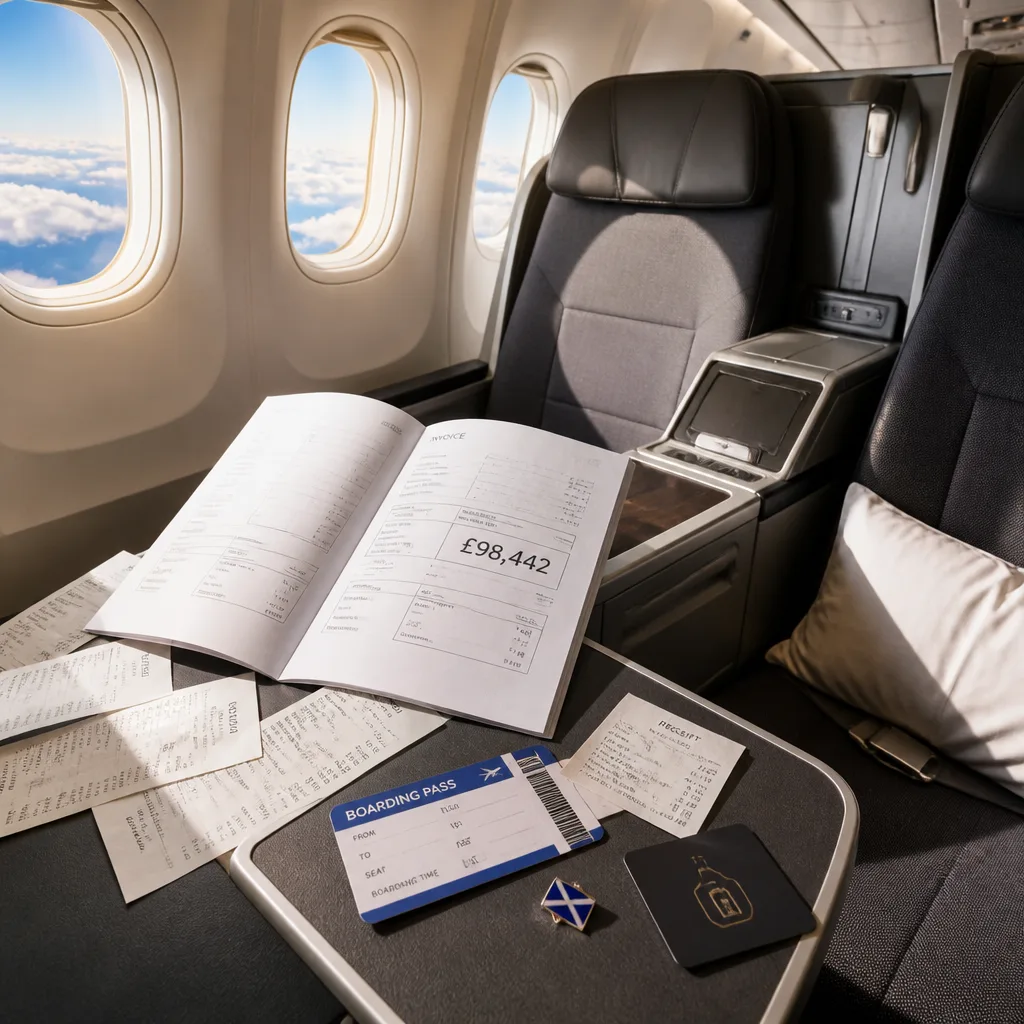
Senior Scottish ministers and their advisers incurred travel and accommodation bills totalling £98,442 for trips to the United States around the World Cup, public expenditure records show. The trips included business-class flights, hotels and car hire for the First Minister, the sports minister and officials, according to accounts released alongside ministerial commentary.
Who travelled and what it cost
The published figures show the largest single flight costs were for the First Minister, John Swinney, and his private secretary, John Webster, each charged £17,893 for flights. A further expense listed was a ticket for a special adviser, Colin McAllister, at £9,864.
Travel was described by ministers as combining support for Scotland’s national team with overseas engagement on trade, tourism, culture and investment. The delegation flew to Boston for Scotland’s first World Cup match and later travelled to Miami. Some discussions reportedly touched on trade links, including activity in Kentucky, known for its whisky industry.
“We sought to minimise costs,” the First Minister insisted, while noting his participation in trade talks.
Defence of costs and political reaction
Economy Secretary Stephen Flynn defended the deployment of ministers and officials, arguing that the ability to engage in person with overseas counterparts matters for trade and investment work. Speaking at the Edinburgh Festival, he framed the question of travel class as a trade-off between presence and perception.
“If we want our politicians to go and sit in row 46 beside the toilets and then land in Boston and then go and engage with US government officials having done so we’ll get exactly what we deserve,”
said Mr Flynn, echoing a line of defence that claims higher-cost travel can be justified by the nature of diplomatic and trade engagements. Conservative MSP Stephen Kerr said the expenditure suggested costs had not been controlled, even if there was public sympathy for ministers supporting the national team.
How this sits with wider official travel spending
The World Cup bill is not the only recent high-profile official travel cost to attract attention. Downing Street disclosed spending of around £60,000 on a private jet used to take the Prime Minister to watch England’s women’s team, with the one-night trip recorded at £60,130 including hotels for the Prime Minister, his wife and 10 officials.
That comparison is instructive: public scrutiny of ministerial travel is driven less by headline sums alone and more by the perceived connection between cost and public benefit. The Scottish government emphasises trade and investment objectives; critics point to optics and opportunity cost.
What the figures mean for public finances and public services
At face value, £98,442 is a modest figure against national budgets and trade promotion programmes. But for citizens and service users feeling the squeeze of inflation and tight public spending, such episodes feed a wider political argument about priorities. The questions raised are practical as well as political:
- Could the same meetings have been held with lower-cost travel without materially affecting outcomes?
- How are benefits from trade talks quantified against direct costs?
- Are rules governing travel class and delegation size sufficiently robust and transparent?
The Scottish government says the trips combined support for the national team with official business on trade, tourism and investment. Ministers argue that face-to-face negotiations remain important for securing contracts and partnerships that can support jobs and incomes at home; opponents counter that the public should see clearer evidence the taxpayer is receiving commensurate returns.
| Item | Amount |
|---|---|
| Total World Cup trip bill | £98,442 |
| Flight cost – John Swinney | £17,893 |
| Flight cost – John Webster (private secretary) | £17,893 |
| Ticket – special adviser Colin McAllister | £9,864 |
| Downing Street private jet trip (comparison) | £60,130 |
For businesses and workers tracking whether public money is being used to support growth, these episodes underline the need for clearer linkage between government travel spending and measurable returns: contracts won, investment pledged, or jobs created. Until such outcomes are publicly demonstrated, expensive ministerial travel will remain an easy political target and a source of scepticism among voters mindful of pressure on wages and public services.
Public bodies will need to balance the diplomatic imperatives of in-person engagement with tighter rules on economy versus business-class travel and more rigorous ex-post reporting on the value delivered. That clarity is what will determine whether headline figures such as £98,442 are viewed as necessary investment or avoidable expense.














