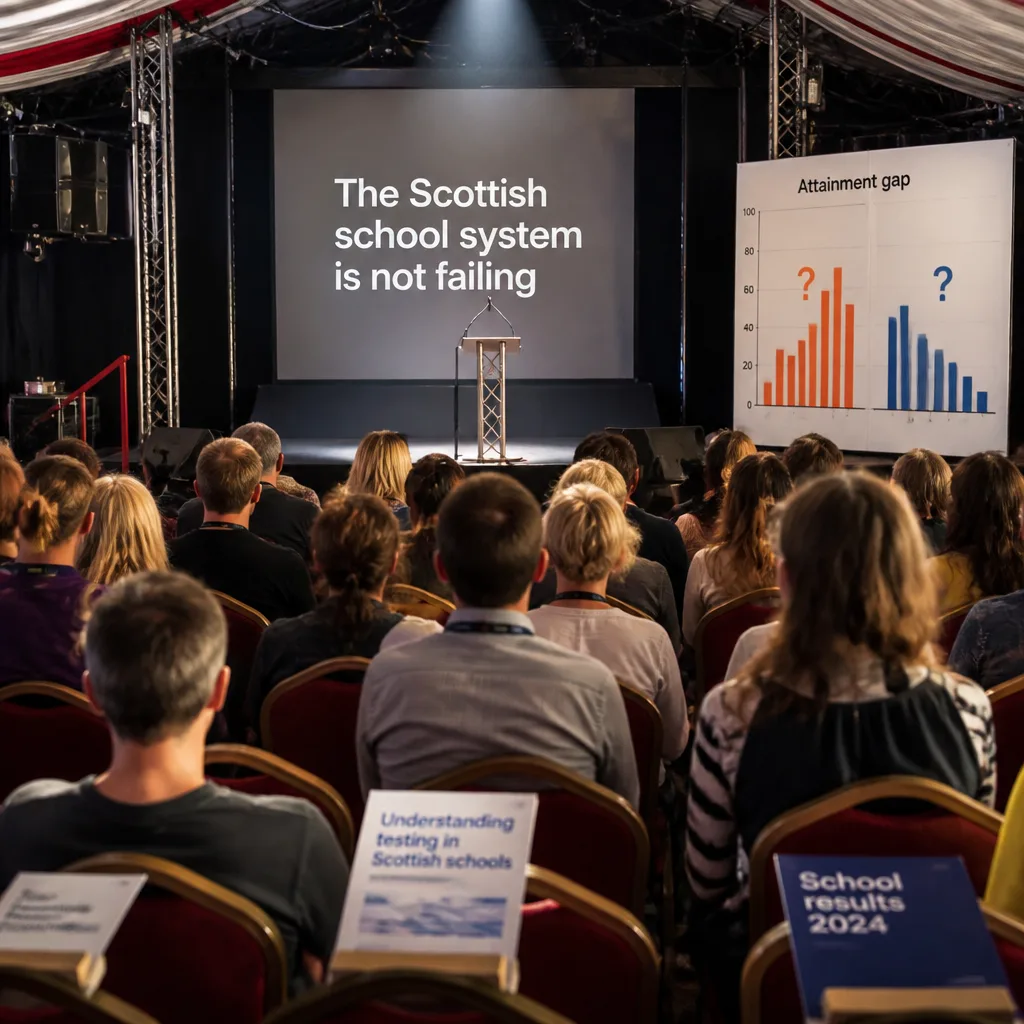
Nicola Sturgeon has told a Fringe audience that the Scottish school system "is not failing" and that she made substantial efforts to tackle its problems, but critics say her government's headline pledge to close the attainment gap between the richest and poorest pupils was not achieved.
The promise and the reality
In a recent appearance at the Edinburgh Fringe, Ms Sturgeon responded to a teacher who had suggested she should "atone" for her record on education by insisting:
"The Scottish education system is not failing. It never has been and it isn't right now. It has its challenges, and I did a lot to overcome those challenges."
The claim recalls a high‑profile speech Ms Sturgeon made in 2015, when she pledged that her government would eliminate the attainment gap. That commitment became a defining education target for the Scottish National Party administration and has informed policy, funding and debate ever since.
Critics, including commentators with knowledge of classroom realities, say the government did not close the gap and that the policy approach frequently misunderstood the causes of unequal outcomes. The contention centres on whether poorer pupils were being held back primarily by school‑level factors or by wider social and economic disadvantages beyond schools' control.
Testing, accountability and politics
During Ms Sturgeon's time in office there were also moves to reintroduce more standardised testing, with proposals that test scores should be published on a school‑by‑school basis. Supporters argued greater transparency and comparative data would drive improvement; opponents warned that such measures politicise education and risk blaming teachers and headteachers for problems rooted in poverty.
Some defenders of the SNP have argued that the Covid‑19 pandemic disrupted progress and that the attainment agenda was on track before 2020. Commentators sceptical of that defence say evidence of improvement prior to the pandemic was limited and that the government was not on course to meet its own targets even before the health crisis.
Consequences for classrooms and policy debate
The dispute over outcomes and responsibility matters for everyday school life. Teachers and headteachers face competing pressures to raise attainment while addressing the needs of pupils affected by poverty, family hardship and other non‑school factors. The debate also shapes funding priorities and the use of interventions such as targeted support, curriculum adjustments and measurement systems.
- 2015 – Ms Sturgeon’s prominent pledge to eliminate the attainment gap.
- Testing proposals – Plans to reintroduce standardised assessments and publish results by school.
- Covid‑19 – Used by some as an explanation for stalled progress; others maintain shortfalls predated the pandemic.
Those involved at school level say policy debates must be informed by a realistic understanding of classroom conditions and the socio‑economic landscape in which pupils live. Observers who worked in education expressed frustration that simple policy fixes were promoted by politicians with limited practical teaching experience.
| Policy area | Claim | Critics' view |
|---|---|---|
| Attainment gap | Government aimed to eliminate gap | Not eliminated; progress limited before pandemic |
| Standardised testing | Proposals to reintroduce testing and publish school scores | Risk of blaming schools for wider social issues |
The exchange at the Fringe highlights broader tensions: politicians must defend their records while opponents and education professionals insist on scrutiny grounded in evidence from schools and communities. For parents and teachers, the practical question remains how to narrow gaps in achievement without overstretching schools or attributing systemic social problems to individual classrooms.
Whatever view one takes of Ms Sturgeon's stewardship, the debate underlines that education policy cannot be resolved by declaratory ambition alone. Targeted measures, sustained investment, and clear, credible accountability arrangements will be necessary if Scotland is to make measurable progress on long‑running inequalities in pupil outcomes.