
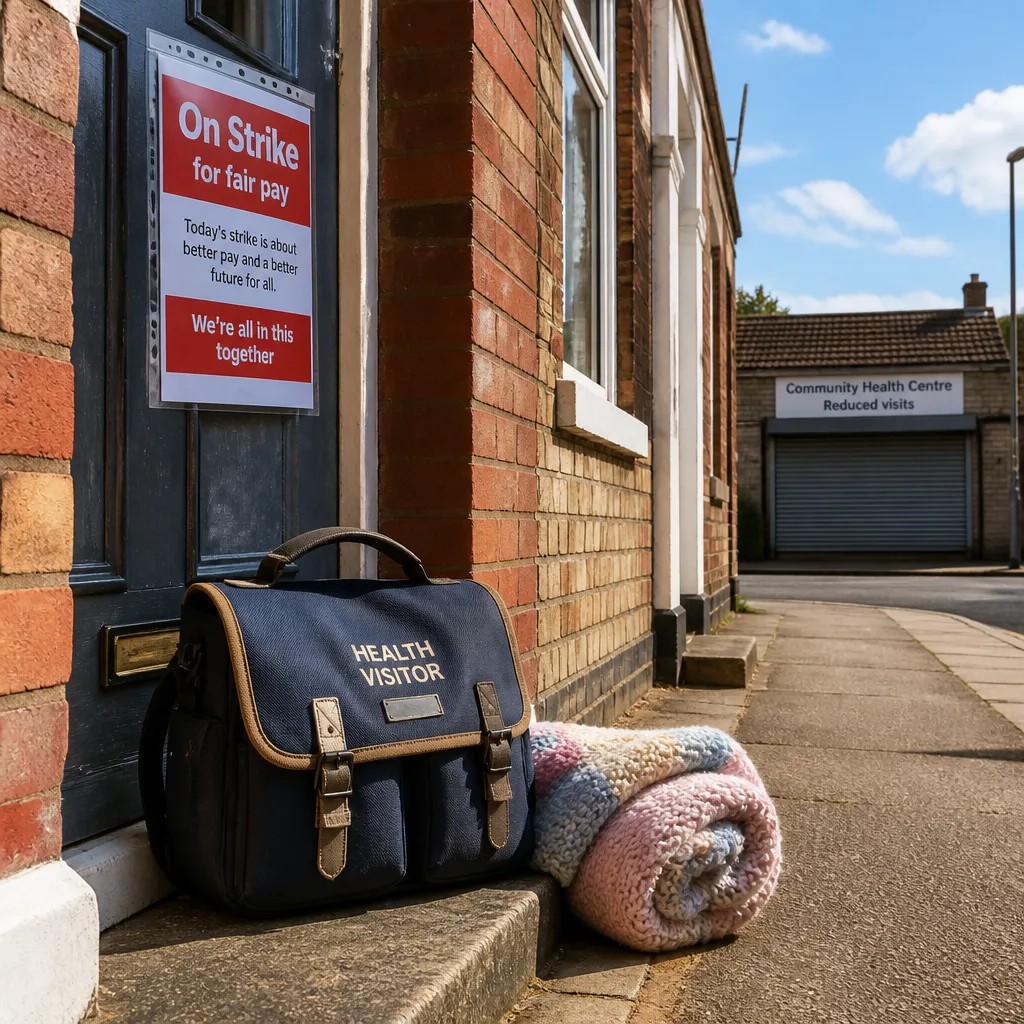
Around 100 health visitors at Cwm Taf Morgannwg health board have been on strike since February in a dispute over job grading, a stoppage that the board says has forced a dramatic reduction in home visits and prompted warnings that babies and young children are being left without vital checks.
Fewer visits, greater pressure on voluntary services
Between March and May 2025 the health board recorded 6,140 home visits by health visitors; in the same period in 2026 that figure fell to 909. The sharp decline has coincided with greater demand for community support groups: Mothers Matter, a charity that helps new parents and specialises in mental health, said referrals and requests for help have increased substantially.
The strike centres on grading of posts, with staff and their trade union arguing the current pay and grades do not reflect the level of skill and responsibility expected of health visitors. Unite, the union representing the workers, said members were seeking to be paid at a level that matches their experience and duties.
"[Demand has] doubled, if not trebled,"
Mothers Matter said the extra workload was straining its small team and making it difficult to keep volunteers and staff. The charity highlighted concerns that families who would normally be seen by a health visitor are instead presenting to GPs and hospital paediatrics, where problems may be escalated and continuity of care is weakened.
Families report practical and mental-health impacts
Parents spoken to in the affected area described real consequences. One mother said the absence of a health visitor made managing feeding issues more difficult, leading her to seek help from a GP and hospital services rather than receiving earlier community support. Another mother, who experienced postnatal depression after her first child, said she supported the strike but feared that other parents might not be getting an opportunity to disclose struggles or receive help.
The health board said it had prioritised safety and accessibility of services during the strike but acknowledged home visits had reduced. It has not provided detail in the material supplied on how many qualified staff remained providing essential checks or how it was mitigating clinical risk for the most vulnerable families.
- Strike length: Ongoing since February
- Number of staff on strike: About 100 health visitors
- Impact on visits: 6,140 visits (Mar–May 2025) vs 909 visits (Mar–May 2026)
| Period | Number of home visits |
|---|---|
| March–May 2025 | 6,140 |
| March–May 2026 | 909 |
Health visitors carry out a range of preventive and screening duties for newborns and infants, including developmental checks, feeding advice and assessment of parental mental health. Public health research shows that timely postnatal support can reduce rates of undetected postnatal depression and identify problems early; however, it is important to distinguish correlation from causation and the figures here demonstrate a shortfall in service provision rather than direct evidence of clinical harm to individual children.
Campaigners and unions argue a resolution to the dispute is required promptly to restore routine visits and reduce pressure on voluntary services and primary and secondary care. The health board has said it remains focused on maintaining safe services while the dispute continues, but the data for spring 2026 underline how much routine preventive contact has been reduced.
For families in Bridgend county, Merthyr Tydfil and Rhondda Cynon Taf, the withdrawal of regular contact with health visitors has increased reliance on small charities and on already-stretched GP and hospital services. The longer the dispute continues, the more challenging it may become to identify and support parents and infants who would normally be reached through community nursing and health visiting teams.














