Record GCSEs at St Mary's as pupils excel across subjects
St Mary's School Cambridge has announced its strongest GCSE performance in a decade, with top grades across a broad curriculum and particularly notable results in STEM subjects. The school reported a substantial share of the very highest grades this year, a milestone headteachers say reflects both academic rigour and pastoral support.
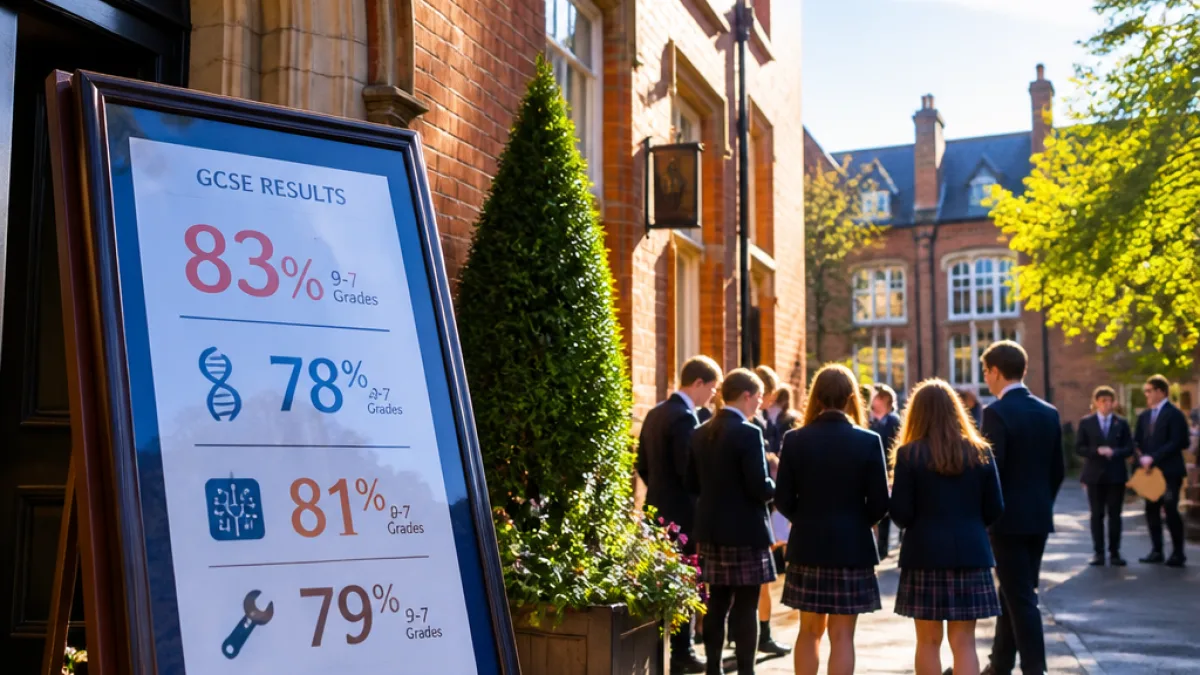
Overall, 24 per cent of grades were awarded at grade 9, with 46 per cent at grades 9–8 and 67 per cent at grades 9–7. These headline figures were underpinned by strong outcomes in traditional and vocational disciplines, from Latin and Classical Greek through to design technology and computer science.
Those figures were echoed in English, where both English language and English literature returned 70 per cent of grades at 9–7. The school also highlighted that popular A‑level choices remain in mathematics and the sciences, bucking a national trend away from girls choosing STEM subjects.
Strong STEM showing and subject breakdown
STEM subjects contributed significantly to the improved performance. Design technology produced particularly high top‑end outcomes, while biology and computer science also delivered strong results for the cohort.
| Measure | Percentage |
|---|---|
| Grade 9 | 24% |
| Grades 9–8 | 46% |
| Grades 9–7 | 67% |
For specific STEM subjects the school provided the following top‑end percentages:
- Design technology: 83% at grades 9–8
- Biology: 67% at grades 9–7
- Computer science: 59% at grades 9–8
“Watching our Year 11 students collect these results has been a real pleasure. Each grade represents a student who has been encouraged to question, explore and discover her own potential.”
Those comments were made by the school’s head, who reflected on more than 125 years of the institution opening doors for young women, adding that this year’s cohort were moving forward with confidence.
Pupil perspectives and the school environment
Pupils celebrating their results emphasised the role of teachers and the supportive environment. One student intending to study biology, psychology, geography and English at A‑level said the care and support from staff had been clear and had helped build confidence and lasting friendships. Another pupil, who will continue with biology, psychology, theology and classics at the school in September, described feeling grateful for the support she had received.
Senior leaders also credited the results to the combination of academic ambition and personal resilience fostered at the school. A senior deputy commented that the outcomes reflect the whole student: academically excellent, intellectually curious and personally resilient.
Local context and consequences
For families in St Mary's and the surrounding area, the results will be read as both reassurance and a prompt. Strong GCSEs can influence choices about sixth‑form pathways and applications to further education. The prominence of STEM achievement may encourage more local girls to pursue science and technology subjects at post‑16 level, reinforcing the school's position locally as a centre for those fields.
Within the town it is also likely that other schools and parents will watch how St Mary's continues to translate these GCSE successes into A‑level outcomes and onward destinations. For smaller businesses and services that support young people—tutors, extra‑curricular providers and sports and arts organisations—the results underline the prevailing emphasis on well‑rounded education in the area.
As families and pupils look ahead to the new academic year, St Mary's School Cambridge will be aiming to sustain the momentum shown by this year's cohort. The school’s leadership spoke of pride in students exceeding expectations and a determination to continue supporting both academic achievement and personal development.