
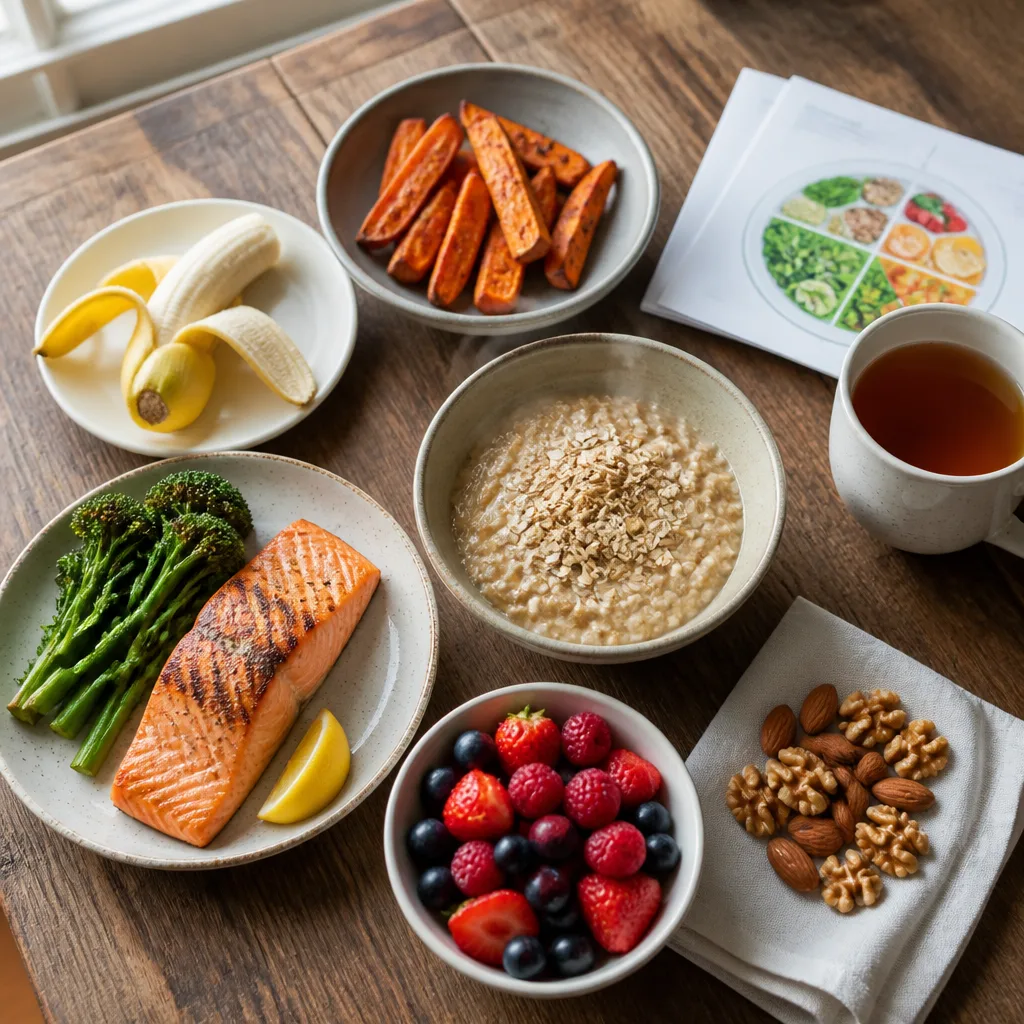
Bananas, sweet potatoes, salmon, berries, nuts and porridge are among commonly eaten foods that nutritionists identify as beneficial for heart health. While no single item is a panacea, these staples supply nutrients linked to cardiovascular function and may be useful when included as part of an overall healthy diet.
What the foods provide
Nutritionists say whole foods that supply potassium, unsaturated fats, fibre, omega-3 fatty acids and antioxidants can support markers associated with cardiovascular risk. The list of six foods commonly recommended for runners and the wider public includes:
- Bananas – a convenient source of carbohydrate and potassium, which helps regulate heart rhythm and muscle function.
- Sweet potatoes – provide fibre and potassium and deliver sustained carbohydrate energy.
- Salmon – offers protein and long-chain omega-3 fatty acids that are linked to reduced inflammation.
- Berries – rich in antioxidants and polyphenols that may support blood vessel health.
- Nuts (especially almonds and walnuts) – supply unsaturated fats, magnesium and fibre that can favourably affect cholesterol.
- Porridge (oats) – a source of beta-glucan, a soluble fibre shown to lower low-density lipoprotein (LDL) cholesterol in controlled settings.
Evidence and limitations
There is a substantial body of nutritional research showing that dietary patterns high in whole plant foods, oily fish and unsaturated fats are associated with lower cardiovascular risk. However, association does not prove cause in every instance, and effects observed in trials often depend on the quantity, quality and context of the food eaten.
For example, soluble fibres such as beta-glucan from oats have been demonstrated to reduce LDL cholesterol in randomised controlled trials, but the magnitude of benefit varies with intake. Likewise, long-chain omega-3 fatty acids from oily fish have been linked to reductions in markers of inflammation and some cardiovascular outcomes in certain studies, yet results differ by population, dose and study design.
Experts quoted in the original piece remind readers that "
There's no one food that you shouldn't eat" and stress that moderation and overall dietary patterns matter more than single items.
How to incorporate these foods safely
Integrating these staples into daily meals can be practical and sustainable. Guidance from nutrition professionals typically emphasises:
- Prioritising whole and minimally processed foods.
- Balancing portion sizes — nuts and oily fish are nutrient-dense and calorie-dense, so portion control is useful.
- Considering the whole diet: swapping saturated fats for unsaturated fats and increasing fibre intake generally confers greater cardiovascular benefit than adding one 'superfood' alone.
| Food | Main nutrients/benefit |
|---|---|
| Bananas | Carbohydrate, potassium — supports rhythm and muscle function |
| Sweet potatoes | Fibre, potassium — steady energy and blood pressure support |
| Salmon | Protein, omega-3s — anti-inflammatory effects |
| Berries | Antioxidants, polyphenols — vascular health support |
| Nuts | Unsaturated fats, magnesium, fibre — cholesterol and metabolic benefits |
| Porridge (oats) | Soluble fibre (beta-glucan) — lowers LDL cholesterol |
Practical caveats
Readers should note several caveats. First, individual response to dietary change varies according to genetics, existing health conditions and medication. Second, the benefits described depend on realistic serving sizes and consistent dietary patterns over time rather than occasional consumption. Third, some foods carry specific considerations: those on anticoagulant medication, for instance, should discuss frequent consumption of certain foods with their clinician.
Public health advice continues to focus on overall patterns — such as the Mediterranean-style diet or diets high in fruit, vegetables, whole grains, legumes, nuts and fish — which are supported by a wider evidence base for cardiovascular protection than the addition of single foods in isolation.
Including bananas, sweet potatoes, oily fish, berries, nuts and porridge can be a practical way to bolster intake of heart-supporting nutrients, but they are most effective when part of a varied, balanced diet and broader lifestyle measures such as regular physical activity, smoking cessation and blood pressure and cholesterol management.














