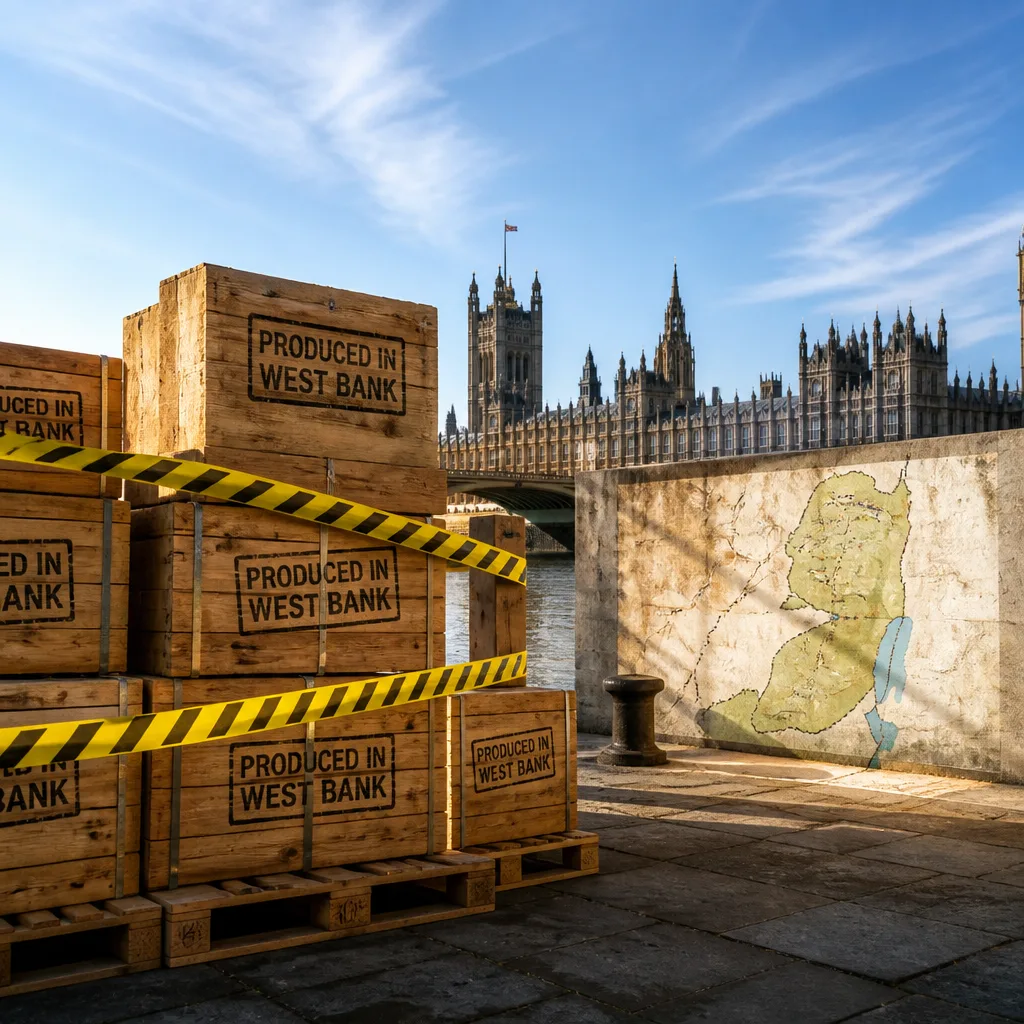
Emily Thornberry, chair of the foreign affairs select committee, has urged the UK government to introduce a ban on goods originating from the occupied West Bank, saying such a measure would help preserve the prospect of a two‑state solution for Israel and Palestine.
Deterrent against settler expansion, she argues
Speaking after a period of rising settler violence, Thornberry told reporters that actions by the Israeli government and settlers were putting the two‑state framework at risk by attempting to displace Palestinians from land in the West Bank. She said she did not support a full embargo on Israeli products, but favoured targeted measures against goods produced in settlements in the occupied territories.
“A ban on goods from the West Bank would be part of a deterrent,” she said, according to a report by the Press Association.
Thornberry also urged that British funds should not be used in ways that support settler expansion. Her intervention follows renewed concern in Westminster about material and political support for settlement activity.
Government reaction and diplomatic context
The foreign secretary, Ed Miliband, publicly rebuked Israel after it published a tender for construction of a settlement in the occupied West Bank. Miliband described the tender as an “unacceptable act” and warned it would “destroy” the two‑state solution, the PA reported.
The combination of a senior opposition MP advocating trade restrictions and the foreign secretary’s public criticism places the UK at a diplomatic juncture. Any move to ban goods from the West Bank would touch on trade policy, legal definitions of occupation and the practicalities of enforcement at ports and borders.
Practical and political implications
A targeted ban would raise a series of immediate questions for ministers to consider, including:
- How to define goods ‘‘from the West Bank’’ for customs and enforcement purposes.
- Mechanisms to verify origin and prevent re‑labelling or diversion via third countries.
- Potential diplomatic repercussions with Israel and responses from business groups and civil society.
Those questions sit alongside legal considerations about the status of settlements under international law and the UK’s existing obligations. Thornberry’s proposal stops short of advocating a complete boycott of Israel; it is focused on items tied to settlements in the occupied territory.
Recent events and parliamentary pressure
The intervention comes amid heightened attention in Parliament to settlement activity. The foreign affairs select committee has previously examined the implications of settlement expansion for prospects of a negotiated peace. Senior figures across Westminster have expressed alarm at recent tenders and planning activity in the occupied West Bank.
| Actor | Action |
|---|---|
| Emily Thornberry | Called for ban on goods from occupied West Bank; said British funds should not support settler expansion |
| Ed Miliband | Condemned an Israeli tender for settlement construction as "unacceptable" and destructive of two‑state outcome |
Any formal policy shift would require ministers to set out how they would implement and police a ban, while balancing trade and diplomatic considerations. The government will also need to consider parliamentary scrutiny and potential legal challenges from affected businesses.
Backbench and select committee pressures can influence foreign policy direction, particularly when they touch on human rights and international law. Thornberry’s stance is likely to intensify debate inside Parliament and among diplomats in London and Brussels.
It remains for ministers to say whether they will take up the suggestion and, if so, how quickly and with what instruments. For now, the issue has been elevated in Westminster and to the foreign secretary’s desk, underscoring the continuing tensions between political advocacy, trade practice and diplomatic relations on the Israel‑Palestine question.