British workers are facing a growing, largely overlooked drain on household finances as the cost of getting to work has climbed substantially over the past decade. Recent figures point to average annual commuting costs now ranging from £2,600 to £5,100, compared with around £1,700 in 2017 — a rise of more than 50% in real terms for many households.
Which parts of the journey are getting pricier?
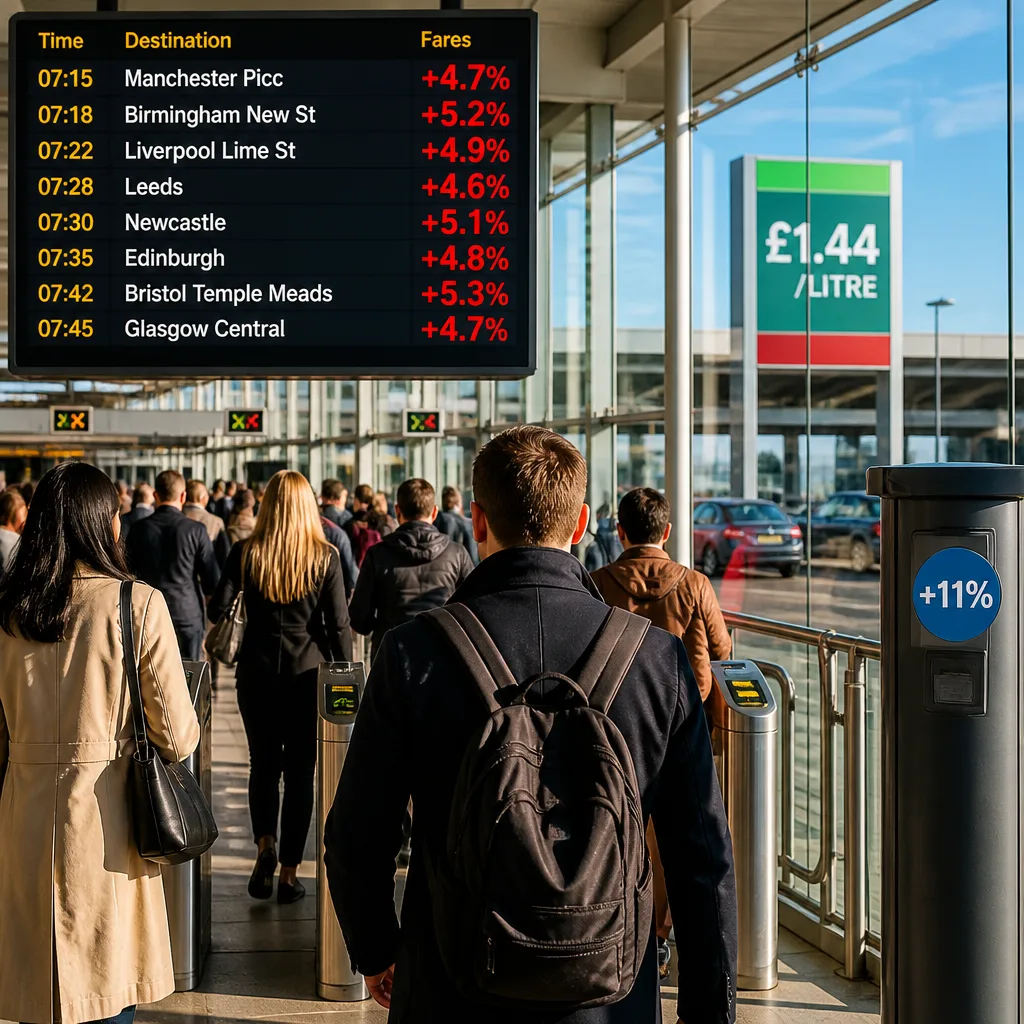
The increases are widespread rather than confined to a single mode of transport. Rail fares recorded a 4.6% rise in March 2026, while bus fares have gone up by an average of 8% across many regions. Motorists are contending with petrol prices that remain stubbornly high — above £1.44 per litre — a level the report says is roughly 35% higher than before 2022. Urban drivers also face higher parking costs: charges across UK cities rose by an average of 11% in 2026, with some London boroughs increasing rates by as much as 20%.
| Item | Reported change |
|---|---|
| Average annual commuting cost (2017) | £1,700 |
| Average annual commuting cost (2026) | £2,600–£5,100 |
| Train fares (March 2026) | +4.6% |
| Bus fares (many regions) | ~+8% |
| Petrol vs pre-2022 | ~+35% (prices > £1.44/litre) |
| Parking charges (cities, 2026) | Average +11% (up to 20% in some London boroughs) |
What this means for households and pay
Commuting costs, the analysis suggests, are rising at roughly 3% faster than general inflation. For workers whose nominal pay has not kept pace, that differential is effectively a pay cut: additional pounds are being siphoned away before households spend on housing, food or savings.
The report also highlights a widespread underestimation of travel expenses. On average commuters underestimate their annual travel bill by at least 30%, suggesting many households are not budgeting adequately for transport and may be more exposed to shocks — such as sudden fuel price jumps or fare increases — than their income statements imply.
- Commuters face sharply diverging impacts depending on location, distance and mode of transport.
- Public transport users have seen notable fare rises, but motorists are not insulated from cost pressure due to fuel and parking increases.
- Rising commuting costs compound existing strains on real pay and household budgets.
Behavioural and economic consequences
The pattern of rising transport bills is already altering decisions about how people travel to work. The report notes an increase in workers reassessing their daily journeys and, in some cases, switching to cheaper alternatives such as electric scooters — a change that can return “hundreds or thousands of pounds” to household budgets over a year, depending on commute length and local fares. While the shift to lower-cost modes can ease immediate pressure on incomes, it also reflects a worrying adjustment: households responding to cost pressure by changing travel behaviour rather than benefitting from higher pay.
There are broader implications for the labour market and consumer spending. If a larger share of wages is diverted to commuting, discretionary spending falls, with consequences for firms that rely on consumer demand. Moreover, rising travel costs could influence employer location choices and hiring patterns, particularly where firms compete to attract workers in areas with poor transport infrastructure.
Policymakers and businesses will need to weigh these trends when designing transport policy, pay settlements and urban planning. On pay, the arithmetic is straightforward: wage increases that match headline inflation will still leave workers worse off if commuting costs keep rising faster. For employers, ignoring rising travel costs risks making job offers less attractive unless they compensate with higher wages, flexible working or travel subsidies.
The increases outlined are not evenly distributed — some workers will absorb much higher bills than others — but the aggregate picture is one of persistent cost pressure on the working population. That pressure will shape household choices, corporate recruitment and public policy in the months and years ahead.