Big numbers, visible effects across the town
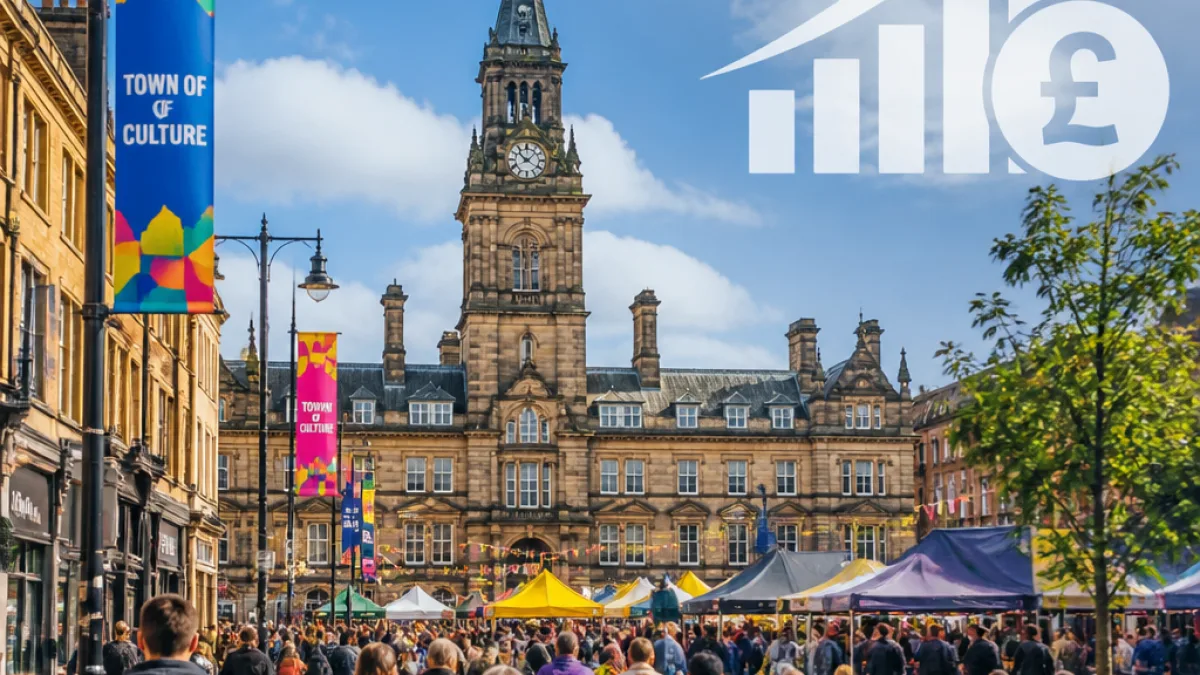
The formal evaluation of Rochdale’s year as Greater Manchester’s Town of Culture shows the programme was more than a badge of honour – it translated into footfall, spending and new opportunities for local artists and volunteers.
Rochdale Development Agency (RDA), with support from The University of Manchester, says the year – which ran from April 2025 to March 2026 – drew an estimated 213,000 people to 297 events. That attendance, the report concludes, generated in excess of £5.5 million of additional leisure spending in the borough, benefiting restaurants, bars and retailers in and around the town centre.
What the numbers mean locally
The headline figures are backed up by a string of other impacts the report sets out: the programme helped cultural organisations leverage further funding, created short-term creative jobs and brought residents together as volunteers and learners.
- £1.1 million – recorded as additional investment attracted by partners who supported the town’s year.
- 1,300+ artists employed during the year, most working freelance (the report equates this to more than 12 full-time employees).
- Nearly 800 residents took part as volunteers, gaining skills and building networks.
- 4,700+ adults engaged in workshop sessions and nearly 6,000 young people participated in activities.
- £245,000 – the value attributed to positive publicity generated for Rochdale.
| Measure | Figure |
|---|---|
| Attendance | 213,000 |
| Events | 297 |
| Additional leisure spending | £5.5m+ |
| Additional investment attracted | £1.1m |
Voices from the council and community
“Rochdale’s year as Greater Manchester Town of Culture was a huge success, attracting more than 213,000 people to enjoy nearly 300 events, generating well over £5.5 million for our local economy. It showcased the very best of our borough and created positive publicity that reflected so well on Rochdale. It is particularly encouraging that 94% of attendees felt the events enhanced Rochdale’s image. We also saw significant increases in engagement with younger audiences and a wide range of diverse communities.”
The remarks were made by Councillor Sue Smith, cabinet member for communities and co-operation at Rochdale Borough Council, summarising the council’s view of the year. The statistic that 94% of attendees felt events improved Rochdale’s image is singled out in the evaluation as a notable reputational gain.
Local consequences and the next steps
The economic boost comes at a crucial time for high streets and grassroots arts organisations. The report’s figures suggest the Town of Culture year created short-term incomes for freelancers and small cultural employers, while the reported additional partner investment of £1.1m may deliver longer-term benefits for projects and organisations that secured that support.
Nearly 800 volunteers and thousands of participants in workshops and youth activities signal direct community engagement beyond passive attendance. That wider participation is important for sustaining cultural activity: it builds local skills, creates pathways into creative careers and strengthens networks that can help projects find volunteers or collaborators in future.
However, the evaluation also raises practical questions for policy-makers and funders in Rochdale: how to convert a concentrated year of activity into sustained programming, how to support the freelance artists who filled many of the roles, and how to ensure business benefits reach neighbourhoods across the borough, not only the town centre.
Why Rochdale matters
Rochdale’s Town of Culture year compressed what the RDA called the equivalent of four years of activity into a single 12-month period. For residents, that meant more events on their doorstep, more work for local creatives and a sharper public profile for the town. For businesses, the extra leisure spend recorded in the report offers evidence that culture can be a driver of local economic activity.
The next test will be whether the momentum from the Town of Culture year is turned into permanent gains for Rochdale’s cultural sector and wider economy. The published evaluation provides a basis for local leaders to plan how the town’s cultural offer can continue to support jobs, training and town centre vitality moving forward.