Mayor pitches large-scale affordable housing plan during Ashton-under-Lyne visit
The Mayor of Greater Manchester used a visit to Stamford Street Central, Ashton-under-Lyne to set out an ambitious housing timetable that aims to reshape how brownfield land is used across the city-region. The administration’s headline goal is to build 50,000 new council and genuinely affordable homes by 2039, with an immediate target of 10,000 homes by May 2028 through a mix of completions, construction starts and planning approvals.
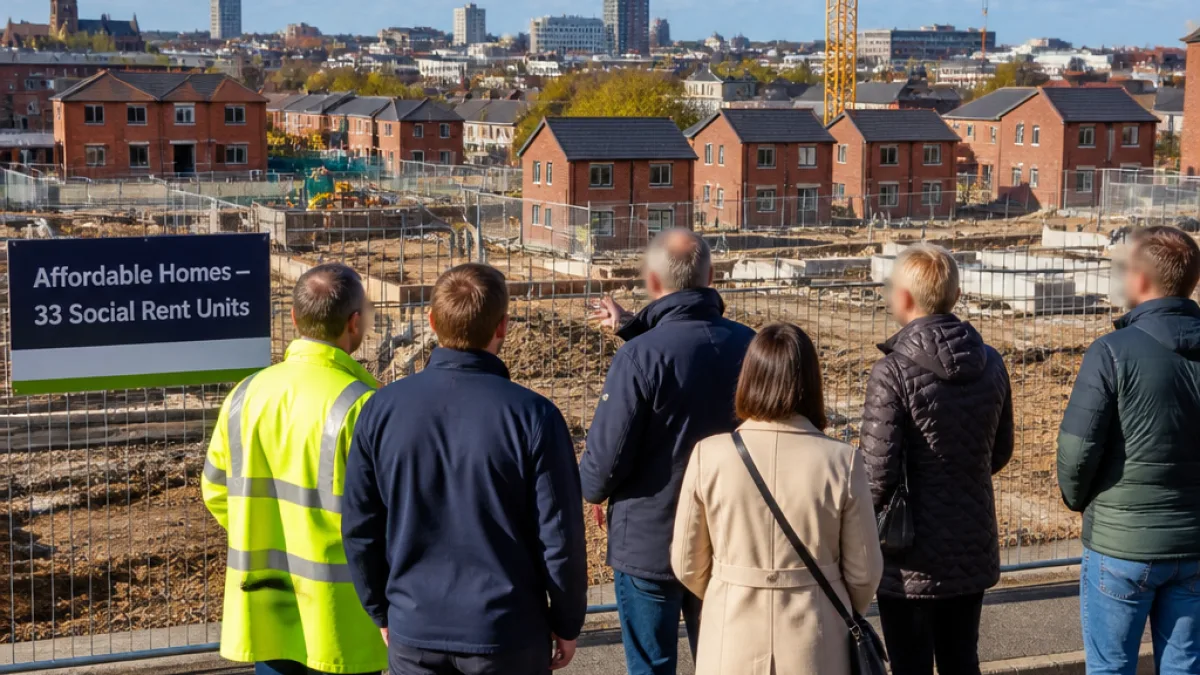
The visit underlined a policy steer towards converting disused sites and public land into housing, using public funding to unlock schemes that would otherwise not proceed. At the Ashton-under-Lyne location the mayor highlighted a scheme already in progress: 33 new social rent homes being constructed at Stamford Street Central.
- Overall target: 50,000 council and affordable homes by 2039.
- Short-term target: 10,000 homes by May 2028 (completion, construction or planning).
- Local scheme: 33 social rent homes under way at Stamford Street Central.
“Transform brownfield sites into affordable homes”
That phrase, used in the mayoral materials, captures the thrust of the plan: prioritise previously developed land and public sites to deliver housing that is genuinely affordable to local residents. The approach relies on public funding to bring sites forward and on co-ordination with local development partners — the mayor’s team invited interested parties to meet and register for the event in Ashton-under-Lyne.
Local impact and immediate next steps
For Ashton-under-Lyne the visit was both symbolic and practical. Stamford Street Central was chosen as a working example of the kind of brownfield site the Greater Manchester Combined Authority (GMCA) wants to replicate elsewhere. The presence of a 33-home social rent development gives neighbours and local councillors a real-world reference point for the scale, tenure and delivery of the schemes being promoted.
The GMCA has urged those with an interest in the programme to register attendance for engagement events; the published notice set a registration deadline of 5pm the same day. For further information, the GMCA communications and engagement team provided a contact email: [email protected].
Numbers and deadlines — a quick reference
| Target | Deadline / status |
|---|---|
| Council and genuinely affordable homes | 50,000 by 2039 |
| Short-term delivery milestone | 10,000 by May 2028 (completion, construction or planning) |
| Local scheme at Stamford Street Central | 33 social rent homes under construction |
How the targets are met will shape planning applications, public spending and the appetite of housing associations and private developers to work with the GMCA. For residents in Ashton-under-Lyne, plans that favour brownfield sites could alter the development landscape by increasing activity on previously unused parcels of land rather than greenfield estates.
There are also practical consequences for local services: building projects bring construction jobs and contractor activity in the short term and add to housing stock in the medium term, which may affect demand for council services, schools and transport links. The mayor’s timetable makes the immediate push for 10,000 homes a test of delivery mechanisms and partnership working across boroughs.
Ashton-under-Lyne has a chance to be one of the early beneficiaries of the policy: the Stamford Street Central scheme provides a tangible example of delivery and a focal point for discussions with the combined authority and local partners. Those with proposals or questions have been directed to the GMCA’s communications team via the published contact details.
This visit frames the mayoral ambition in local terms and sets a clear challenge — and opportunity — for Greater Manchester’s councils, housing associations and developers to turn brownfield promise into homes for residents.