
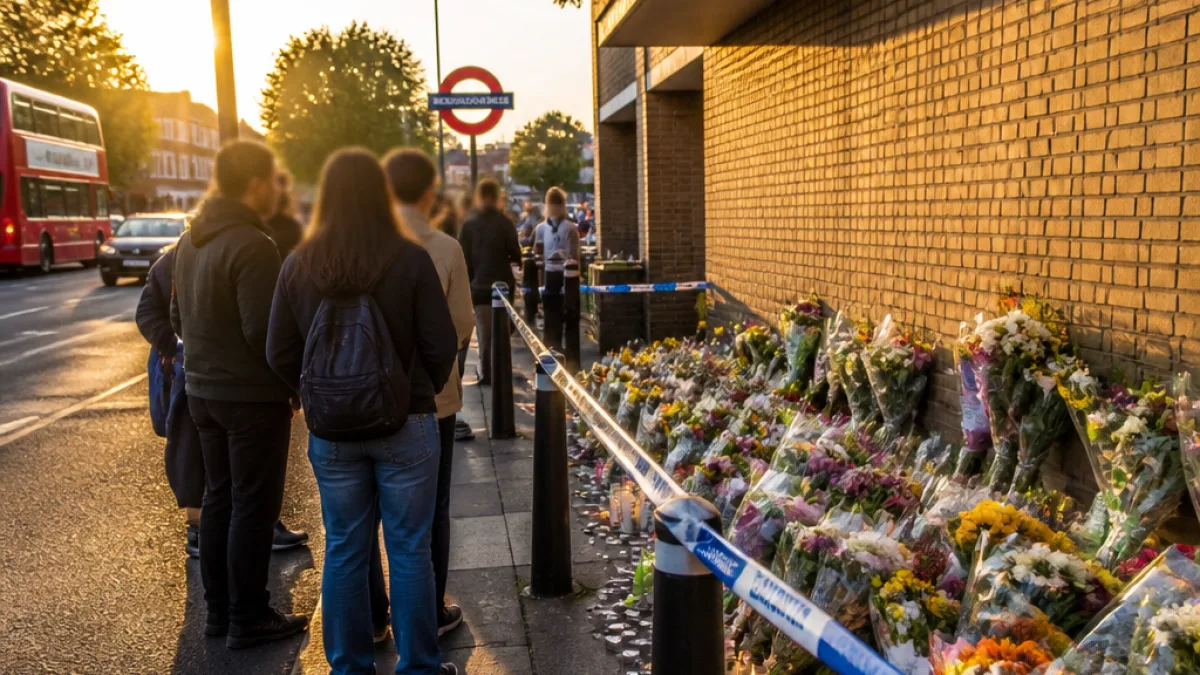
The majority of unsolved murders in London between 2019 and 2023 involved victims from ethnic minority communities, according to fresh analysis that has prompted concerns about unequal protection and worsening trust in the police.
Disparity concentrated among young Black victims and firearm cases
Research by the charity Action on Armed Violence shows ethnic minorities made up 61% of all recorded homicide victims in the capital during the four‑year period, but accounted for nearly 93% of unsolved cases. The imbalance is most acute among Black Londoners: they were victims in 40% of all murders and in 73% of unsolved killings.
The charity’s analysis also highlights that shootings are more likely to remain unsolved than stabbings. Black people represented 83% of unsolved shootings and 73% of unsolved stabbings during the period under review. The average age for homicide victims in London was recorded at 36, but the average age in unsolved cases fell to 28, indicating a younger demographic is disproportionately affected when investigations fail to reach a conclusion.
“Our data suggest that London’s unsolved murders are not evenly distributed. Instead, they are concentrated among young Black men and in cases involving firearm violence,” said Iain Overton of Action on Armed Violence.
Impact on communities and trust in policing
Campaigners and the charity behind the research warn that unequal outcomes in homicide investigations risk deepening existing mistrust between affected communities and police. Where families of victims do not see those responsible brought to justice, perceptions of unequal treatment under the law may harden.
That mistrust is acknowledged by the Metropolitan Police. The force says one factor behind the disparity could be lower levels of trust in policing among Black communities, which can reduce co‑operation from victims and witnesses and make investigations more difficult.
Despite the findings on unsolved cases, the Met note their overall clearance rate for murders compares favourably: the force said around nine in 10 recorded killings ultimately led to a conviction. Last year the Met recorded 97 homicides in London, its lowest figure in a decade and down from 153 in 2019.
“We know serious violence disproportionately affects certain communities, particularly young black men, who have the lowest trust in policing,” said Commander Paul Brogden, head of homicide at the Met.
Numbers at a glance
| Measure | Value (2019–2023) |
|---|---|
| Proportion of homicide victims who were from ethnic minorities | 61% |
| Proportion of unsolved murder victims who were from ethnic minorities | ~93% |
| Proportion of murders with Black victims | 40% |
| Proportion of unsolved murders with Black victims | 73% |
| Average age of all homicide victims | 36 |
| Average age of victims in unsolved cases | 28 |
What this means on the ground
On borough streets where young Black men say they already feel over‑policed yet under‑protected, the figures will be seen as confirmation of long‑standing grievances. Local campaigners argue that when investigations stall, communities not only lose faith in detectives but also become less likely to engage with future inquiries — a cycle that can leave violent offenders free to reoffend.
Police say there are many reasons why investigations can be hard to resolve, including lack of witnesses, difficulties securing forensic evidence and the often complex criminal networks involved in firearm crimes. They stress the Met’s overall murder‑to‑conviction ratio remains comparatively high.
However, the pattern revealed by Action on Armed Violence has prompted calls for targeted measures to restore confidence and reduce the inequality in investigative outcomes. Suggestions from community groups include improved witness protection, additional resourcing for homicide squads working in affected boroughs and expanded outreach to rebuild trust.
Moving forward
For policy‑makers and senior officers, the figures present both an operational and political problem. Redressing the imbalance will require not only investigative improvements but also sustained community engagement to ensure witnesses feel safe to come forward.
- Action on Armed Violence analysis covers homicides recorded between 2019 and 2023.
- Ethnic minorities made up 61% of homicide victims and nearly 93% of unsolved victims in that period.
- Black victims were heavily over‑represented in unsolved shootings and stabbings.
The statistics underline a pressing question for London: how to ensure equal access to justice across communities while sustaining the downward trend in overall homicide numbers. Without answers, the gulf between victims and investigators risks widening — with consequences for public safety and social cohesion.















