LHT Logistics has celebrated its 25th anniversary by investing in new vehicles and expanding the territory it serves, moves that underline the continuing evolution of Britain’s independent haulage sector as it chases higher‑margin long‑distance work.
From local courier to national trunking
The company, established in 2001 by a father and his sons following the family’s exit from running a long‑standing pub, began as a small courier outfit from a modest 1,000 sq ft warehouse in Edmonton. It now runs a fleet and a hub close to the M25 that supports daily nationwide trunking and regional routes across North London, Hertfordshire and Essex.
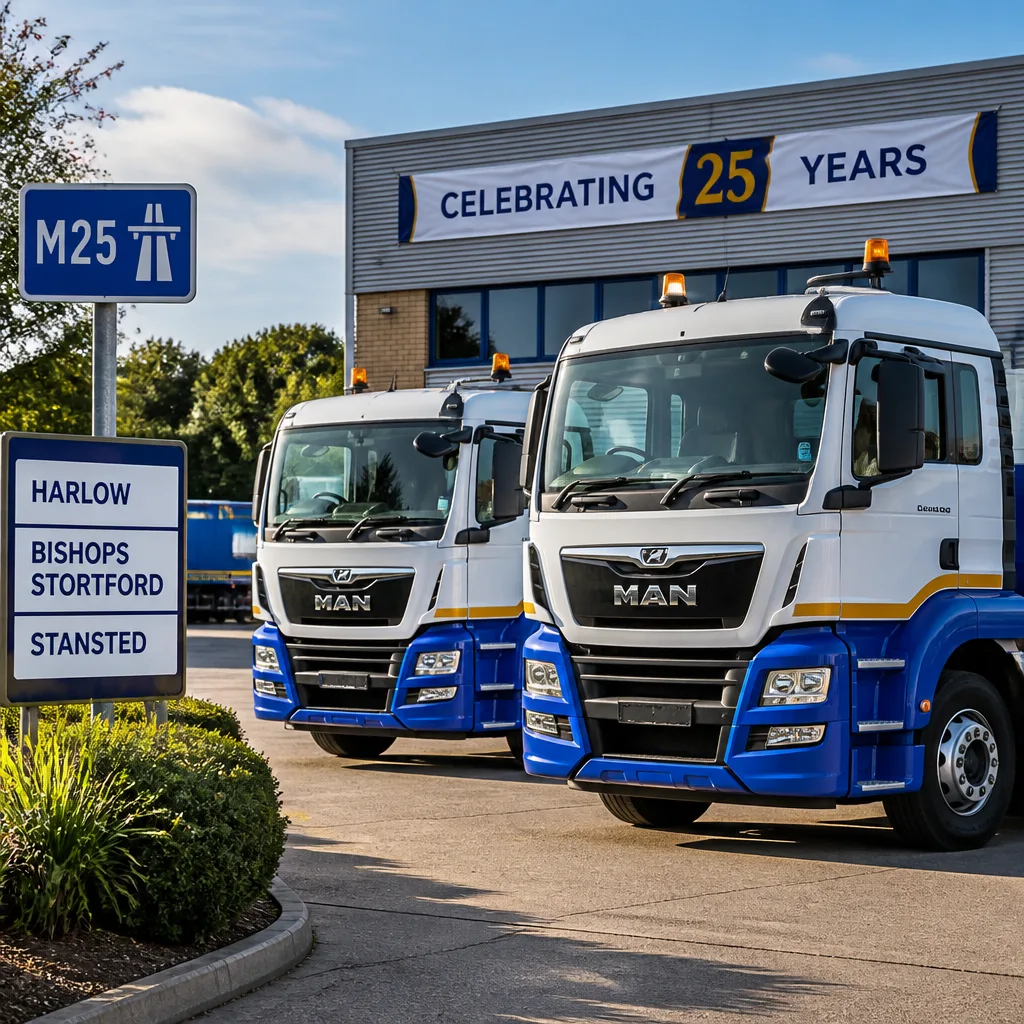
Today LHT operates a fleet of 15 vehicles and employs a workforce of about 30 people at its depot. In a sign of strategic repositioning, the company has recently added two MAN trucks to a fleet of Renaults and said this purchase forms part of a move towards long‑distance general haulage and higher‑volume trunk routes.
Territorial gains and turnover growth
The business has also taken on new network territory within the Pall‑Ex freight network, including Harlow, Bishops Stortford and Stansted. LHT stated these additions have driven a notable surge in turnover in the past six months, without disclosing specific revenue figures.
“Reaching 25 years is a massive milestone for us... Investing in our fleet and expanding our territory are crucial steps to the next chapter of growth for us,” said managing director Ben Ruby.
Such comments are consistent with many owner‑managed hauliers who invest in additional capacity and network rights to lift utilisation and billing rates. But without published financials, it is not possible to verify the scale of recent revenue growth or how margins have changed after purchasing new trucks — which typically involve substantial capital and running costs.
What it means for jobs, pay and prices
A mid‑sized regional operator expanding into national trunking can have several practical implications. Employing an extra driver or two and adding depot staff would boost local jobs, albeit modestly relative to national employment. Higher utilisation and longer hauls tend to raise driver hours and exposure to fuel, maintenance and infra‑costs — pressures that feed into wage demands and, ultimately, customer prices.
Smaller logistics firms are often squeezed between rising operating costs and customers’ price sensitivity. Investment in newer trucks can improve fuel efficiency and reliability, lowering per‑kilometre operating costs, but also brings depreciation and finance charges. LHT’s decision to buy two MAN vehicles suggests management expects greater revenue from longer routes to offset those costs.
- Fleet size: 15 vehicles
- Staff: ~30 employees
- Recent investment: Two MAN trucks added to existing Renault fleet
- New territories: Harlow, Bishops Stortford, Stansted
| Metric | Reported |
|---|---|
| Years in business | 25 |
| Depot staff | ~30 |
| Fleet | 15 vehicles |
Recognition from network partners may help with commercial credibility. LHT won the Pall‑Ex “Depot of the Year” award, and Pall‑Ex’s chief operating officer praised the business for sticking to its core values while investing for the future. Such endorsements can matter when large shippers choose network partners and when independent hauliers bid for higher‑value trunking contracts.
Nevertheless, expansion plans will be tested by broader market dynamics: driver shortages, wage pressures, fuel price volatility and tight freight margins. For the workforce, new network territories can mean more stable, longer‑distance work but also longer shifts and less home time — factors that influence recruitment and retention and, indirectly, wage bargaining.
For customers, the shift by small operators into trunking can increase competition and choice, potentially easing spot rate volatility. But the benefits hinge on whether firms like LHT can scale efficiently without passing higher costs to clients.
For now, LHT’s quarter‑century milestone is a reminder that many of Britain’s logistics players are family‑rooted, nimble and prepared to reinvest. Whether that translates into sustained growth, better pay for drivers or lower prices for customers will depend on execution and the same structural forces shaping the wider haulage industry.