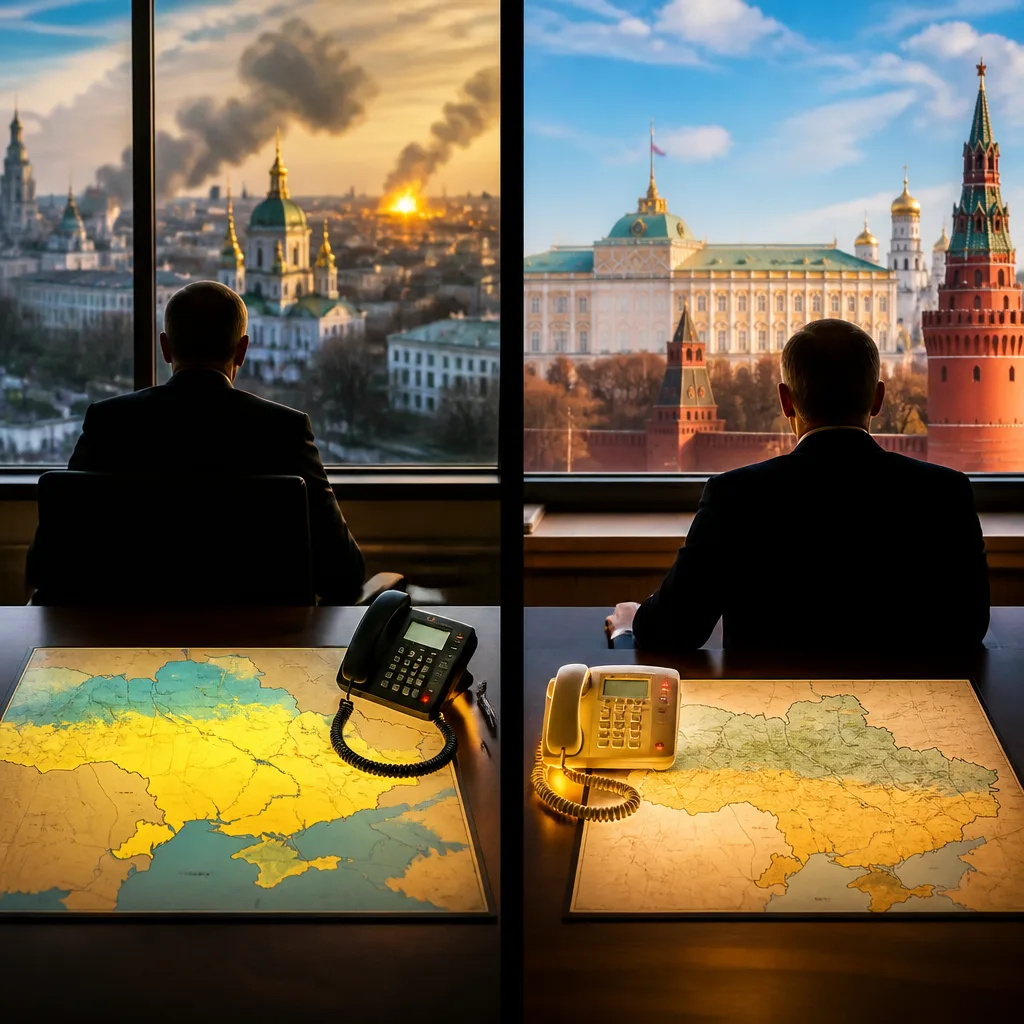
The Kremlin said on Tuesday that Russian President Vladimir Putin and US President Donald Trump held an hour-long, "extremely frank" and constructive telephone call that focused on ending the conflict in Ukraine. The conversation follows a weekend of shuttle diplomacy by US negotiators and fresh Russian strikes on Ukrainian cities, including Kyiv.
Diplomatic momentum after envoy visits
The call came after US figures Steve Witkoff and Jared Kushner travelled to both Moscow and Kyiv over the weekend in a bid to restart long-stalled American efforts to broker a settlement, the Kremlin said. According to Kremlin aide Yuri Ushakov, Mr Trump urged a swift end to hostilities, while Mr Putin provided what the aide described as an "objective and detailed analysis" of conditions on the frontline.
"[They] focused on the issue of a settlement in Ukraine," Kremlin aide Yuri Ushakov told reporters.
The White House did not publish an immediate readout of the call. The Kremlin’s account included an assertion that Mr Putin outlined what the United States could "realistically do to bring the hostilities to a swift conclusion" and emphasised that Russia had no aggressive intentions towards Europe, according to Mr Ushakov.
Fighting continues despite talks
The phone call coincided with renewed Russian aerial strikes. The Kremlin had announced a short ceasefire to allow Mr Witkoff and Mr Kushner to visit Kyiv, but the strikes resumed overnight and Ukrainian emergency services said at least five people were killed. Reporters in Kyiv heard explosions in the early hours, with fires reported and residents sheltering in basements and metro stations.
Ukrainian President Volodymyr Zelenskyy said negotiators from Russia, Ukraine and the United States could meet as soon as this month to discuss an end to the war. He was quoted as saying he wanted talks to take place in the autumn if all parties agreed.
"If all sides agree, we also want to hold it in the autumn. If September works out, then it would be great. The earlier, the better," Mr Zelenskyy said.
Practicalities and obstacles
Despite the momentum of talks and high-level engagement, the Kremlin had on Monday cautioned that it was "too early" to fix a venue or date for face-to-face negotiations. Previous rounds of diplomacy have repeatedly foundered. Trust between Moscow and Kyiv remains low, and there is little sign either side has moderated hardened positions on key issues.
- Participants: Mr Putin, Mr Trump; US envoys Mr Witkoff and Mr Kushner visited Moscow and Kyiv.
- Timing: One-hour call on Tuesday; envoy visits over the preceding weekend.
- Security situation: Russian strikes resumed after a brief ceasefire; Ukrainian authorities reported at least five fatalities.
The Kremlin’s summary of the call highlights a familiar pattern in diplomacy on the Ukraine war: high-level exchanges that produce statements of intent but little immediate clarity on implementation. Mr Putin’s presentation of battlefield developments and the Kremlin’s insistence that Russia harbours no aggressive plans for Europe are longstanding elements of Moscow’s public stance.
What this means going forward
If credible, the call could reflect a US push to leverage direct engagement between leaders to create space for talks on the ground. Washington has been advocating fresh, face-to-face negotiations between Moscow and Kyiv; Kyiv has indicated willingness to enter talks if certain conditions and safeguards are met.
However, the continuation of strikes even as diplomacy advances underlines the fragility of any pause in violence. Any negotiated process — whether mediated by the US or conducted directly between Moscow and Kyiv — will need to resolve a range of unsettled political and territorial questions that have previously prevented agreement.
| Item | Detail |
|---|---|
| Call length | One hour (Kremlin) |
| Envoys | Steve Witkoff, Jared Kushner (US visits to Moscow and Kyiv) |
| Reported fatalities | At least five people killed in renewed strikes (Ukrainian rescue services) |
For UK policy-makers and international partners, the immediate concern will be whether diplomatic engagement can reduce civilian harm and create conditions for reliable, verifiable talks. Observers will also watch for any concrete initiatives emerging from Washington that might translate bilateral leader engagement into durable progress at the negotiating table.