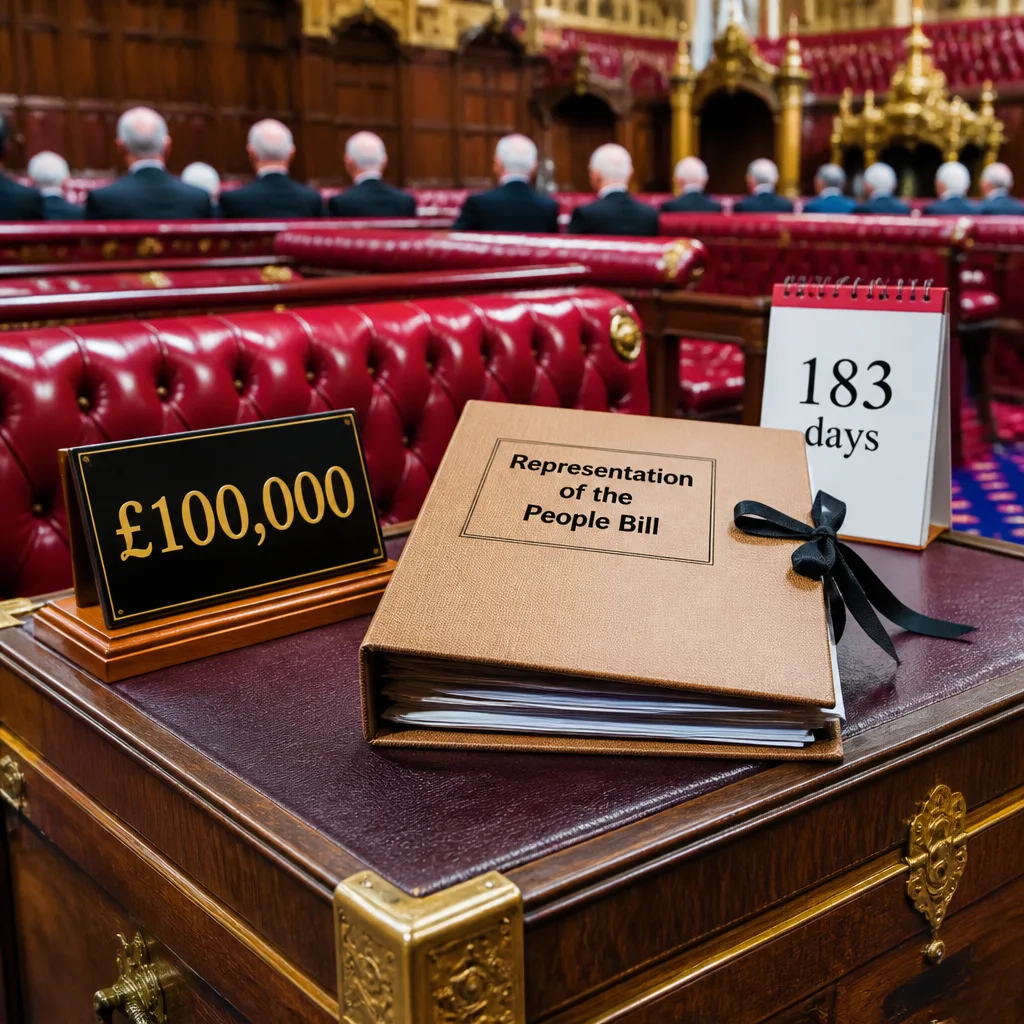
The government is proposing stronger residency requirements for people who make large political donations, including a minimum period of UK residence and tighter tests of whether donors have a genuine connection to Britain, Communities Minister Baroness Taylor of Stevenage told peers.
What ministers want
The measures under discussion would retain the existing annual cap on donations above £100,000 but would make it harder for individuals who have spent significant time overseas to give above that threshold, according to exchanges in the House of Lords on Monday as the Representation of the People Bill was debated.
Speaking in the Lords, Baroness Taylor said the government was “considering how we will strengthen the residency requirements, including ensuring that the length of time spent in the UK aligns with broader government policy.” She also said ministers intended to introduce a regime requiring donors contributing above the cap to demonstrate a "genuine and ongoing connection" to the UK.
"We are considering how we will strengthen the residency requirements, including ensuring that the length of time spent in the UK aligns with broader government policy."
Current rules and proposed changes
Under the present legal framework, donations from foreign sources are prohibited, but there is an exception that allows British citizens who live overseas to give to political parties without a cap. The government’s proposals would narrow that exception for large donations.
Ministers have not published final wording for the new tests. However, officials indicated they are examining how the residency test could mirror other UK residency rules, noting that tax law treats someone as resident for tax purposes if they have spent at least 183 days in the UK in a tax year.
| Item | Relevant figure or test |
|---|---|
| Annual donation cap for extra scrutiny | £100,000 |
| Proposed minimum UK residency period under consideration | 12 months |
| Tax residency benchmark cited by ministers | 183 days |
Political reaction
Business Secretary Jonathan Reynolds, when asked about whether the changes were aimed at donors linked to Reform UK, denied any targeting of a particular party. He told BBC Radio 4’s Today programme that donation policy should ensure that those who want to influence British politics “have a stake in Britain” and that the rules would apply universally.
Opposition and third-party figures were sceptical. The Liberal Democrat Cabinet Office spokeswoman Lisa Smart criticised the proposals as insufficient, accusing the government of “playing whack-a-mole” and urging a broader approach — including what she described as a universal cap — to prevent external influence on UK politics.
In public comments earlier in the week, Nigel Farage objected to retrospective applications of new rules that could render some donations illegal, saying the government’s moves were contentious. The debate has been prompted in part by recent disclosures about donations and the residency status of particular donors, on which the government has said it wants greater clarity.
Parliamentary process and implications
The bill, which has already seen amendments supported by MPs, is now being scrutinised in the House of Lords. Any changes to the definition of who may lawfully donate above the threshold could have practical consequences for party funding and for the transparency of political influence.
- Peers will examine specific drafting to define the minimum residency period and the tests for a "genuine and ongoing connection".
- The government has signalled it may align residency tests with wider policy areas such as tax residency.
- If enacted, the changes would restrict the ability of some British voters abroad to make large donations without clearer UK ties.
Ministers have framed the proposals as preserving the integrity of UK politics by ensuring large donors have a meaningful link to the country. Critics say the measures do not go far enough and want a broader cap on donations. Peers will now consider whether the bill’s provisions strike the right balance between protecting the political system and respecting the rights of expatriate Britons to participate in political life.