Political realignment at Luton Borough Council has produced a new leader and brought to a close almost two decades of continuous Labour control. At two extraordinary meetings this month councillors voted to remove the Labour leader and then to elect Amjid Ali, a Liberal Democrat councillor for Barnfield, as the new leader of the council.
How the vote unfolded
The sequence of events began after a summer split among Labour councillors. Seven of the party’s members broke away to form an Independent Alliance Group, with an eighth leaving to sit as a non-aligned independent. That erosion of Labour numbers left the administration vulnerable to a coordinated challenge from opposition members.
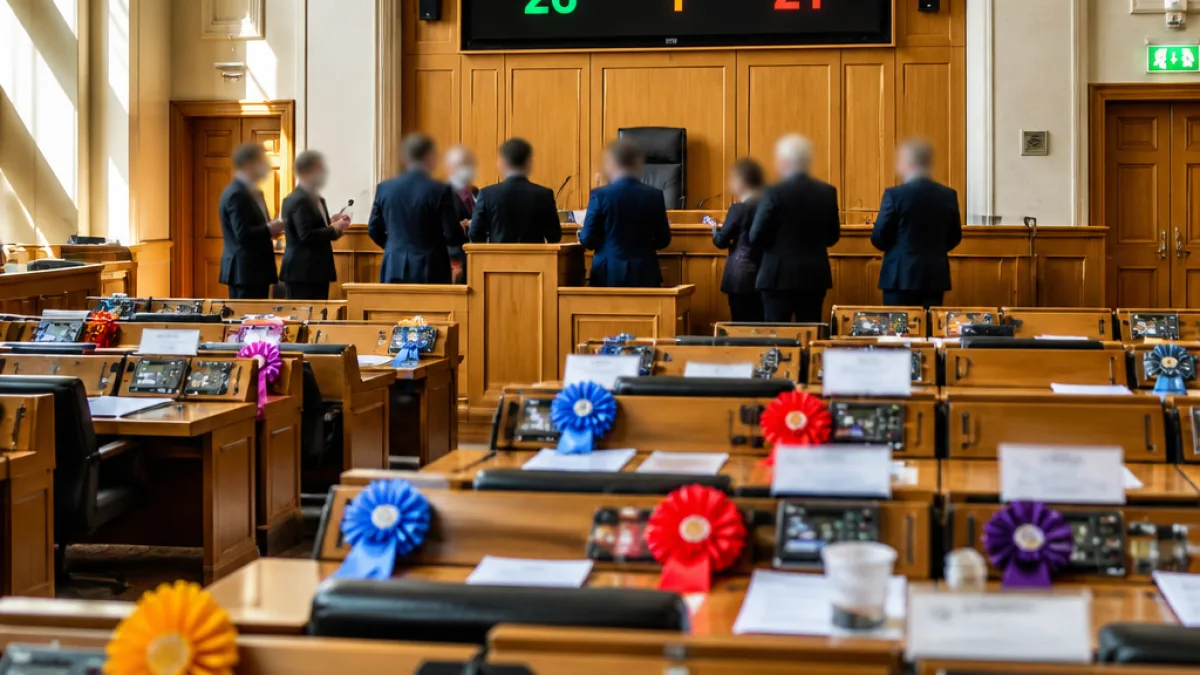
At an initial extraordinary council meeting a motion seeking the removal of the council leader, Tahmina Saleem (Biscot), was carried by 24 votes to 21. That was followed by a second extraordinary meeting, held on Monday evening, at which an effective vote of no confidence in her leadership was passed by 26 in favour, 21 against and one abstention.
| Motion | Result |
|---|---|
| Remove council leader (first meeting) | 24 for, 21 against |
| Vote of no confidence (second meeting) | 26 for, 21 against, 1 abstention |
Numbers and alliances
Labour’s remaining group of councillors numbered 21 and unanimously backed Councillor Saleem in the ballot. The successful leadership challenge was secured by an alliance comprising:
- 13 Liberal Democrats
- 7 Independent Alliance Group councillors
- 3 Conservatives
- 2 non-aligned Independents
- 1 Reform UK councillor
Former Liberal Democrat group leader David Franks, who had left the party the previous month to become a non-aligned Independent, abstained in the decisive ballot.
“I’m both honoured and humbled to be given this opportunity and I fully recognise the significant responsibility that comes with it,”
Those were the words Councillor Amjid Ali used after the meeting to set out immediate priorities. He said his focus would be on providing stability, delivering services and listening to residents, promising a council that is "visible and approachable" and candid about the challenges it faces.
Implications for local government and services
The change in leadership introduces uncertainty as well as opportunity. A new ruling group formed from such a varied coalition faces practical questions about how to sustain a working majority and agree policy priorities. The cross-party nature of the alliance that elected Councillor Ali suggests immediate emphasis on consensus around operational matters rather than a single-party manifesto.
For residents, the most tangible effects will be on how the council organises frontline services, budgets and local priorities. Councillor Ali emphasised continuity: that the authority remains committed to providing everyday services and resolving problems. How quickly and effectively a reorganised council can set a clear programme of work and communicate it to the public will be important for local confidence.
Political context and stability
The split within Labour that precipitated the change raises questions about long-term stability. Independent groups can be fluid by nature, and the balance of power on the council may remain fragile. The composition that delivered the successful challenge — drawing on members from five different political alignments — underlines the degree to which individual councillors’ decisions now determine control.
What happens next will depend on whether the new leadership can maintain the cohesion of its disparate supporters and translate short-term control into a sustainable governance arrangement. For now, Luton has a new council leader and a political landscape that has shifted markedly after nearly 20 years under one party.
Residents and local stakeholders will be watching for the council’s next moves on budgeting, service delivery and strategic priorities as the incoming leader sets out his agenda.