Local scheme aims to turn renting into a route to ownership
The Cambridge Building Society has welcomed a family of four into one of its rental properties in Northstowe after they were chosen through the lender’s Rent-to-Home ballot. The move highlights a growing effort by a local mutual to tackle the practical barriers many renters face when trying to save for a mortgage deposit.
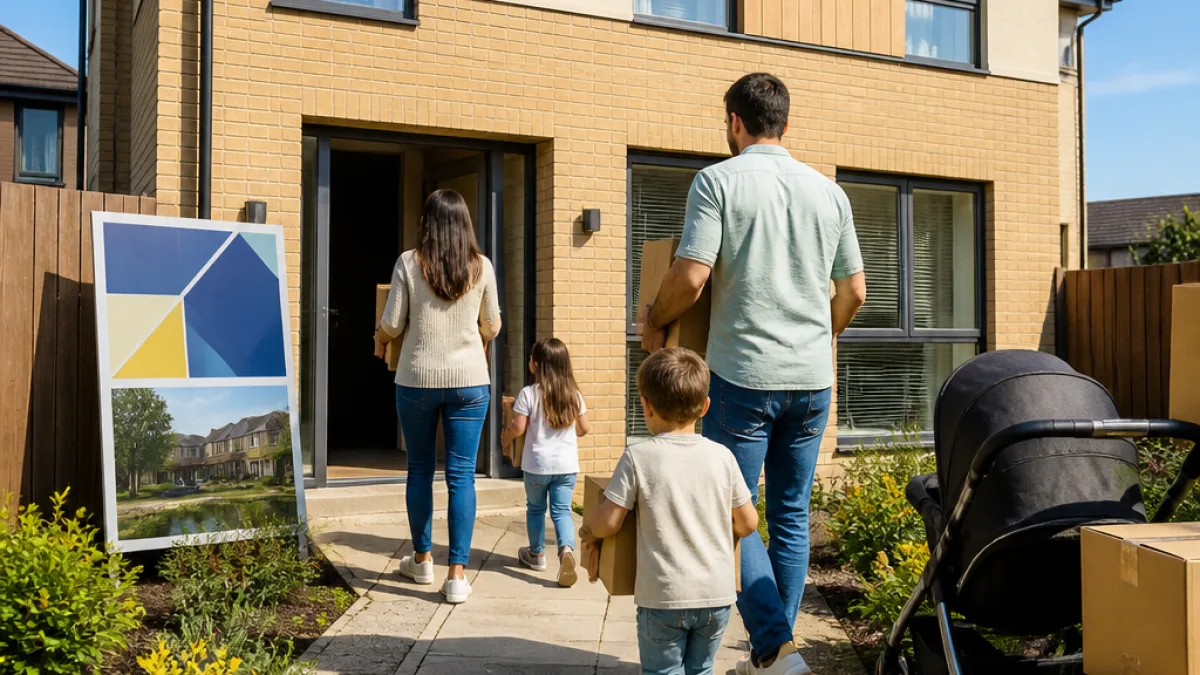
The tenants, identified as Caitlyn and Toby, moved into the newly refurbished house together with their 18-month-old son Arthur and baby George. Under the scheme, tenants rent a property for between one and three years, and may have as much as 70% of the rent they pay returned to use towards a deposit when they are in a position to purchase their own home.
- Scheme launched in 2019 to help first-time buyers unable to save while paying rent.
- Eligible tenants can rent newly refurbished properties and build towards a deposit over 1–3 years.
- Up to 70% of rent paid can be returned to use as part of a deposit when ready to buy.
The couple said the opportunity provided vital security and a path towards home ownership. Caitlyn described her reaction to receiving the call informing them they had been chosen.
“I nearly didn’t answer the phone because it was a random number, but when they told me we’d won the Rent-to-Home ballot, I was jumping up and down,”
She added that the scheme would give them the chance to save for a mortgage deposit over the next three years, benefit from a garden for their children and, most importantly, to feel they are on the path to owning their “forever home”.
The Cambridge’s chief commercial officer, Carole Charter, said the society was pleased to welcome another family into the scheme and to help tenants place roots while building towards ownership.
“For many families, saving for a deposit while covering rent and everyday household costs can feel like an impossible challenge, and Rent to Home is designed to help bridge that gap by turning a proportion of the rent they pay into a future deposit.”
How the Rent-to-Home model works
The model targets households who can afford to pay rent but struggle to accumulate a deposit because of high living costs. Tenants live in the property as renters for an agreed period; when they decide to purchase, a portion of the rent they have paid is allocated towards their deposit.
| Feature | Detail |
|---|---|
| Tenancy length | 1–3 years |
| Return towards deposit | Up to 70% of rent paid |
| Property condition | Newly refurbished |
| Launch year | 2019 |
Local housing markets around Cambridge have seen strong demand, and schemes such as Rent-to-Home are one of several interventions seeking to make home ownership more attainable without direct subsidy. The Cambridge Building Society, as a mutual, positions the product as a way to assist first-time buyers who are priced out of saving while meeting rental and household costs.
While Rent-to-Home does not remove all barriers to ownership — prospective buyers must still meet mortgage lending criteria when they come to purchase — it shifts the dynamic for those who can afford regular rent payments but are either squeezed by costs or lack a lump-sum deposit.
For tenants such as Caitlyn and Toby the immediate advantages are tangible: a secure rented home in a developing community, space for young children and a mechanism to convert a portion of their outgoings into a future asset.
Cambridge and its surrounding new towns, including Northstowe, continue to test different approaches to housing affordability. The Rent-to-Home ballot provides a local example of how a building society is attempting to use its lending and housing stock to support gradual progress towards ownership, while also offering the security and standards associated with newly refurbished accommodation.