High street memories and changing retail patterns
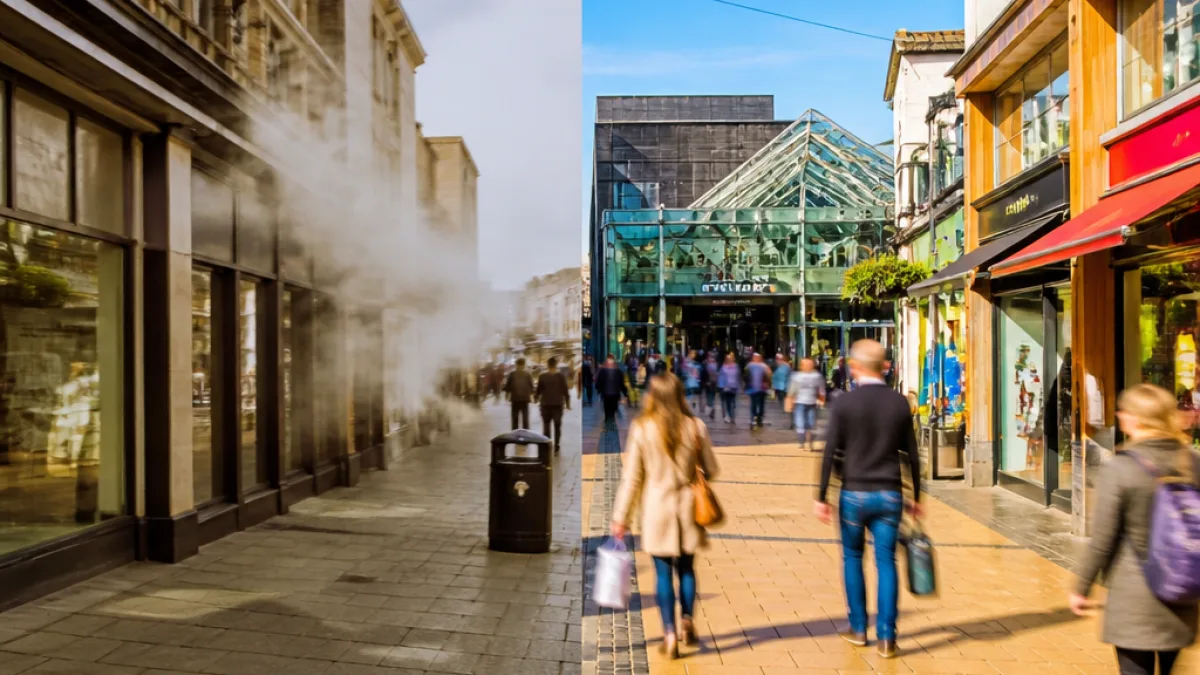
Photographs of Gentleman's Walk from the 2000s serve as a reminder of how much Norwich's busiest shopping street has changed in little more than a decade. A procession of national names pictured in the old images — some now gone from the street, others moved into adjacent shopping centres — illustrates a slow but steady reshaping of the city centre retail offer.
The pictures, drawn from local archives and contemporary imagery, show familiar brands occupying sites that today host different operators. Among those visible in the older photographs are Lush, HMV, The Works, Topshop, Clinton Cards, Dixons and mobile phone retailers such as Orange and Phones 4u.
From fragrant storefronts to new arrivals
One widely remembered image captures the Lush shop whose scent used to drift along the street — a sensory detail that many local shoppers recall. The Lush site is now occupied by Gong Cha, a sign of how leisure and food-and-drink operators increasingly replace traditional retail units. Until 2021, the prominent Topshop frontage stood where Mountain Warehouse trades today.
"Do you remember the smell of Lush when it used to be in Gentleman's Walk?"
Other examples of movement include The Works, which previously traded on Gentleman's Walk before relocating to Chapelfield (now Chantry Place), and HMV, which once stood on the corner of Gentleman's Walk and Davey Place. The site of former electronics retailer Dixons appears in images from 2001, taking the reader back to a different era of high street retail.
What the changes tell us about Norwich's retail economy
The photographs evidence two related trends observed nationally: the migration of some brands into covered shopping centres, and the losses attributable to rising online sales. In Norwich's case, Gentlemans Walk's changing occupants reflect the draw of nearby centres such as Chapelfield/Chantry Place for larger chains, while independent and leisure businesses fill the vacated units on the street itself.
For residents, these shifts have practical and cultural consequences. Practically, they change the pattern of footfall around the city centre and influence where people go for particular goods. Culturally, the replacement of recognisable national names with different operators alters the character of the street — from a retail corridor to a mixed-use zone where food, drink and niche retail increasingly coexist.
Examples from the archive
To make the changes concrete, the following table matches a selection of sites from the 2000s images with their more recent occupants (as shown in the material published alongside the photographs):
| 2000s occupant | Current occupant (as shown) |
|---|---|
| Lush | Gong Cha |
| Topshop | Mountain Warehouse |
| The Works | Chopstix (site now) |
| Dixons | The White Company (current site) |
These snapshots do not capture the entirety of change on Gentleman's Walk, but they do underline how individual units have been repurposed. Some former high-street stalwarts — for example Clinton Cards and Phones 4u — no longer exist in their original forms, leaving visual traces in photographs and memories.
Looking ahead
Gentleman's Walk's evolution sits within a wider local debate about the future of Norwich's city centre, the role of shopping centres, and how to balance tourism, leisure and resident needs. The photographs are useful not only as nostalgia but as prompts for discussion about planning, town-centre management and the types of businesses the city seeks to attract.
- Gentleman's Walk has seen many national chains move out or relocate into covered centres.
- Leisure and food-and-drink operators are increasingly prominent in former retail units.
- Photographs highlight both tangible changes and the sentimental memory of former shops.
For Norwich residents, the story of Gentleman's Walk is ongoing: the visual record from the 2000s captures a moment in transition, but the street continues to adapt as consumer habits and the urban economy change.