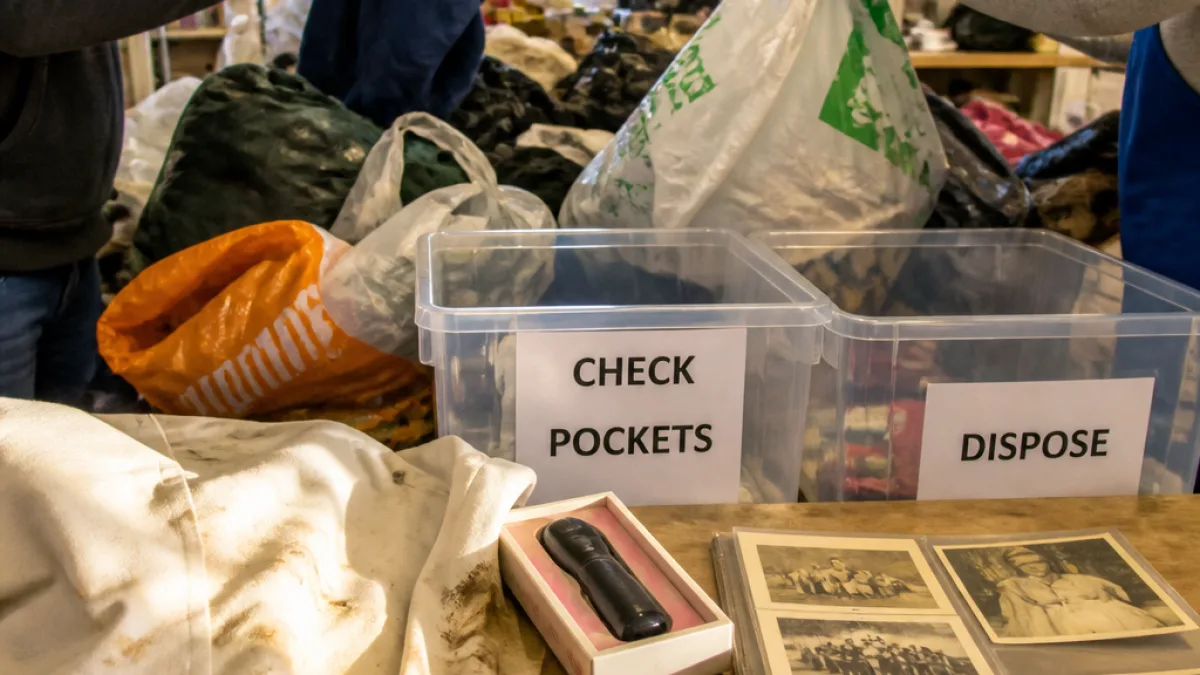
Staff plead with donors to check pockets and bags before dropping off donations
Charity shops across Birkenhead are appealing for common sense from people donating pre‑loved goods after staff reported finding a string of unsuitable and sometimes unhygienic items in donation bags.
Workers told the ECHO they routinely come across things that should never have been put in a donation pile, forcing shops to sort, clean or — more often than not — bin items that cannot be sold. The range of problematic finds is broad, and has left staff both frustrated and concerned about health and safety.
Among the items disclosed by local shop teams were soiled clothing and shoes contaminated with animal faeces, pockets containing used tea bags, unopened sanitary products mistakenly mixed with donations and prescription medication left in garments. One shop reported having to dispose of items covered in mould, cat urine and, in extreme cases, rat urine.
- Adult items: Staff found a large black bag containing vibrators and other adult paraphernalia, which workers believe may have been handed in by mistake.
- Sentimental finds: Old family photo collections dating back to the 1940s, including images of relatives who served in the Second World War, were among the more unusual but treasured donations.
- Important documents and valuable items: Personal notebooks, passports and even a set of police medals were discovered — the medals were passed on to a nearby antiques shop.
The time and effort required to sort through donated bags is a real burden for charity shops that rely heavily on volunteers or small paid teams. Unsuitable items increase waste and costs, and can create an unpleasant working environment for staff and volunteers who are trying to support local causes.
"Check your pockets before you donate"
That blunt piece of practical advice sums up what many shop workers want to get across. It is not that charities are fussy; it is that some donations are unsafe, unsalvageable or potentially upsetting to both staff and customers.
Local consequences for charities and shoppers
Charity retail plays a vital role in Birkenhead's high street, offering low‑cost clothing and household goods, and helping fund local projects. But when donations are contaminated or damaged, they cannot be resold and often have to be disposed of, reducing the overall benefit to the charity and adding to council waste streams.
| Common problematic finds | Impact |
|---|---|
| Soiled clothing, mould, animal excrement | Unsaleable; health and safety disposal required |
| Prescription drugs, personal documents | Potentially dangerous or confidential — requires secure handling |
| Adult toys or intimate items | Inappropriate for resale; often disposed of |
On the flip side, shops do sometimes receive items of genuine value and interest. Volunteers regularly unearth vintage clothing, rare pieces and sentimental family photographs that tell local stories — items which can be welcomed into the shop and the community.
Nevertheless, staff say simple steps by donors would make a big difference: check and empty pockets, clean and bag items that might be dirty, remove personal documents and, when in doubt, take potentially hazardous items to the household waste centre rather than a charity shop.
For many in Birkenhead, charity shops are treasured places that support people on tight budgets and raise funds for worthy causes. With a little more care from donors, they can continue to serve the community without the extra workload and health risks currently being reported by shop teams.