Fifty years ago a quiet but significant change came to hospitals serving St Helens: they were instructed to stop selling cigarettes. The decision, announced by the Liverpool Area Health Authority, was an early local step in recognising the health dangers of tobacco, even as practice and public attitudes lagged behind the new policy.
Policy change, but not prohibition
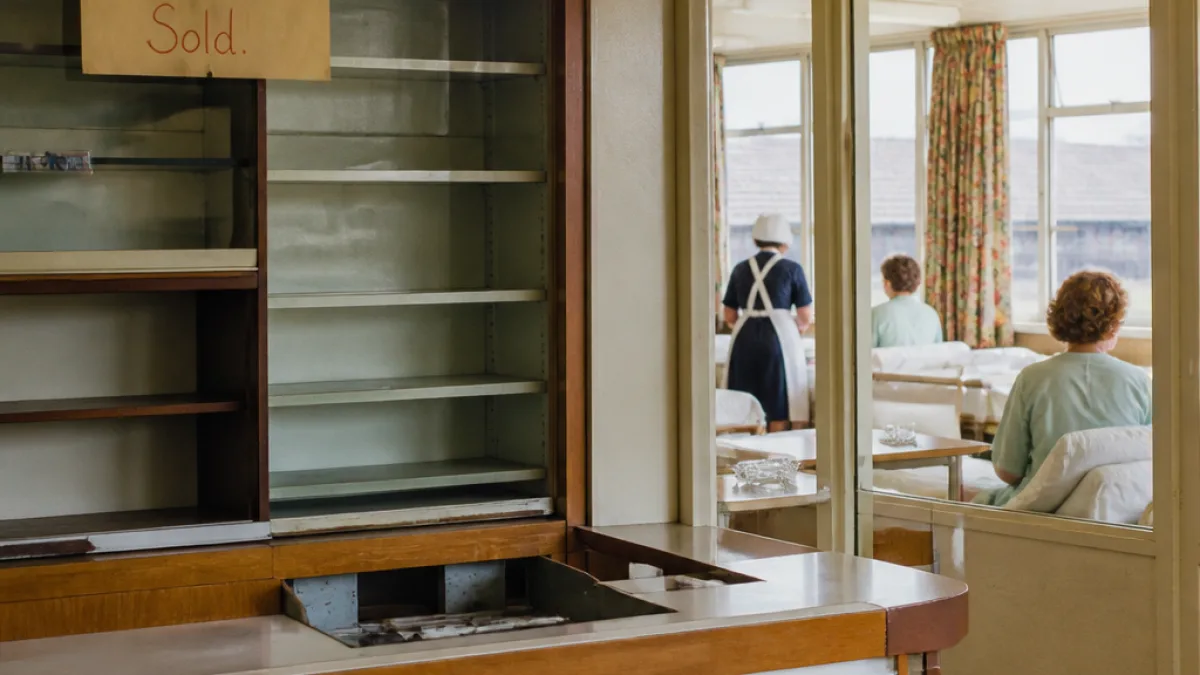
The authority’s position was succinctly stated at the time: "The authority feels that because of the health dangers of smoking we should not approve of smoking by selling cigarettes in hospitals." Yet the ban on sales did not equate to a ban on patients smoking. In practice, many inpatients continued to be allowed to smoke and simply relied on visitors to bring supplies.
This half-measure reflected the realities of the era. In 1976 around half of all adults were smokers, and hospital stays were typically much longer than today. Administrators judged that forcing patients to go "cold turkey" during recovery could be harmful.
Pragmatism and exceptions
Pragmatism, rather than strict prohibition, guided policy in the 1970s. The sales ban itself was applied unevenly: patients in Rainhill Hospital were exempted from the restriction on cigarette sales, underlining the piecemeal approach taken by health authorities.
Smoking indoors by patients, unthinkable by today’s standards, was commonplace back then. One stark reminder of the danger came from an earlier tragedy. In 1951, a patient at Whiston Hospital, Patrick Moonan, who was being treated for diabetes, suffered fatal burns after accidentally setting fire to his shirt while lighting his pipe. The subsequent inquest recorded a verdict of accidental death, and the coroner offered no criticism of the hospital practices, observing: "These things can happen in the best regulated hospitals."
"These things can happen in the best regulated hospitals."
From wartime habit to peacetime concern
The prevalence of smoking had deep roots. The peak of prevalence is traced back to the First World War, when as many as 96 per cent of soldiers smoked, encouraged by campaigns such as "Smokes For Tommy", which sent vast quantities of cigarettes to men at the front and to wounded servicemen recuperating in local hospitals.
One local artefact underlines how routine cigarettes were: an invoice survives for 6,000 cigarettes ordered on behalf of the Hughes family of Sherdley Hall for delivery to patients. Such records show how embedded tobacco was in everyday life and care during earlier decades.
- 1976: about half of all adults were smokers in Britain.
- 1951: fatal hospital fire involving a patient lighting a pipe at Whiston Hospital.
- WWI: smoking encouraged among soldiers; reported peak of 96%.
Fast-forward to the present and public health policy has moved decisively. Government plans to place local bans on smoking in hospital grounds on a statutory footing would have seemed extraordinary in the 1970s when patients were still commonly permitted to smoke indoors.
For residents of St Helens the story is a reminder of how medical practice, public perception and institutional policy change over time. A ban on sales was the first, cautious step. It reflected contemporary social attitudes and clinical pragmatism: where long stays and widespread addiction made abrupt prohibition seem risky.
But the decision also marked the beginning of a shift. Hospital walls that once welcomed cigarette sales have, over the decades, become spaces where smoking is increasingly restricted in the name of safety and recovery. The move away from selling cigarettes in hospitals was modest at the time, yet it foreshadowed the stricter approaches and public health campaigns that followed.
Understanding that history matters. It helps explain why current debates over smoking bans and hospital grounds can seem like the final stage of a long journey — one that started in the corridors and canteens of local hospitals in St Helens five decades ago.