From choking chimneys to cleaner skies
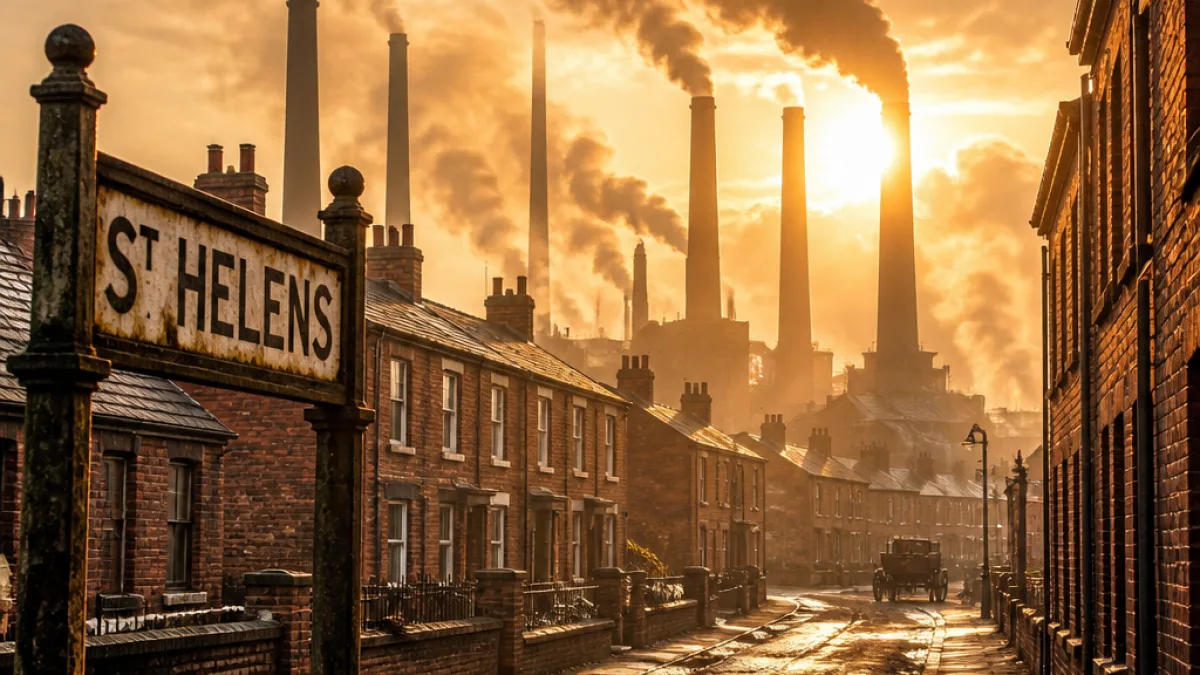
St Helens’ 19th-century boom brought prosperity, but it also brought an atmosphere many residents today would struggle to imagine. Rapid industrial growth filled the skyline with chimneys that belched smoke and chemical vapours, turning the town into, by contemporary accounts, one of the unhealthiest places in the country.
The scale of the problem is plain in records from the period. Medical and civic authorities were alarmed by noxious emissions from chemical works, with the town’s first Medical Officer of Health, Dr Robert McNicoll, warning as early as 1874 that workers and residents were suffering severe lung damage.
"complete disintegration of the lung tissues, terminating fatally"
Council minutes and local newspapers of the day paint a bleak picture. Editorials described the air as a persistent nuisance. Weather and the timing of particular manufacturing processes made conditions worse at times, with short-lived but intense discharges of acidic vapour from chimneys aggravating an already dangerous mix of smoke and chemical fumes.
Local impacts recorded in council rooms
One striking episode recorded by the borough surveyor, James Hart, took place in November 1879. He reported that over three days the emissions from the St Helens Chemical Company at Pocket Nook were so extensive they affected the whole district around Higher Parr Street. Such incidents were not isolated but part of a pattern that reinforced a growing public-health concern.
- Industrial chimneys and domestic coal fires combined to darken the air.
- Certain chemical processes produced hydrochloric acid vapour when mixed with the damp local atmosphere.
- Medical officers and newspapers flagged rising mortality and chronic illness tied to poor air quality.
Why this history matters today
The United Nations International Day for Clean Air falls on 7 September. For St Helens, the date is a reminder of how public health, industry and civic action interacted to change local conditions. The hard lessons from the Victorian era explain much about modern environmental regulation and public-health structures that exist to prevent a repeat of those toxic episodes.
That history is more than a local curiosity. It helped shape attitudes to industrial regulation, workplace safety and urban planning. Officials and campaigners in the late 19th century began to recognise the health consequences of unregulated emissions — a recognition that fed into later legal and practical changes, even if those changes came slowly.
| Year | Event |
|---|---|
| 1874 | Dr Robert McNicoll, Medical Officer of Health, warns of fatal lung damage caused by chemical emissions. |
| 1879 | Borough surveyor reports extensive hydrochloric acid fumes from the St Helens Chemical Company affecting Higher Parr Street. |
| 7 September | United Nations International Day for Clean Air — a contemporary prompt to reflect on past and present air quality. |
Residents today breathe air that is immeasurably cleaner than what their great-great-grandparents endured. But the story of St Helens’ polluted past is a useful caution: industrial prosperity without oversight can have severe, lasting health costs. The records of councillors, medical officers and local newspapers show how public pressure and professional warnings began to push the town towards change.
As the international community marks a day to think about clean air, St Helens’ own history offers context. The town’s Victorian-era struggles were a local chapter in a wider industrial story — one that ultimately led to better protections for workers and residents, and to the cleaner skies many of us now take for granted.